


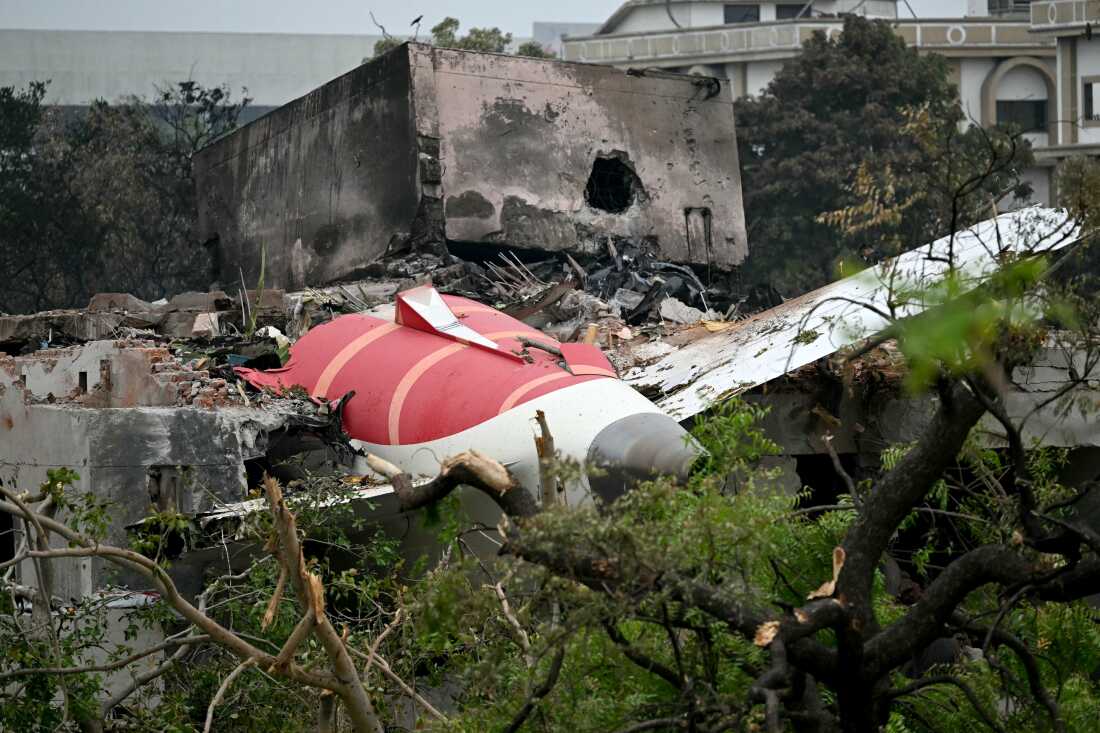
An Air India Boeing 787-8 Dreamliner crashed in dramatic fashion Thursday afternoon, after issuing a mayday call just moments into its flight. The aircraft, which had 242 passengers and crew members on board, went down near an urban area, striking a building housing medical staff and leaving a trail of wreckage. Remarkably, one person from the ill-fated plane survived.
The crash unfolded shortly after takeoff, when the Dreamliner had barely reached an altitude of 330 feet. Initial reports indicate that pilots transmitted a mayday distress signal before losing control. Within seconds, the plane descended rapidly and collided with a multi-story building used as a hostel for employees of a nearby hospital.
Emergency services were dispatched immediately to the scene, where they found the rear section of the aircraft embedded in the second floor of the structure. The impact sparked a large fire, consuming much of the fuselage and spreading debris over the surrounding area.
Authorities confirmed late Thursday that one man from the flight had survived the crash. He was transported to a hospital in critical but stable condition. No immediate details have been released about his identity or how he managed to escape the burning wreckage.
Local officials reported that the hostel building was occupied at the time of the crash. Preliminary assessments indicate that no fatalities occurred among those inside the hostel, though several residents were treated for smoke inhalation and minor injuries. The quick response of firefighters and rescue personnel likely prevented a greater tragedy.
Aviation safety teams have begun their investigation, focusing on both mechanical and procedural factors that could have contributed to the disaster. The recovered flight data recorder and cockpit voice recorder are expected to provide key insights into the aircraft’s final moments.
Early reports suggest that the Dreamliner experienced trouble almost immediately after lifting off. Witnesses on the ground described hearing a loud, sputtering engine noise and seeing the plane appear unstable in the air. The aircraft’s mayday transmission, issued just prior to the crash, suggests that the crew was aware of a critical malfunction or emergency situation.
The Boeing 787-8 Dreamliner is a wide-body jetliner known for its advanced composite materials and fuel efficiency. It is generally considered one of the safer aircraft in commercial service. However, Thursday’s crash raises questions about what went wrong in this instance. Investigators will now scrutinize maintenance records, weather conditions, and the aircraft’s systems to determine the root cause.
This accident marks one of the most severe air disasters involving an Air India Dreamliner. The airline has grounded several aircraft from its Dreamliner fleet as a precautionary measure pending the outcome of the investigation.
Air India representatives expressed deep sorrow over the loss of life and said they are cooperating fully with authorities. Counseling and support services have been offered to the families of passengers and crew members affected by the crash.
International aviation experts have also been called in to assist with the investigation, given the complexity of the aircraft and the global implications of any potential safety findings. Boeing, the aircraft’s manufacturer, issued a statement expressing condolences and pledging to support the investigation.
As the recovery of wreckage continues and forensic teams comb the crash site, many questions remain unanswered. Authorities are urging patience as they conduct a thorough analysis to uncover what led to the tragic event.