


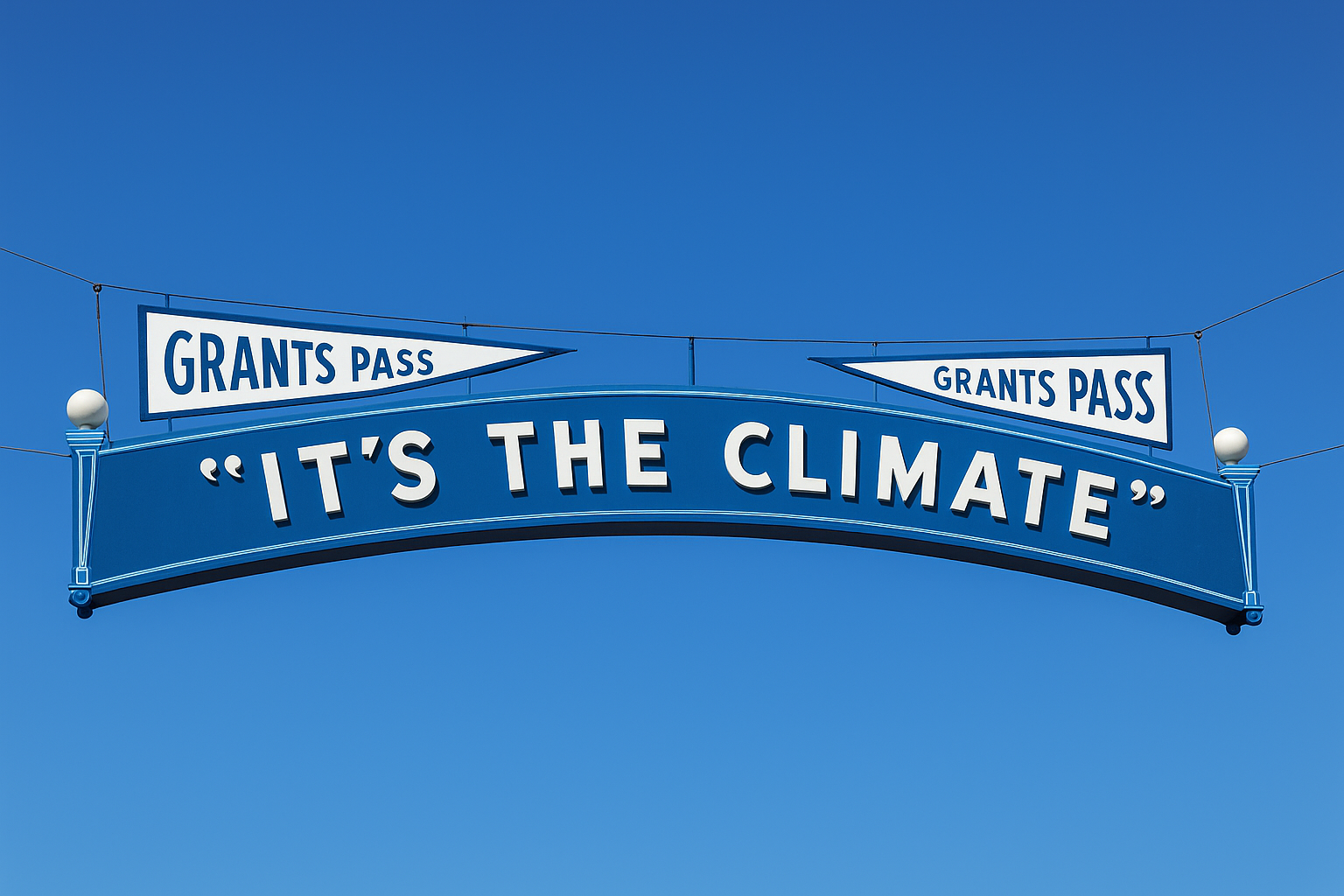
Grants Pass, Oregon has long been a destination for those seeking more than just a change of scenery. Tucked into the Rogue Valley and bisected by the flowing Rogue River, our Southern Oregon city boasts stunning landscapes, four true seasons, and that golden tagline plastered on signs and murals across town: “It’s the Climate.” And while the weather here is certainly an asset—offering warm, dry summers and crisp but manageable winters—that’s only part of the story.
For many who arrive in Grants Pass, it feels like stepping into a postcard. The downtown is walkable and charming, framed by mountains and lined with local shops, cafes, and galleries. Outdoor enthusiasts find paradise here with world-class rafting, fishing, and hiking just minutes from their doorstep. There’s a slower, more deliberate pace of life that appeals to retirees, remote workers, artists, and families looking for an escape from high rents and hectic freeways elsewhere.
But what brings people here isn’t always enough to keep them.
Grants Pass, for all its beauty and tranquility, is not immune to the tensions and pressures affecting much of rural America. The city sits squarely in Josephine County—one of the most politically conservative counties in Oregon—and the divide between ideologies has widened in recent years. For some, this is a welcome bastion of traditional values. For others, it’s a dealbreaker.
Newcomers who arrive expecting small-town unity sometimes find themselves caught in a cultural tug-of-war. Political polarization seeps into school board meetings, city council votes, and even casual conversations at the grocery store. National issues like homelessness, environmental regulations, and pandemic responses have fueled local disputes that drive wedges between neighbors.
This political climate doesn’t just influence mood—it affects policy. The city has faced high-profile lawsuits over how it handles its homeless population, particularly regarding park camping bans that made national headlines. While some residents support stricter enforcement to preserve public safety and aesthetics, others argue the city is criminalizing poverty without offering meaningful solutions.
Affordability is another double-edged sword. While many move to Grants Pass from California or Portland to escape soaring housing prices, they soon discover that wages haven’t caught up with the cost of living here either. Jobs are often concentrated in lower-wage service industries or seasonal tourism work. Healthcare access, while improving, can be limited. And if you’re a renter, your options are narrowing fast.
For those with deep roots or a pioneering mindset, these hurdles can be weathered. But for others—especially younger families or professionals looking for stability—the pressures sometimes outweigh the perks.
Still, there’s no denying that Grants Pass holds a certain magic. It’s not uncommon to hear someone say they left, only to return a few years later, unable to shake the pull of the river, the scent of pine in the air, or the way the stars seem to shine a little brighter over the hills. For those who thrive on solitude, independence, and a closer connection to nature, this place delivers in spades.
In the end, whether you’re arriving or packing up to leave, Grants Pass leaves an impression. Some fall in love and never look back. Others admire it from a distance, grateful for the experience but ready to find a different fit. That’s the reality of living in a place with strong identity and strong opinions—it’s not for everyone. But for the ones who stay, it’s home.