


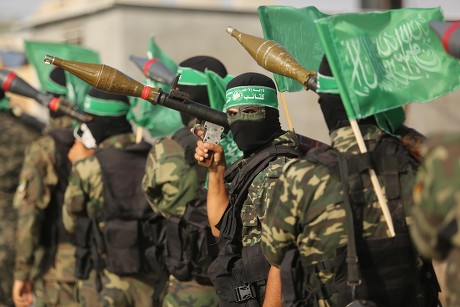
Hamas announced it is prepared to enter negotiations with the United States regarding the release of hostages, marking a potential shift in the ongoing standoff that has drawn international attention. The declaration came after President Donald Trump issued a fresh ultimatum, demanding progress on the matter or warning of further consequences.
The statement from Hamas represents a notable development in a conflict where communication between U.S. officials and the group has historically been limited, indirect, or facilitated through intermediaries. Previous attempts at negotiations involving hostages have often been complicated by political divisions, security concerns, and the involvement of multiple regional actors.
Trump’s ultimatum, delivered in his characteristically firm terms, put new pressure on Hamas at a time when the situation in Gaza and surrounding areas remains volatile. While details of the ultimatum were not immediately released, the President’s stance has emphasized a firm deadline for action, increasing speculation about what steps the United States might take if demands are not met.
For Hamas, the decision to state readiness for talks could be driven by multiple factors, including the humanitarian toll of ongoing hostilities, international pressure, or a desire to ease some of the economic and political isolation the group faces. Analysts note that even a public declaration of willingness to negotiate marks a departure from past rhetoric, which has often been more rigid or combative.
The United States has consistently labeled Hamas a terrorist organization, limiting direct diplomatic engagement. As a result, if talks do move forward, they are likely to involve mediators such as Egypt, Qatar, or Turkey, which have previously served as channels for communication. These countries have played pivotal roles in brokering ceasefires and prisoner exchanges in the past, and could again serve as key intermediaries in any negotiation process.
The fate of hostages has long been a sensitive issue in conflicts involving Hamas. In previous instances, negotiations over prisoner releases have involved protracted discussions, international mediation, and complex exchanges, often tied to broader political objectives. Each move in the process carries significant political and security implications for all parties involved.
While Hamas’s statement has been welcomed by some observers as a possible opening, others remain cautious, pointing out that the group has previously issued similar declarations that did not yield concrete results. The timing of the announcement—coming directly after Trump’s ultimatum—suggests that the U.S. pressure campaign may be having an impact, though it remains uncertain how genuine or sustainable the group’s willingness is.
The coming days are expected to determine whether this signals the beginning of a serious negotiation process or simply a tactical maneuver designed to ease pressure in the short term. For now, the spotlight remains on whether U.S. officials will respond with formal steps to initiate talks, and how the international community will position itself in supporting or challenging the process.
The situation underscores the delicate balance between diplomacy, security concerns, and humanitarian urgency. Hostage negotiations in this context remain among the most difficult diplomatic challenges, requiring not only agreement on terms but also trust-building measures between adversaries with deep-seated animosities.