


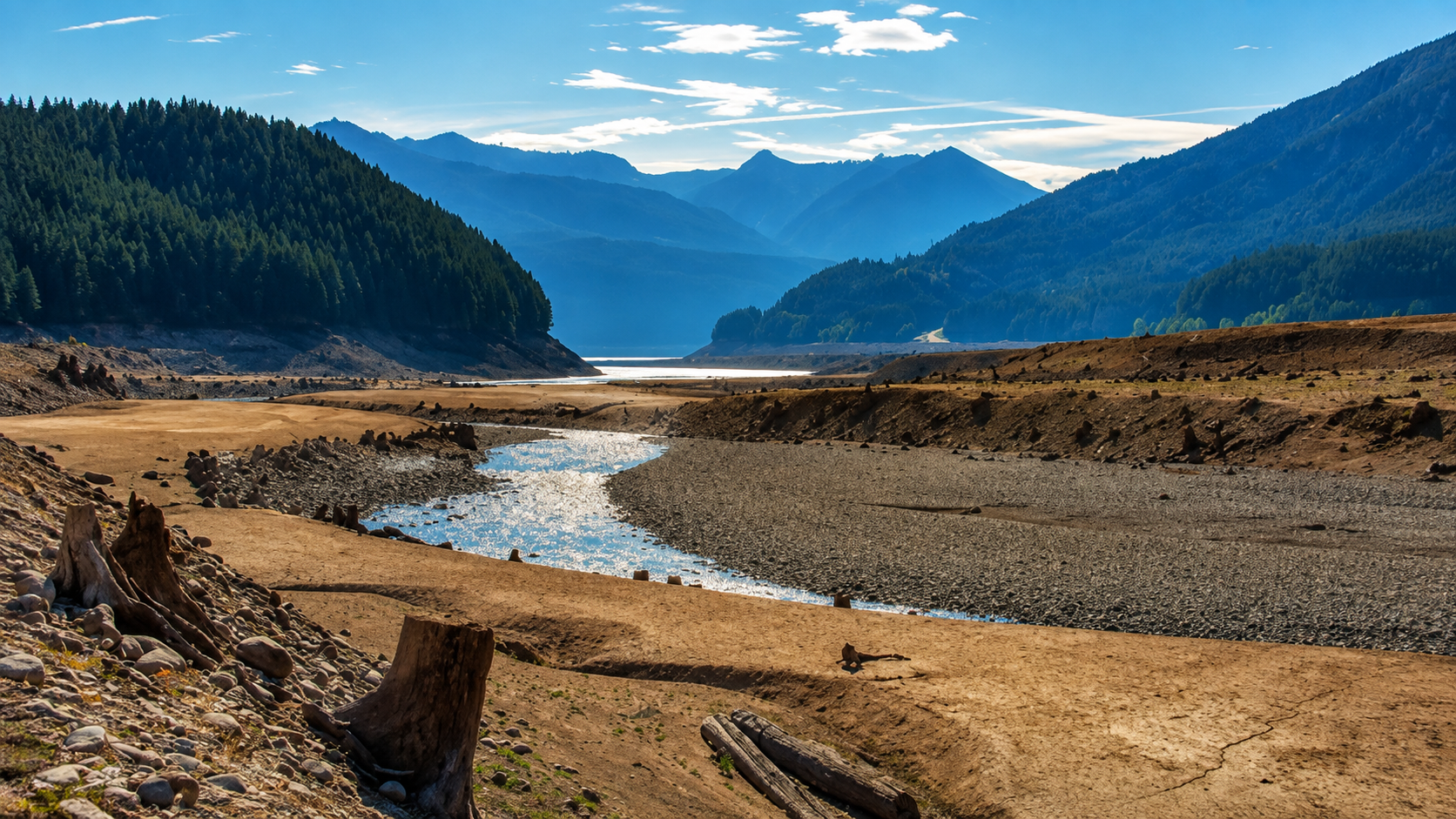
Southern Oregon is approaching September under an unusual convergence of severe drought, depleted water supplies and extreme wildfire activity following an exceptionally poor mountain snow year that left the region with diminished moisture before summer began. Josephine and Jackson counties remain under state drought emergency declarations, while Oregon has experienced a wildfire season that has already surpassed previous modern records for acreage burned.
The water shortage developed during winter and spring, when mountain snowpack accumulated at exceptionally low levels across much of Oregon. Snow stored at higher elevations normally provides a gradual supply of water as temperatures rise, feeding rivers, streams, reservoirs and groundwater systems well after seasonal rainfall diminishes. Warm conditions accelerated the disappearance of an already limited snowpack this year, reducing the amount of runoff available during the hottest and driest months.
Federal drought records illustrate the severity of the deficit in Southern Oregon. Josephine County recorded its 13th driest January through July period in 132 years of records. The state declared a drought emergency for Josephine County after evaluating precipitation, snowpack, streamflow, reservoir levels and other water supply indicators. Jackson County received an emergency declaration earlier in the year when approximately 95 percent of the county was experiencing moderate to severe drought. Curry County was added this month, extending emergency drought conditions across a substantial portion of southwestern Oregon.
The consequences are visible throughout the region’s water system. Reduced snowmelt has contributed to unusually low streamflows, while reservoirs have entered their annual summer drawdown with less water available to replace what is being used. Persistent heat increases evaporation from soil, vegetation and open water, intensifying shortages as agricultural, residential and ecological demand continues.
Rural groundwater supplies can also become vulnerable during prolonged drought. Thousands of Southern Oregon properties outside municipal water systems depend upon domestic wells, and declining groundwater levels can reduce production or cause shallower wells to stop producing. Oregon water officials have warned that severe drought can also require regulation of water rights earlier than usual, potentially affecting users with older priority dates than would ordinarily face restrictions.
Agricultural producers are experiencing the same hydrologic shortage. Farms, ranches, vineyards and orchards across Southern Oregon require irrigation during the portion of the year when natural streamflows are lowest. Reduced runoff limits available irrigation supplies while high temperatures increase evaporation and crop water demand. Southwestern Oregon producers in some areas have already faced difficult decisions involving irrigation and harvesting because of limited water availability.
The drought has developed alongside an extraordinary wildfire season. Recent statewide reporting has placed Oregon above 2.6 million acres burned during 2026, exceeding the state’s previous modern record while significant fires remain active. Earlier estimates of approximately 2.4 million acres reflected a rapidly increasing total as major incidents continued expanding and fire agencies updated acreage calculations.
The escalation has been dramatic. When Oregon’s statewide wildfire emergency was declared in June, officials reported 414 fires covering approximately 8,077 acres. Within roughly two months, statewide acreage had climbed into the millions as several enormous incidents spread across Central and Eastern Oregon and additional fires developed elsewhere. The Rowe Creek incident alone exceeded 370,000 acres and required more than 1,600 personnel during a period of intensive suppression operations.
Southern Oregon has faced significant fire activity of its own. Incidents across Jackson, Josephine and Klamath counties have required evacuations, aircraft operations and extensive ground suppression. The Fielder Mountain Fire near Rogue River became one of the region’s larger incidents, while additional fires throughout southwestern Oregon have demonstrated the ability of dry vegetation to support rapid fire growth during periods of heat, low humidity and wind.
Drought does not determine how an individual wildfire starts. Lightning remains a natural ignition source, while vehicles, equipment, electrical infrastructure and other human activity can produce accidental fires. Prolonged drought instead changes the environment surrounding an ignition. Grasses cure earlier, brush loses moisture, forest litter dries and woody fuels become increasingly receptive to combustion. Wind can then accelerate flames through dry vegetation and transport embers beyond established fire lines.
Jackson and Josephine counties entered fire season on May 15, placing the region under seasonal restrictions unusually early. By late August, vegetation had experienced more than three months of continued summer drying following a winter already deficient in stored mountain moisture.
The statewide magnitude of the fire season can affect Southern Oregon even when Oregon’s largest incidents are burning elsewhere. Wildfire response depends upon local departments, the Oregon Department of Forestry, the Oregon State Fire Marshal, federal agencies, contractors and interstate resource agreements. During periods of extensive fire activity, aircraft, engines, hand crews and specialized incident management personnel can already be assigned to other fires when a new incident begins.
Waterways are experiencing separate consequences from the drought. Reduced streamflow can allow water temperatures to increase more rapidly during hot weather, creating additional stress for cold water fish and aquatic habitat. The Rogue River and its tributaries support salmon, steelhead and other species that depend upon adequate flows, suitable temperatures and access to colder sections of waterways during summer.
The region’s water deficit will not necessarily disappear when autumn rainfall returns. Reservoirs ending summer with depleted storage require substantial precipitation and runoff to recover, while groundwater systems may recharge more slowly. Several periods of rain can reduce immediate wildfire danger without restoring the volume of water lost during an exceptionally dry year.
Winter snowfall will therefore become an important measure of Southern Oregon’s recovery. Total precipitation matters, but mountain snow provides water differently from rainfall by remaining stored at elevation before gradually melting during spring and early summer. A wet winter dominated by rain can produce considerable precipitation without rebuilding the natural snow reservoir needed during the following dry season.
Wildfire danger also remains active beyond August. Oregon’s fire seasons are determined by weather, vegetation and fuel conditions rather than a fixed calendar date. Cooler nights and isolated rainfall can temporarily moderate fire behavior, but sustained moisture is required before larger fuels and drought affected soils begin recovering.
Josephine and Jackson counties are entering September with drought emergencies still active, diminished water supplies and vegetation that has endured months of drying. Oregon’s statewide wildfire emergency remains in effect as fire agencies continue suppression operations and prepare for additional starts.
The final scale of the 2026 drought will become clearer after summer water use, agricultural impacts, reservoir levels, streamflows and wildfire acreage are fully calculated. Several measurements are already established. Southern Oregon began the warm season following an exceptionally poor snow year, Josephine County experienced one of its driest January through July periods in more than a century of records, both Josephine and Jackson counties reached drought emergency conditions, and Oregon surpassed its previous modern record for wildfire acreage before the end of August.
How quickly Southern Oregon recovers will depend upon sustained autumn precipitation, winter temperatures, mountain snowfall and the amount of water ultimately carried into rivers, reservoirs and groundwater systems next spring. Until those supplies begin rebuilding, the region remains under the cumulative effects of a drought that began months before summer and a wildfire season that has already established a new statewide benchmark.