


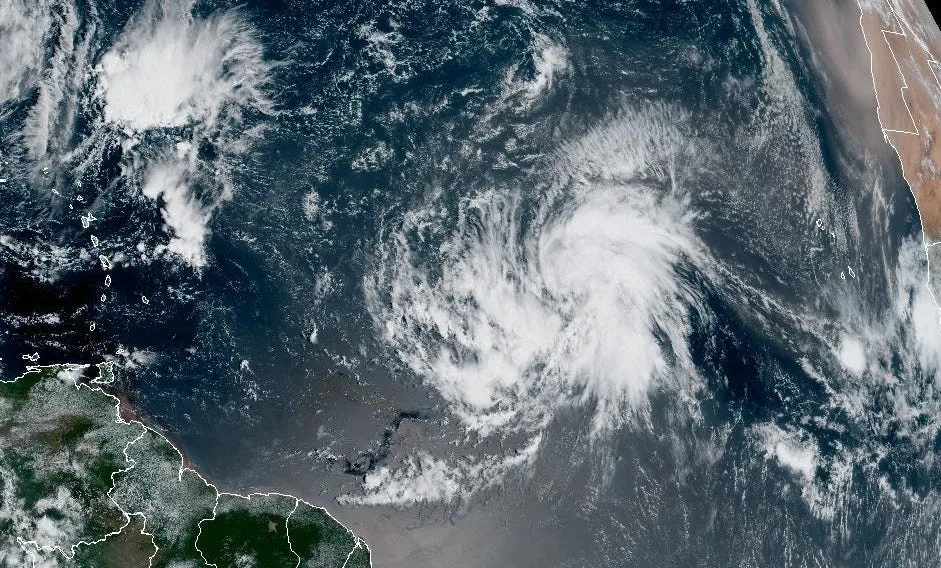
The 2025 Atlantic hurricane season has produced its second hurricane, as Gabrielle intensified into a Category 1 storm on September 21. The system, which had been steadily gaining strength, reached hurricane status when maximum sustained winds climbed to approximately 75 miles per hour. This development marks a notable benchmark in a season that has already seen a series of active tropical disturbances across the Atlantic basin.
By late afternoon, Hurricane Gabrielle was positioned roughly 320 miles southeast of Bermuda. The storm was tracking north-northwest at a forward speed near 10 miles per hour, a course that forecasters continue to monitor closely. While it remains far from the U.S. mainland, the storm’s path in relation to Bermuda and potential future shifts across the Atlantic are under active evaluation by meteorologists.
The classification as a Category 1 hurricane places Gabrielle at the entry level of the Saffir-Simpson Hurricane Wind Scale, which categorizes storms based on sustained wind speed and their potential to cause damage. Category 1 storms are characterized by winds ranging between 74 and 95 miles per hour, strong enough to damage roofs, siding, and trees, and to disrupt utilities in areas directly impacted. Though considered the lowest category on the scale, such storms can still produce significant hazards, particularly when coupled with heavy rainfall or storm surge.
The storm’s current position in open waters offers a degree of reassurance for coastal residents, yet its proximity to Bermuda raises attention. The island has long experience with powerful Atlantic systems, and preparedness measures are often taken quickly in response to such developments. Forecasting models remain crucial in determining whether Gabrielle will pose a direct threat to land or curve away into the broader Atlantic. The National Hurricane Center has continued issuing regular advisories to keep the public and international partners informed.
The emergence of Gabrielle underscores the continuing volatility of the 2025 hurricane season. Meteorologists had previously projected that this season could be above average in terms of storm frequency and intensity, driven in part by warm ocean temperatures and favorable atmospheric conditions. The naming of a second hurricane before the end of September aligns with those predictions, highlighting the importance of ongoing vigilance for communities throughout the Atlantic basin.
Historically, late September is a period of heightened hurricane activity, as ocean waters remain warm and atmospheric patterns support storm development. This climatological peak means additional storms are possible in the coming weeks, even as Gabrielle garners immediate attention. For coastal communities from the Caribbean to the U.S. eastern seaboard, preparation efforts remain critical during this phase of the season.
While Gabrielle’s future track and ultimate strength remain uncertain, its formation into a hurricane reinforces the need for monitoring and readiness. Authorities continue to emphasize that storms can shift in both direction and intensity, sometimes with limited warning. As a result, forecasters encourage residents across potentially affected regions to remain aware of official updates and advisories as the season progresses.
The development of Hurricane Gabrielle serves as both a reminder of the power of tropical systems and as a reflection of the natural rhythm of the Atlantic season. Whether the storm poses a direct threat to land or veers away into open waters, its presence adds to a growing tally of storms that define 2025 as another active year in the ongoing cycle of hurricanes across the Atlantic.