


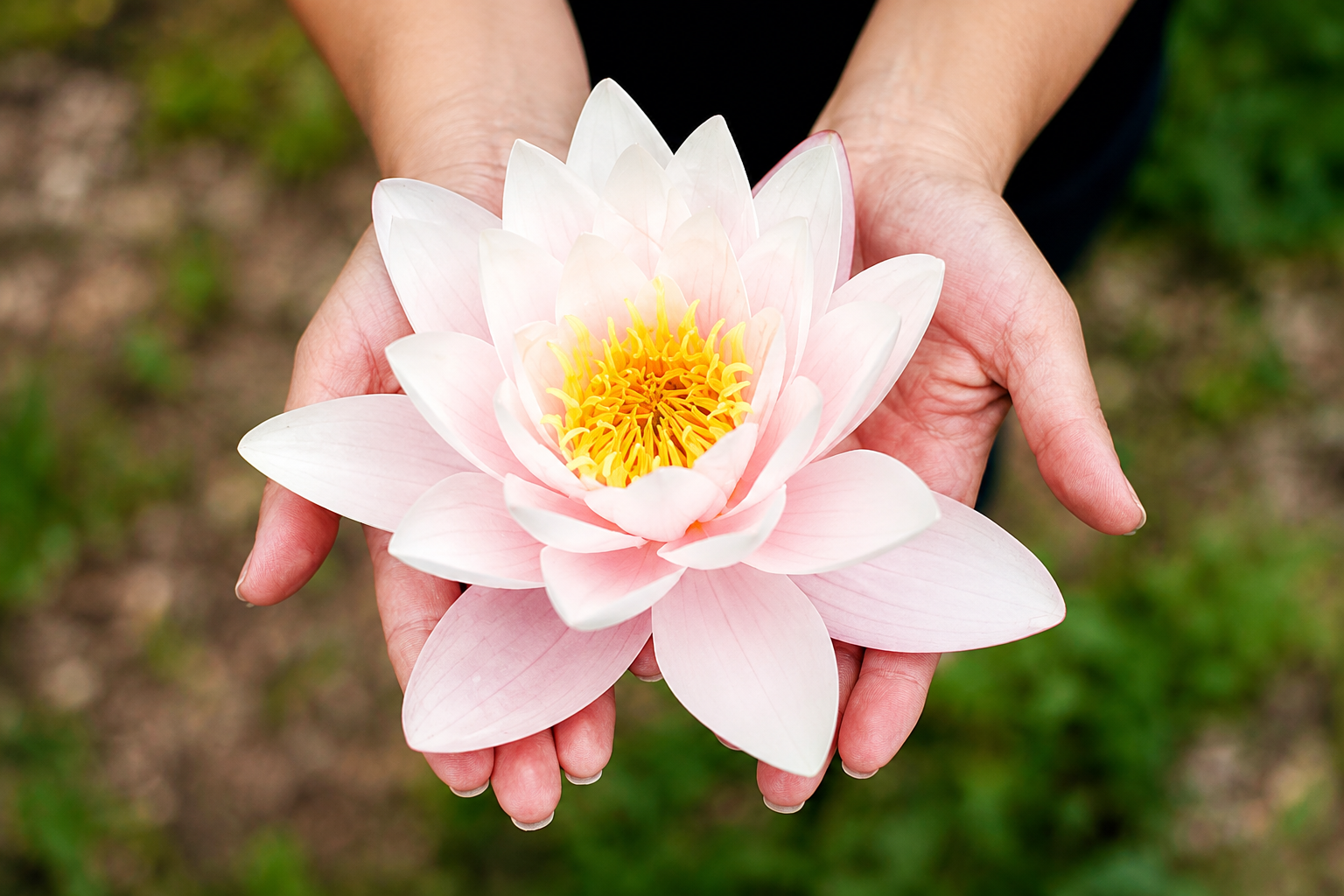
Lotus enters our historical record not as a battlefield medicine or a nutrient-dense food, but as a symbol of clarity, awakening, and the mind’s ability to rise above the noise of the world. Long before medicine understood neurotransmitters, cellular signaling, or the chemistry associated with calm, ancient physicians and scholars recognized lotus seed and lotus leaf as plants connected with balance and mental clarity. In Ayurvedic traditions, lotus appears as a cooling, stabilizing plant, one used to steady the body, clear excess heat, and support mental clarity during periods of strain. It became associated with scholars, monks, physicians, and others whose lives demanded long periods of study, contemplation, or meditation. The plant’s role was never dramatic; it was subtle, precise, and deeply respected.
In ancient Egypt, lotus held an even more profound place. The blue lotus, Nymphaea caerulea, was woven into the spiritual, medicinal, and artistic fabric of the civilization. Egyptians incorporated lotus into ceremonial preparations, and its unmistakable flowers appear throughout surviving Egyptian art. Tomb paintings frequently show figures holding lotus blossoms near their noses, imagery associated with rebirth, renewal, beauty, and the restoration of life. The plant became so deeply embedded in Egyptian culture that its meaning extended well beyond ordinary botanical use. Ancient Egyptians did not know the language of neurotransmitters, alkaloids, or cellular receptors, but their enduring fascination with lotus reveals a civilization that regarded the plant as something far more significant than an ornamental flower.
Chinese medicine developed another enduring relationship with lotus. Lotus seed became valued as both food and traditional medicine, while different parts of the plant were incorporated into preparations intended to support balance within the body. Traditional Chinese medicine has long associated lotus seed with nourishing and calming qualities, while lotus leaf has historically been used in connection with digestion, internal heat, and other aspects of physical balance. For scholars and contemplative traditions, the symbolism was equally powerful. A lotus could grow from dark, muddy water and emerge above the surface clean and intact, making it a natural representation of a mind capable of remaining composed despite the disorder surrounding it.
Across Southeast Asia, the lotus became inseparable from Buddhist culture and spiritual practice. The flower’s journey from mud through water and into open air offered an extraordinary natural metaphor for awakening, discipline, and clarity. Lotus seeds and other parts of the plant also became familiar foods and ingredients within traditional systems of wellness. Rather than acting like a conventional stimulant, lotus occupied a quieter place within these traditions, associated with nourishment, balance, contemplation, and steadiness. Its reputation developed not around an abrupt burst of energy, but around the very qualities represented by the flower itself: composure, resilience, and clarity.
Modern biochemistry has begun examining what ancient cultures could only understand through observation and experience. Lotus seeds contain an assortment of naturally occurring compounds, including alkaloids, flavonoids, amino acids, and phenolic compounds. Among the best-known lotus alkaloids are neferine and liensinine, compounds that have attracted scientific interest because of their biological activity. Laboratory and preclinical research has investigated their effects on cellular signaling, calcium regulation, oxidative stress, inflammation, and other physiological processes. The research does not mean that every traditional claim surrounding lotus has been scientifically proven, but it provides a fascinating biochemical backdrop to a plant that humans have valued for centuries.
The relationship between lotus and the nervous system is particularly interesting from a health-and-wellness perspective. Researchers have examined lotus compounds for potential effects involving neurological signaling and stress-related biological processes. Much of this work remains experimental, and the effects observed in laboratory or animal research cannot automatically be translated into specific benefits for people. Still, the research provides another layer to the historical story. Ancient healers described plants according to what they observed in the body and mind; modern researchers can examine those same plants at the molecular level, identifying compounds and biological pathways that earlier civilizations had no means of seeing.
At the cellular level, lotus also offers an impressive collection of naturally occurring antioxidant compounds. Lotus seeds and other parts of the plant contain flavonoids and phenolic compounds, including substances such as kaempferol and quercetin. Antioxidants are important because oxidative stress occurs when reactive molecules overwhelm the body’s ability to regulate them, potentially contributing to cellular damage. The brain is particularly interesting in this regard because of its substantial energy requirements and sensitivity to oxidative processes. Research into lotus and its antioxidant activity therefore extends beyond ancient tradition and into contemporary investigations of cellular health, inflammation, metabolism, and neurological function.
Lotus leaf plays a different but complementary role in the plant’s wellness history. Traditionally used in several Asian systems of medicine, lotus leaf contains its own collection of flavonoids, alkaloids, and other phytochemicals. Modern research has examined these compounds in relation to metabolism, oxidative stress, inflammation, and digestive function. That research also intersects with growing scientific interest in the relationship between digestion and the brain. The gut-brain axis, once largely absent from mainstream conversation, is now recognized as a complex communication network involving the nervous system, immune system, hormones, microorganisms, and digestive tract. Although it would be premature to claim that lotus directly regulates this entire system, its traditional association with digestion and balance makes the subject worthy of continued scientific investigation.
Even the symbolism surrounding lotus seems remarkably suited to its place in wellness history. The flower begins beneath the surface, rooted in mud and surrounded by murky water, yet rises toward sunlight before opening above it. Egyptians connected lotus with rebirth and renewal. Chinese traditions embraced it as an emblem of purity and integrity. Buddhist traditions made it one of the world’s most recognizable symbols of awakening and enlightenment. Different civilizations developed different interpretations, yet each returned to a remarkably similar idea: something clear, ordered, and beautiful can emerge from an environment that is anything but.
That symbolism may also explain why lotus has endured when countless other ancient plants have disappeared from popular memory. Wellness is not simply the pursuit of stimulation, energy, or immediate physical change. It can also involve steadiness, nourishment, rest, concentration, emotional balance, and the ability to function without constantly pushing the body harder. Lotus fits naturally within that philosophy. Its historical reputation was built around qualities that are quieter and more difficult to measure, yet no less relevant to the way human beings have thought about health for thousands of years.
Across civilizations, lotus became a plant of healers, scholars, spiritual practitioners, and ordinary people who incorporated its seeds, leaves, roots, and flowers into food, traditional medicine, ceremony, and daily life. Its story is not one of dramatic transformation or miraculous cures. It is the story of a plant whose relationship with humanity developed slowly across thousands of years, carrying with it recurring themes of clarity, nourishment, composure, and renewal.
As we move toward the final chapter of this five-day series, lotus stands naturally as the fourth pillar: the clarity medicine of ancient tradition, a botanical woven through the histories of Egypt and Asia, a symbol that became inseparable from some of the world’s great contemplative traditions, and a plant whose complex chemistry continues to give modern researchers new reasons to examine what ancient civilizations discovered through observation long before the laboratory existed.