


A powerful winter storm sweeping across the Northeastern United States has triggered widespread transportation disruptions, forcing airlines to cancel thousands of flights and leaving travelers across the country facing delays that extend far beyond the storm zone. Aviation officials and meteorologists describe the event as one of the most significant winter travel disruptions of the 2026 season, highlighting the vulnerability of national air travel systems during large-scale weather emergencies.
As the storm intensified along the East Coast, airlines moved quickly to reduce operations at major airports ahead of deteriorating conditions. By the evening of February 22, more than 3,300 flights within the United States had already been canceled, while over 5,000 additional flights experienced delays. Anticipating worsening weather, carriers canceled more than 4,800 flights scheduled for February 23 before the storm reached peak intensity. The preemptive cancellations were designed to prevent aircraft, passengers, and flight crews from becoming stranded once heavy snowfall and strong winds made safe operations impossible.
The storm developed into a classic nor’easter, drawing moisture from the Atlantic Ocean while cold Arctic air settled over the region. The result was a wide corridor of heavy snow, strong winds, and reduced visibility stretching from the Mid-Atlantic through New England. Snowfall rates intensified rapidly in urban corridors, creating hazardous travel conditions and forcing local officials to restrict movement in several metropolitan areas.
Major aviation hubs experienced the most severe impacts. Airports serving New York City, Boston, Newark, Philadelphia, and Washington, D.C. saw departure and arrival schedules sharply reduced as airlines suspended large portions of their operations. Because these airports function as central connection points within the national aviation network, disruptions quickly spread to cities across the United States, affecting travelers far from the storm itself.
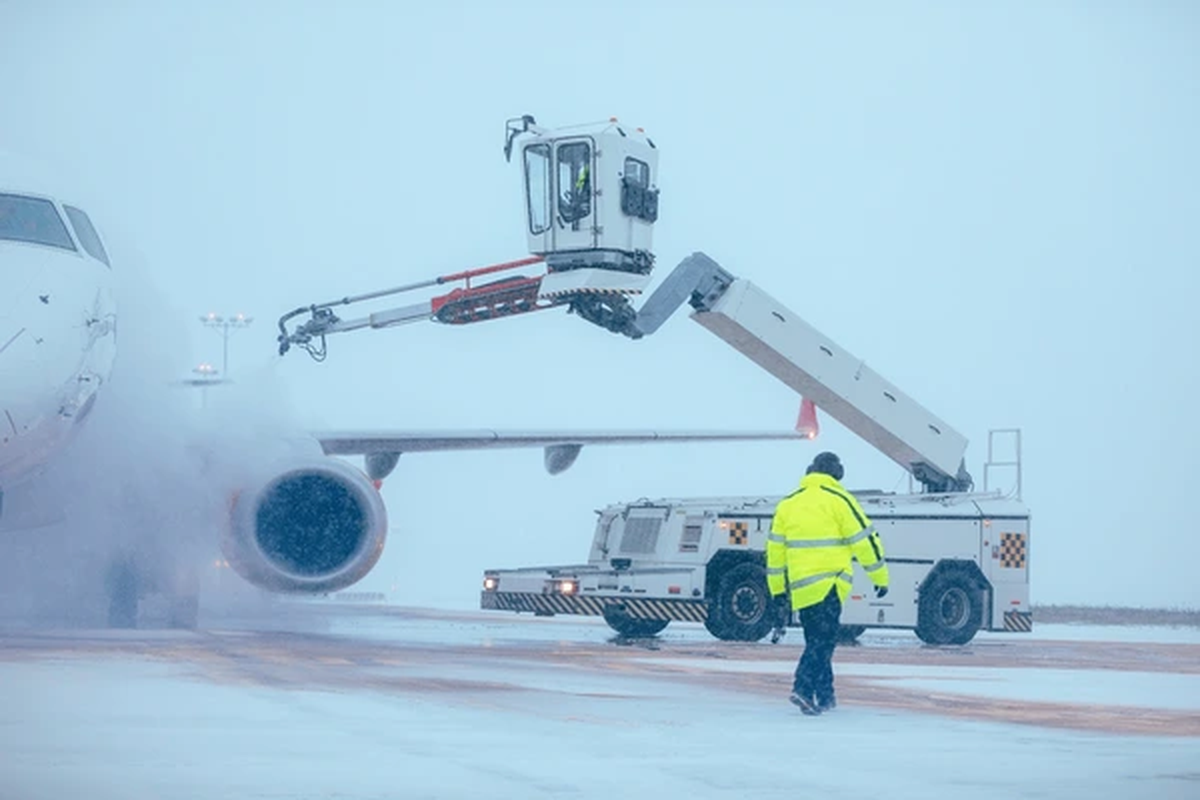
Winter storms pose unique challenges to aviation operations. Heavy snow accumulation limits runway access, while ice formation requires time-consuming de-icing procedures before aircraft can safely depart. Strong winds and blowing snow further complicate operations by lowering visibility and creating unstable landing conditions. Even when conditions improve, restoring normal service takes time because aircraft and flight crews must be repositioned across the system.
The ripple effect became evident as cancellations in the Northeast caused aircraft scheduled for later flights elsewhere in the country to remain grounded. Passengers traveling on unrelated routes encountered unexpected delays due to missing aircraft and disrupted crew schedules. Airlines typically reduce operations in advance of severe weather to minimize these cascading impacts, though widespread delays remain unavoidable when major hubs shut down simultaneously.
Beyond aviation, the storm disrupted ground transportation and daily life across much of the Northeast. Snow-covered highways slowed vehicle traffic, public transit systems operated on reduced schedules, and emergency crews worked continuously to clear roads and maintain essential services. Strong winds and heavy snow placed additional strain on power infrastructure, contributing to localized outages as utility crews responded throughout affected states.
Meteorologists expect gradual improvement once snowfall diminishes and winds weaken, but transportation experts note that airline recovery following large winter storms often takes several days. Clearing airport runways, repositioning aircraft, and reorganizing flight crews require coordinated efforts across multiple regions before normal schedules can resume.
The event serves as another reminder of how interconnected modern travel systems remain, where severe weather in one region can quickly disrupt mobility nationwide. As cleanup continues and airports reopen, airlines and passengers alike face the ongoing challenge of restoring stability after one of the winter’s most disruptive storms.