


A series of moderate earthquakes struck offshore areas of California and Mexico during a busy morning of seismic activity along the Pacific Rim, drawing renewed attention to one of the world’s most geologically active regions. Although the earthquakes occurred within hours of one another, seismologists say there is no evidence that the events were directly connected, instead describing them as separate earthquakes occurring within the highly active tectonic system known as the Pacific Ring of Fire.
According to seismic monitoring agencies, the earthquakes ranged from moderate magnitudes and were centered beneath the Pacific Ocean off the coasts of central California and southern Mexico near the Guatemala border. Because each earthquake occurred offshore and at depths that limited their impact on populated areas, there were no immediate reports of widespread damage, serious injuries or tsunami threats.
Scientists emphasize that while multiple earthquakes occurring on the same day can appear alarming, such activity is not unusual along the Ring of Fire, where shifting tectonic plates generate thousands of earthquakes each year. The region experiences constant geological movement as enormous sections of the Earth’s crust gradually collide, separate and slide past one another. Most of these earthquakes are relatively small and pass unnoticed, while others are large enough to be felt across surrounding communities.
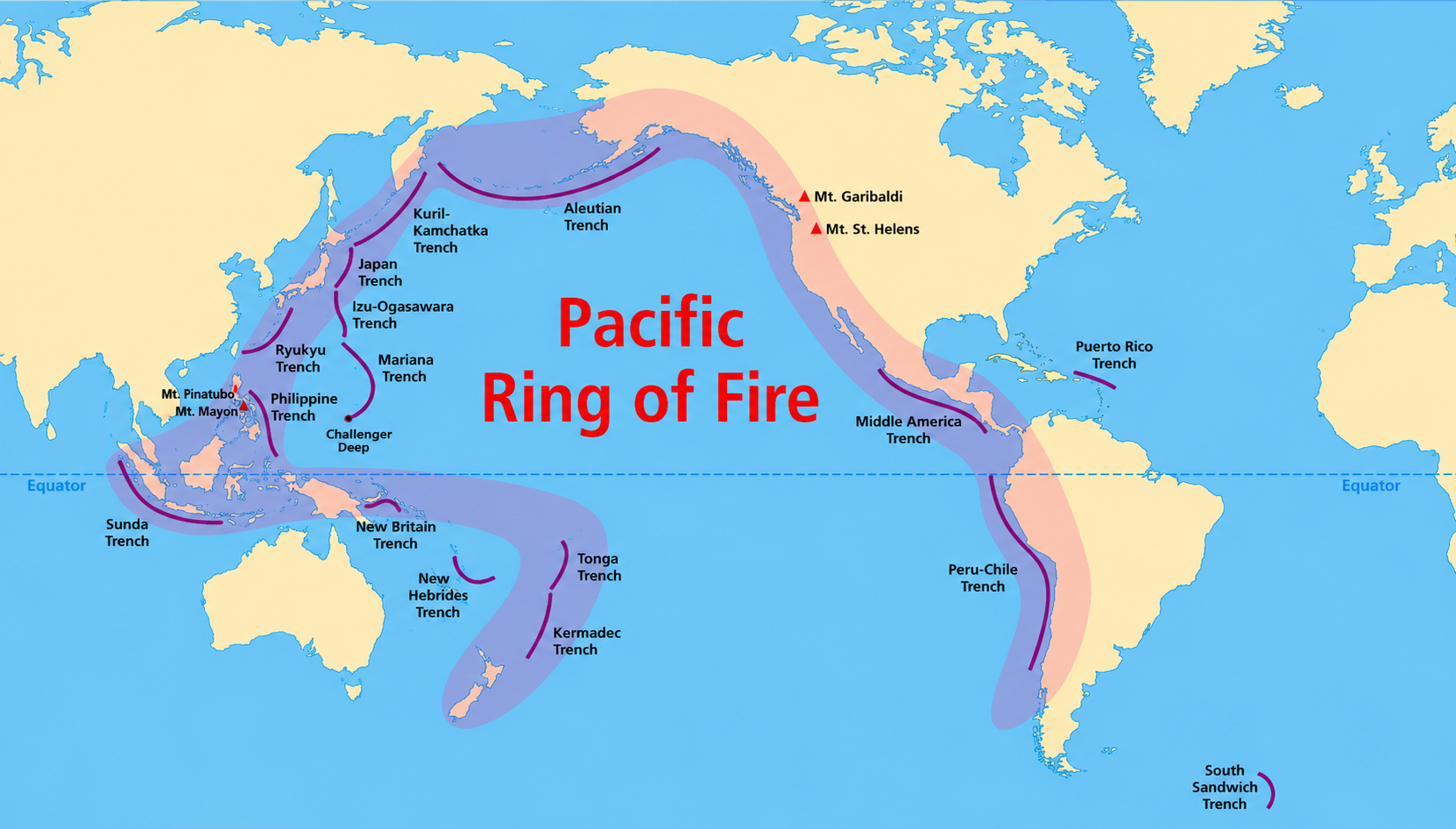
The earthquakes off southern Mexico occurred near the Middle America Trench, one of the most active subduction zones in the Western Hemisphere. There, the Cocos Plate is steadily moving beneath the North American Plate, building pressure that is periodically released through earthquakes. This process has produced some of North America’s most powerful earthquakes throughout recorded history and continues to make the region one of the world’s most closely monitored seismic zones.
The California earthquake occurred offshore along the complex plate boundary separating the Pacific Plate and the North American Plate. California is home to an extensive network of active faults extending both inland and beneath the Pacific Ocean. While the San Andreas Fault is the state’s best-known fault system, hundreds of additional faults contribute to California’s frequent seismic activity. The state records thousands of earthquakes annually, although only a small percentage are strong enough to be widely felt by residents.
Despite the close timing of the earthquakes, geologists caution against assuming that earthquakes separated by hundreds or even thousands of miles are automatically related. Earthquakes occurring within the same tectonic region often result from independent stress being released on different fault systems rather than one event triggering another. While scientists continue evaluating seismic data following each earthquake, no evidence has emerged indicating that the California and Mexico events were directly linked.
The morning’s activity also serves as another reminder of the immense geological forces shaping the Pacific Ring of Fire. Stretching roughly 25,000 miles around the Pacific Ocean, the Ring of Fire is responsible for approximately 90 percent of the world’s earthquakes and nearly three-quarters of its active volcanoes. The region extends from the western coasts of North and South America across Alaska and the Aleutian Islands before continuing through eastern Asia, Japan, the Philippines, Indonesia and New Zealand. Nearly every nation bordering the Pacific Ocean experiences some level of earthquake risk because of these active plate boundaries.
Southern Mexico has experienced significant seismic activity throughout the past year. Earlier this year, a powerful earthquake struck offshore near the Mexico-Guatemala border, producing numerous aftershocks and prompting temporary tsunami advisories before the threat subsided. Another major earthquake in southern Mexico earlier in the year resulted in structural damage and casualties, underscoring the region’s ongoing vulnerability to powerful seismic events.
Emergency management agencies continue monitoring both the California and Mexico regions for aftershocks, which commonly follow moderate and large earthquakes. While aftershocks may continue for days or weeks, experts stress that current science cannot accurately predict when or where the next major earthquake will occur. Likewise, the occurrence of several moderate earthquakes does not necessarily indicate that a larger earthquake is imminent.
For communities throughout the western United States, including Oregon, California and Washington, the latest earthquakes serve as another reminder that seismic hazards remain a permanent part of life along the Pacific Coast. Emergency preparedness officials continue encouraging households to maintain disaster supply kits, secure heavy furniture and appliances, identify safe locations inside homes and workplaces, and establish family emergency communication plans before an earthquake occurs.
Although the recent earthquakes caused little disruption, they illustrate the continuous movement occurring beneath the Pacific Ocean every day. As tectonic plates slowly reshape the Earth’s surface, scientists will continue closely monitoring seismic activity while emergency officials work to ensure communities remain prepared for whatever geological events may come next.