


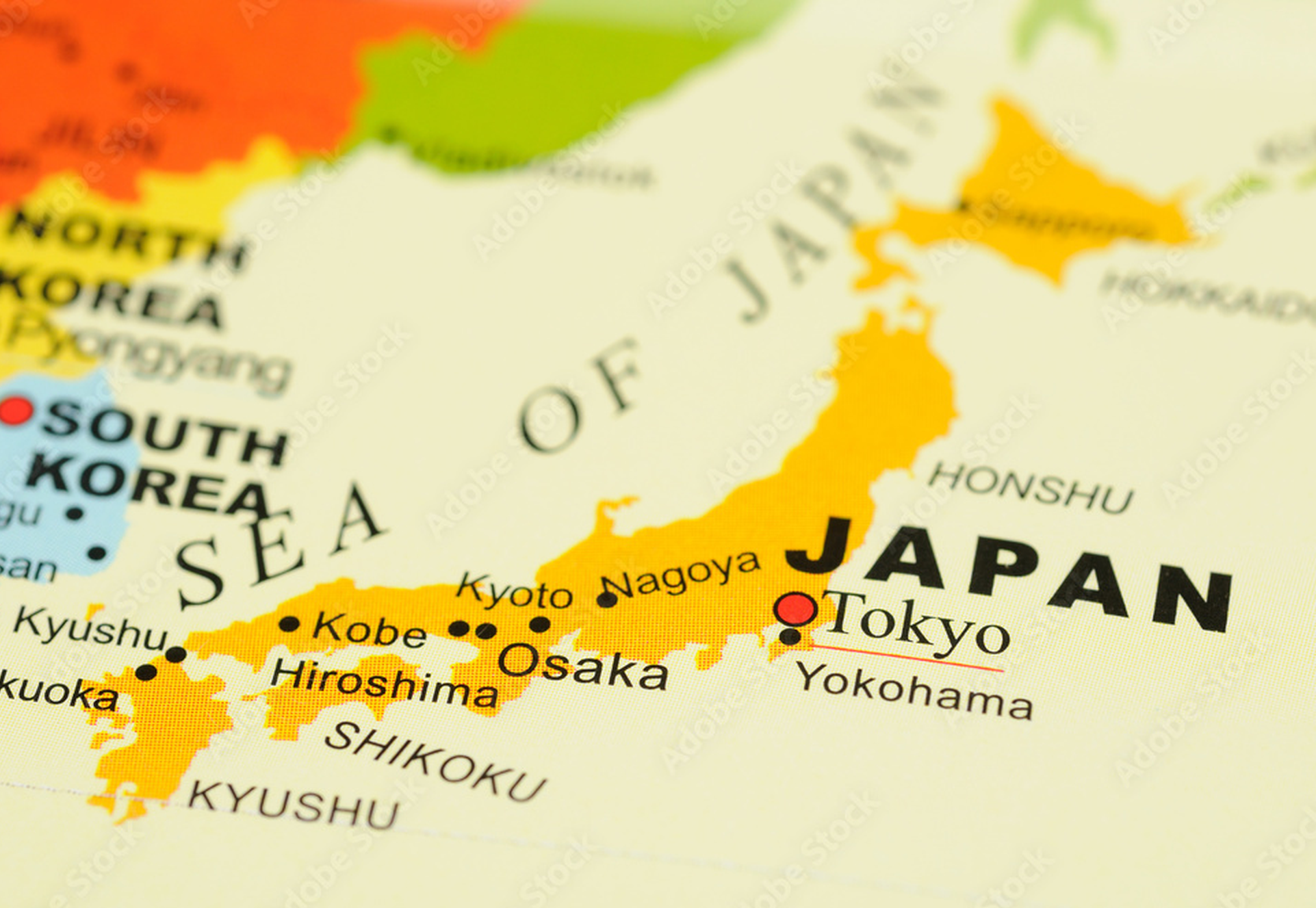
A powerful magnitude 7.4 earthquake struck Monday off the northeastern coast of Japan, prompting immediate tsunami warnings and advisories as authorities moved quickly to assess potential damage along vulnerable coastal regions. The earthquake, confirmed by the United States Geological Survey, originated beneath the Pacific Ocean, an area long recognized for intense seismic activity due to its position along the Pacific Ring of Fire.
The tremor was felt across portions of northeastern Japan, a region no stranger to large-scale earthquakes. Within minutes of detection, Japan’s meteorological and disaster response systems activated, issuing alerts to coastal communities and initiating precautionary evacuations. Residents in low-lying areas were urged to move inland or to higher ground as officials evaluated the potential for tsunami waves.
Japan’s response reflects years of investment in early warning infrastructure and public preparedness. The country maintains one of the most advanced seismic monitoring systems in the world, capable of detecting offshore earthquakes and issuing alerts in seconds. Transportation systems in affected regions were temporarily halted to allow for safety inspections, while ports and coastal operations paused amid uncertainty about wave activity.
Initial tsunami projections suggested the possibility of moderate wave activity, though the severity and impact of such waves depend on several factors, including the depth of the earthquake, the nature of the seafloor displacement, and coastal geography. Authorities treated the threat with caution, emphasizing the unpredictability of tsunami behavior and the need for residents to remain alert until advisories were lifted.
As of the latest reports, there have been no widespread indications of catastrophic damage or mass casualties. However, emergency services remain on standby as assessments continue. Aftershocks are expected following an earthquake of this magnitude, and even smaller secondary tremors can pose risks to infrastructure already stressed by the initial event.
The earthquake inevitably draws comparisons to the 2011 Tōhoku disaster, a far more powerful seismic event that triggered a devastating tsunami and caused extensive loss of life and damage. That event reshaped Japan’s approach to disaster preparedness, leading to stronger coastal defenses, expanded evacuation planning, and improvements in communication systems designed to reach the public quickly and clearly.
Beyond Japan, the earthquake was closely monitored by international agencies, including those in the United States, which routinely evaluate whether seismic events in the Pacific could generate transoceanic tsunami effects. In this case, experts indicated that any impact along the U.S. West Coast would likely be minimal or negligible, though monitoring remains ongoing as a precaution.
The broader significance of this event lies not only in its magnitude, but in the demonstration of how modern warning systems function under pressure. Japan’s rapid response highlights the importance of coordination between scientific agencies, government authorities, and the public. In regions where earthquakes are an ever-present risk, preparedness is not optional but essential.
For communities along the Pacific Rim, including parts of the United States, the earthquake serves as a reminder of shared geological realities. While events of this scale are not uncommon in the region, their potential consequences depend heavily on readiness and response. The systems designed to detect, warn, and protect are only as effective as the speed and clarity with which they are executed.
As officials continue to monitor the situation in Japan, the immediate focus remains on safety and verification. Tsunami advisories will remain in place until authorities are confident that the risk has passed. In the meantime, the event stands as another example of how quickly natural forces can shift and how critical it is for nations to remain prepared for what follows.