


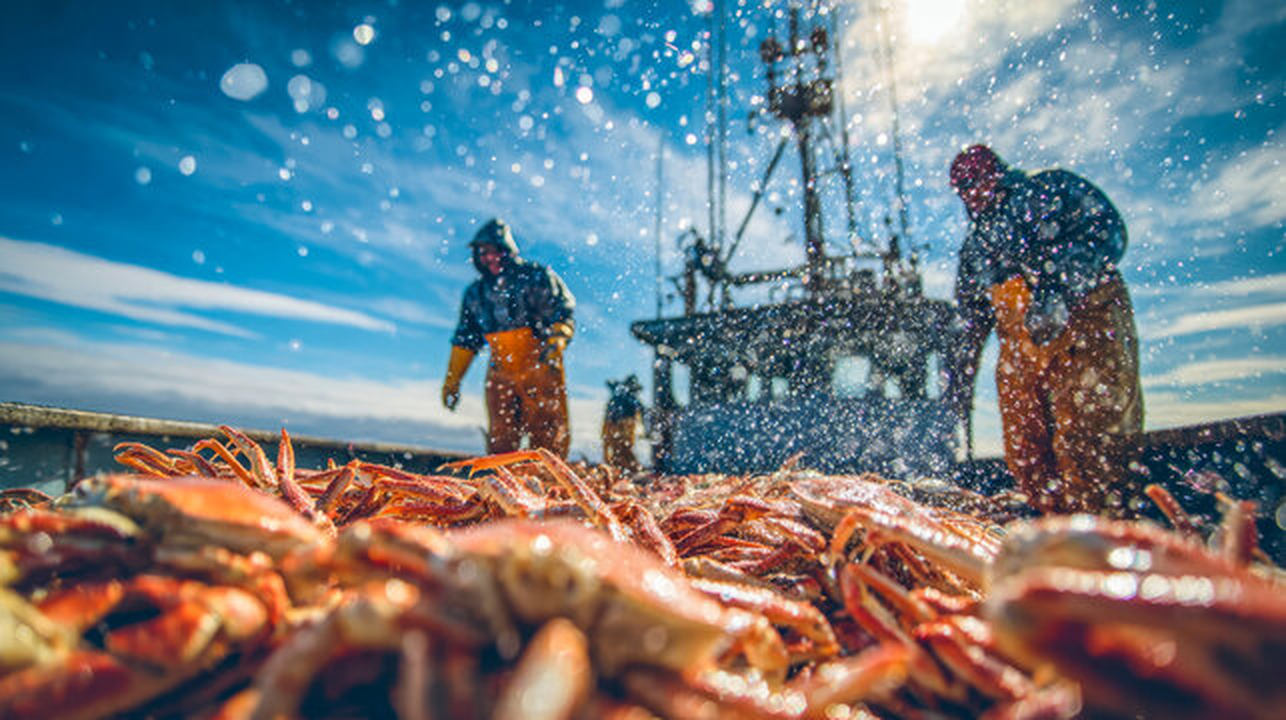
Oregon’s commercial Dungeness crab season is underway, but this year it has opened under unusual financial uncertainty that could ripple beyond coastal ports and be felt, at least indirectly, by residents of Southern Oregon. For the first time in many years, crabbers have begun setting gear and heading to sea without an agreed upon base price for their catch, leaving fishermen, processors, and regional markets navigating a season that lacks one of its traditional economic anchors.
The Dungeness crab fishery is one of Oregon’s most valuable single-species fisheries, generating tens of millions of dollars annually and supporting thousands of jobs across harvesting, processing, transportation, wholesale distribution, and retail sales. While most commercial crab landings occur in coastal communities such as Newport, Coos Bay, and Brookings, the economic effects extend inland. Southern Oregon businesses that rely on tourism, restaurants that feature crab as a seasonal draw, and consumers who purchase fresh or locally sourced seafood are all part of the broader economic ecosystem tied to the fishery.
Typically, crabbers and processors negotiate a starting dock price before the season opens. This price serves as a financial benchmark, giving fishermen a clearer picture of expected income and allowing processors and distributors to plan pricing, logistics, and supply chains. This season, however, those negotiations failed to produce an agreement before boats left the docks. As a result, crabbers are fishing without certainty about what they will be paid per pound when they deliver their catch.
For fishermen, this creates immediate financial risk. Fuel, bait, gear maintenance, and crew wages are upfront costs that must be paid regardless of the final price received. If dock prices settle lower than expected, profit margins could shrink or disappear altogether. For Southern Oregon residents, particularly those in coastal-adjacent counties like Curry and Josephine, that financial strain can translate into reduced spending in local economies, fewer seasonal hires, and tighter household budgets for families connected to the fishing industry.
The uncertainty also has implications for seafood prices at the consumer level. Without a stable starting price, processors may delay setting wholesale prices, and retailers may be cautious about committing to promotions or bulk purchases. For Southern Oregon grocery stores, fish markets, and restaurants, this could mean higher or more volatile prices for crab during the early part of the season, or limited availability until pricing stabilizes. Residents hoping to buy crab for family meals or special occasions may notice fluctuations compared to previous years.
From a broader financial perspective, the timing of the season matters. The Dungeness crab harvest traditionally peaks during the winter months, when tourism slows and coastal economies rely heavily on fishing income to sustain businesses through the off season. Any disruption in earnings can amplify economic stress, particularly at a time when many Oregon households are already grappling with higher costs for fuel, utilities, insurance, and food. Reduced income along the coast can indirectly affect inland areas as spending declines across the regional supply chain.
Southern Oregon is also home to transportation companies, distributors, and secondary processors that handle seafood moving north and south along the Interstate 5 corridor. Pricing uncertainty can complicate contracts and delivery schedules, potentially leading to delays or reduced volumes. While these impacts may not be immediately visible to consumers, they contribute to a less predictable business environment that can affect wages, hours, and long-term planning for regional employers.
Despite the uncertainty, the season’s opening still brings cautious optimism. Recent years have shown strong demand for Dungeness crab, and global markets continue to value West Coast product. If prices settle at sustainable levels once landings begin, economic impacts on Southern Oregon residents may be limited. However, the lack of a pre-season agreement underscores ongoing tensions within the industry and highlights how dependent regional economies remain on stable market conditions.
For Southern Oregon residents, the crab price dispute is not just a coastal issue. It serves as a reminder that local food systems, regional employment, and household budgets are interconnected. While most inland residents are unlikely to feel immediate hardship, the long-term health of Oregon’s fisheries plays a quiet but important role in the financial stability of the broader region.