


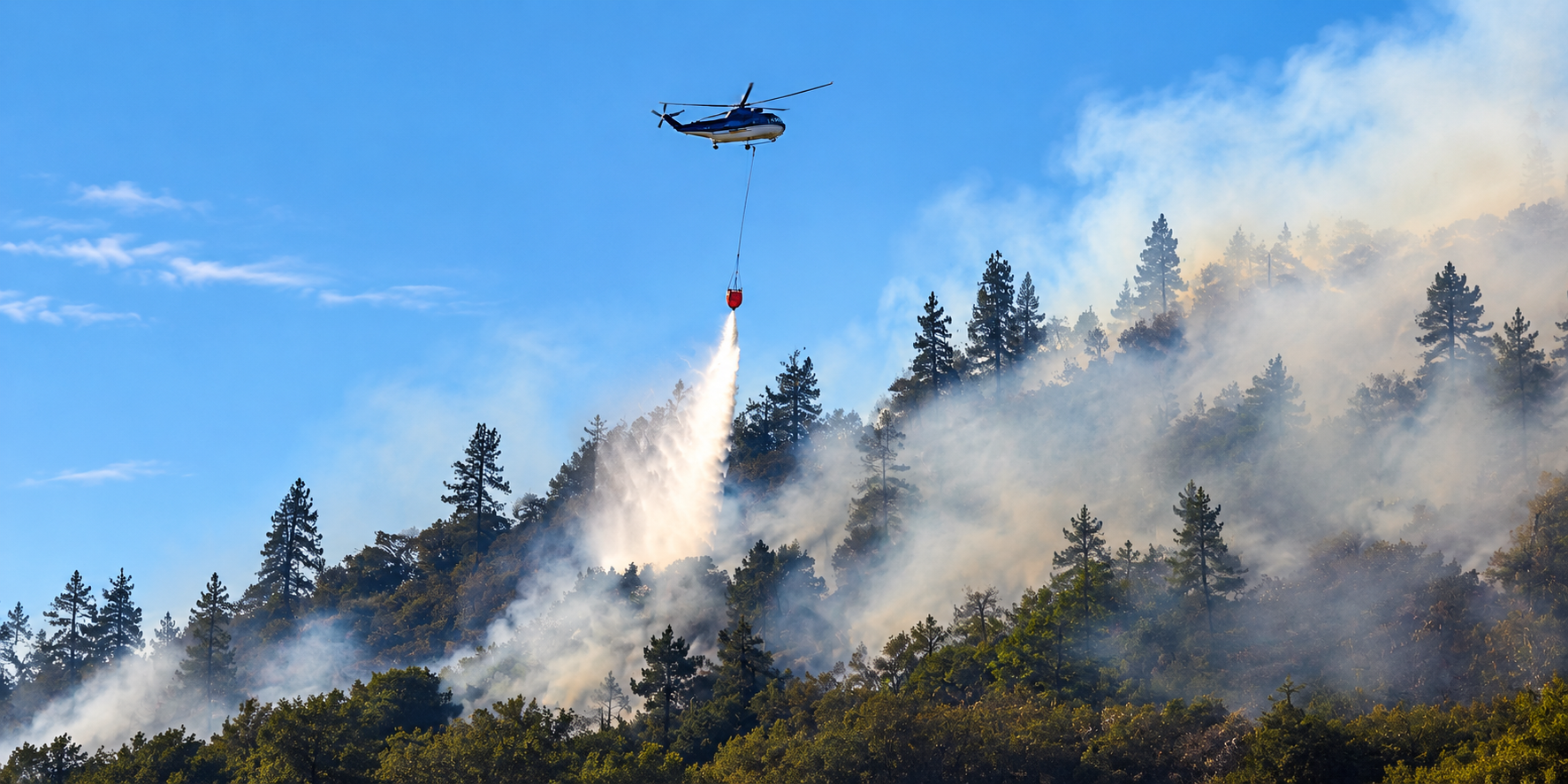
2026 wildfire season is rapidly becoming one of the most expensive in state history, forcing state fire agencies back to Salem for hundreds of millions of dollars in financial authority as suppression expenses mount and federal reimbursements trail behind the bills already arriving from fire crews, contractors and local departments.
For Southern Oregon, where wildfire has become an annual threat to communities, forests, businesses and transportation corridors, the financial decisions unfolding at the Capitol reach directly into the region’s ability to sustain an aggressive response when multiple fires compete for personnel, engines, aircraft and equipment.
By Aug. 20, approximately 2.5 million acres had burned across Oregon and statewide wildfire costs had reached an estimated $236.2 million. The financial trajectory has placed 2026 alongside the record-setting 2024 season, when the Oregon Department of Forestry ultimately recorded $317.6 million in gross expenses and $134.4 million in net costs.
ODF is now seeking approximately $77.9 million from two state emergency appropriations while requesting an additional $250 million in spending authority to process wildfire payments. The request includes $66.04 million from money reserved for natural disaster prevention, preparedness, response and recovery and another $11.83 million designated for fire protection expenses.
The $250 million request is not an additional appropriation of the same kind. It would increase ODF’s authority to process Other Funds expenditures associated with the 2026 season as invoices and reimbursements move through the state’s wildfire financing system.
By Aug. 7, ODF alone had accumulated approximately $160.3 million in gross wildfire expenses. Its net costs had reached $110.5 million, already exceeding the amount immediately available through the state’s designated natural disaster appropriation.
The Oregon State Fire Marshal is confronting its own mounting expenses. Agency documents prepared for September budget deliberations show approximately $25.1 million in estimated mobilization costs through July 27, covering conflagrations, immediate response and pre-positioning. OSFM is seeking $28 million from the September Emergency Board after receiving $7 million for the 2026 fire season earlier this year, bringing its proposed fire-season budget to $35 million.
The escalating expense reflects the scale of the response on the ground. At peak activity, Oregon was managing seven active conflagrations with four incident management teams and 37 task forces operating from southwestern Oregon through central and eastern portions of the state, exceeding peak activity recorded during 2024.
Low snowpack followed by repeated lightning outbreaks helped accelerate fire activity and suppression expenses during July. State financial analysts expect the season to continue through late September or early October, leaving the final cost unresolved while Oregon continues paying for active operations.
Southern Oregon occupies a particularly important position in that system. ODF protection districts and local fire agencies throughout Josephine, Jackson, Douglas, Klamath, Curry and neighboring counties form part of the statewide network that attacks new fires, supplies resources to larger incidents and participates in mobilizations when local capacity is exceeded. During periods of simultaneous fire activity, resources can be shifted across district and county boundaries as the state attempts to prevent new starts from becoming major incidents.
Federal assistance reduces some of Oregon’s ultimate financial exposure but does not eliminate the state’s immediate responsibility for the bills.
Fire Management Assistance Grants administered through the Federal Emergency Management Agency can reimburse as much as 75 percent of eligible firefighting expenses for qualifying incidents. Those expenses can include equipment, supplies, field camps and costs associated with mobilizing and demobilizing resources.
Oregon has secured multiple federal fire assistance grants this season, including federal authorization for the Wrights Spring Fire in Klamath County and on Klamath Tribes land. At the time federal assistance was requested, the fire threatened homes around Sprague River and Chiloquin along with utility, communications, railroad, recreation and cultural resources.
Federal approval, however, does not place reimbursement money immediately into Oregon’s accounts. Claims must be documented, reviewed and processed, and federal reimbursements can take months or longer to reach the state.
That delay was a major component of Oregon’s 2024 wildfire financial crisis. Contractors and other vendors waited months for payment while state agencies carried enormous suppression expenses and awaited reimbursement. Oregon eventually convened a special legislative session to stabilize wildfire finances and provide money necessary to pay outstanding obligations.
The experience changed the way the state finances major fires. Under legislation enacted in 2025, ODF can borrow from the Oregon State Treasury to cover suppression costs while appropriations and federal reimbursements remain outstanding. ODF has submitted documentation outlining the need for Treasury financing sufficient to maintain agency operations and vendor payments through December.
The mechanism is designed to prevent the state’s accounting timetable from becoming a financial burden for the businesses and people already performing the work. Wildland firefighting contractors, equipment operators, aviation companies and other vendors incur payroll, fuel, maintenance and operating expenses while deployed. Delayed state payments can therefore move the financial pressure from Salem directly onto private companies and local organizations waiting to be compensated.
That concern carries particular weight in Southern Oregon, where private contractors and local fire organizations are deeply embedded in the regional wildfire response system. The availability of engines, heavy equipment, aircraft and trained personnel can become critical when lightning storms produce multiple starts or major incidents exhaust local resources.
The financial effects of wildfire also extend beyond suppression.
Wildlife areas, hunting access, recreation, timberlands, ranches and public lands have experienced closures or restrictions during the 2026 season. The Oregon Department of Fish and Wildlife has offered controlled-hunt preference-point reinstatement in areas where wildfire damage or closures substantially affected hunting opportunities. The agency evaluates the amount of a hunt area burned, access conditions, habitat damage and the length of the remaining hunting season when making those determinations.
Those disruptions carry economic consequences in rural communities where hunting, fishing, camping, forestry and outdoor recreation contribute to seasonal commerce. They also create costs that are not necessarily reflected in the state’s headline suppression totals, including damaged habitat, rehabilitation work, lost recreational access and recovery on burned public lands.
Oregon’s Emergency Board is scheduled to consider ODF’s request Thursday, Sept. 10. State fiscal analysts have recommended approval of the department’s $66.04 million natural-disaster allocation, $11.83 million fire-protection allocation and $250 million increase in expenditure authority.
The numbers before the state are interim figures rather than a final accounting. Fires remain active, invoices continue arriving and reimbursement claims will continue moving through state and federal systems long after crews leave the fire lines.
What is already apparent in the financial records is the extraordinary scale of 2026. Oregon entered the season with a system redesigned after the payment failures of 2024, only to encounter another year in which suppression expenses accelerated faster than immediately available fire funding.
For Southern Oregon fire districts, contractors and communities surrounded by some of the state’s most fire-prone landscapes, the decisions now moving through Salem will help determine whether Oregon can continue financing an extended wildfire response without repeating the delayed payments that followed its previous record season. The flames determine where the emergency begins. The increasingly expensive task facing the state is making certain the financial system can keep pace with the people sent to fight them.