


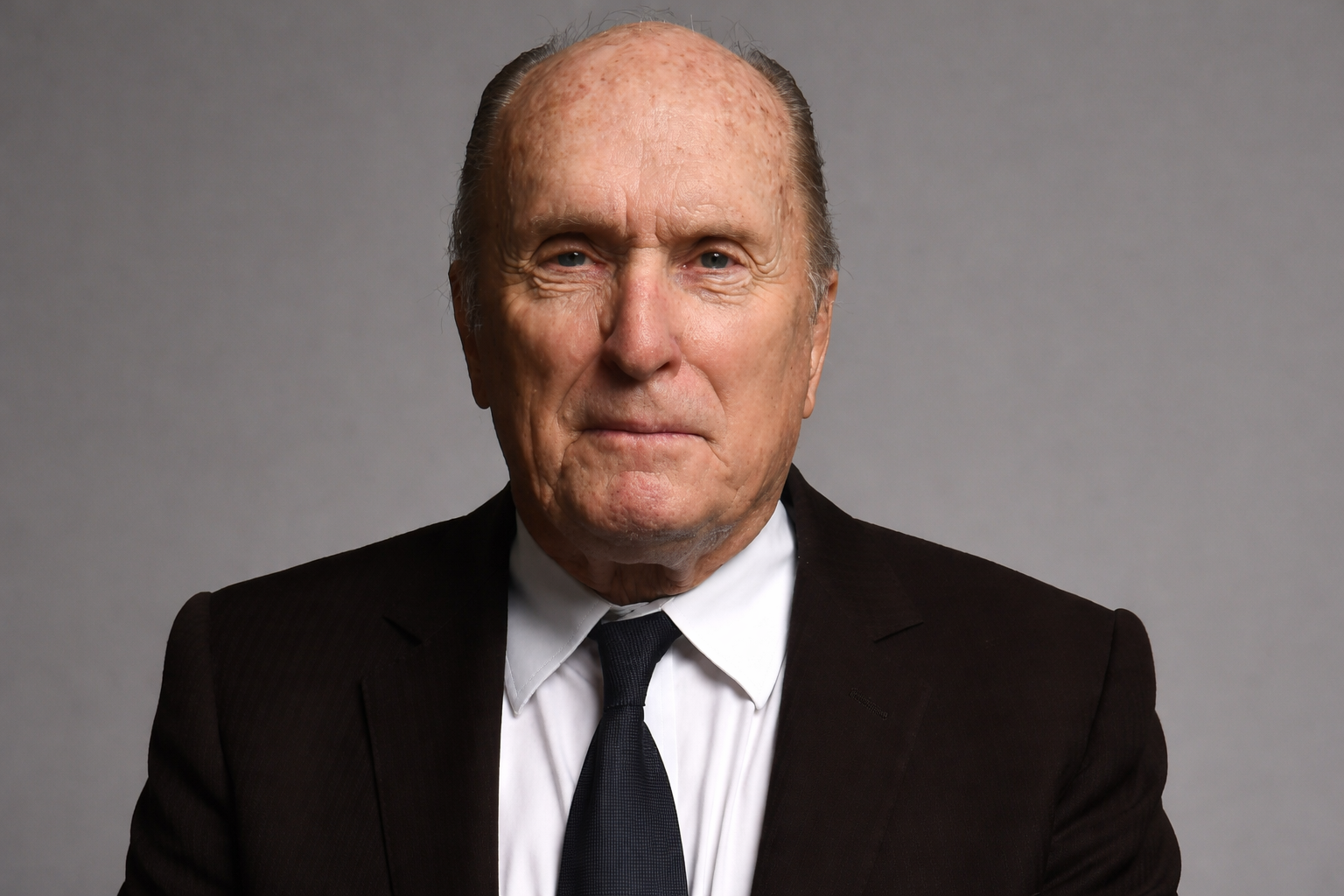
The long and remarkable career of Robert Duvall has come to a close. The Academy Award–winning actor, whose performances shaped some of the most enduring films in American cinema, has died at the age of 95. News of his passing was confirmed by family representatives, who reported that he died peacefully at home on February 15, 2026.
For more than six decades, Duvall stood as one of Hollywood’s most respected and disciplined performers. While many actors chase fame, Duvall built something more enduring: a body of work defined by restraint, authenticity, and emotional precision. His characters rarely sought the spotlight, yet they commanded it.
Born on January 5, 1931, in San Diego, California, Duvall was raised in a military family and later served in the United States Army before pursuing acting. He studied at the Neighborhood Playhouse School of the Theatre in New York, where he trained alongside other future luminaries of stage and screen. From the outset, his approach was rooted in craft rather than celebrity.
Duvall’s film debut came in 1962 with his portrayal of Boo Radley in To Kill a Mockingbird, a performance that required him to communicate almost entirely without dialogue. It set the tone for a career built not on theatrics, but on subtlety. In the 1970s, he became widely known for his role as Tom Hagen, the calm and calculating consigliere in The Godfather and its sequel. The performance remains one of the most memorable supporting roles in American film history and helped anchor one of cinema’s most celebrated franchises.
He followed that success with another iconic portrayal in Apocalypse Now, playing Lieutenant Colonel Bill Kilgore. The role showcased his ability to balance intensity and dark humor within a character shaped by the contradictions of war. Over the decades, Duvall demonstrated remarkable range, moving effortlessly between westerns, crime dramas, political thrillers, and character-driven independent films.
In 1984, Duvall won the Academy Award for Best Actor for his role in Tender Mercies, portraying a washed-up country singer seeking redemption. The performance was widely praised for its quiet depth and emotional honesty, qualities that defined much of his work. Throughout his career, he received seven Academy Award nominations, as well as multiple Golden Globe Awards, Emmy Awards, and a BAFTA. He was also honored with the National Medal of Arts in recognition of his contribution to American culture.
Despite his stature, Duvall largely avoided the trappings of Hollywood celebrity. He was known for preferring rural life and maintaining a relatively private existence outside the spotlight. Colleagues frequently described him as disciplined, thoughtful, and deeply committed to authenticity in storytelling. Directors valued his instinctive understanding of character, and younger actors often cited him as a model of professionalism.
Duvall continued acting well into his later years, appearing in both independent productions and major studio films. His longevity in the industry reflected not only talent but endurance, adaptability, and a willingness to take on complex roles at every stage of life.
He is survived by his wife, Luciana Pedraza Duvall. Though he had no children, his legacy lives on through an extraordinary catalogue of performances that continue to influence actors, filmmakers, and audiences around the world.
Robert Duvall’s career was never about spectacle. It was about substance. In an era when fame often overshadows craft, he remained a steadfast example of what disciplined artistry can achieve. His work will endure as a benchmark of excellence in American film, a reminder that sometimes the quietest performances leave the loudest and most lasting impact.