


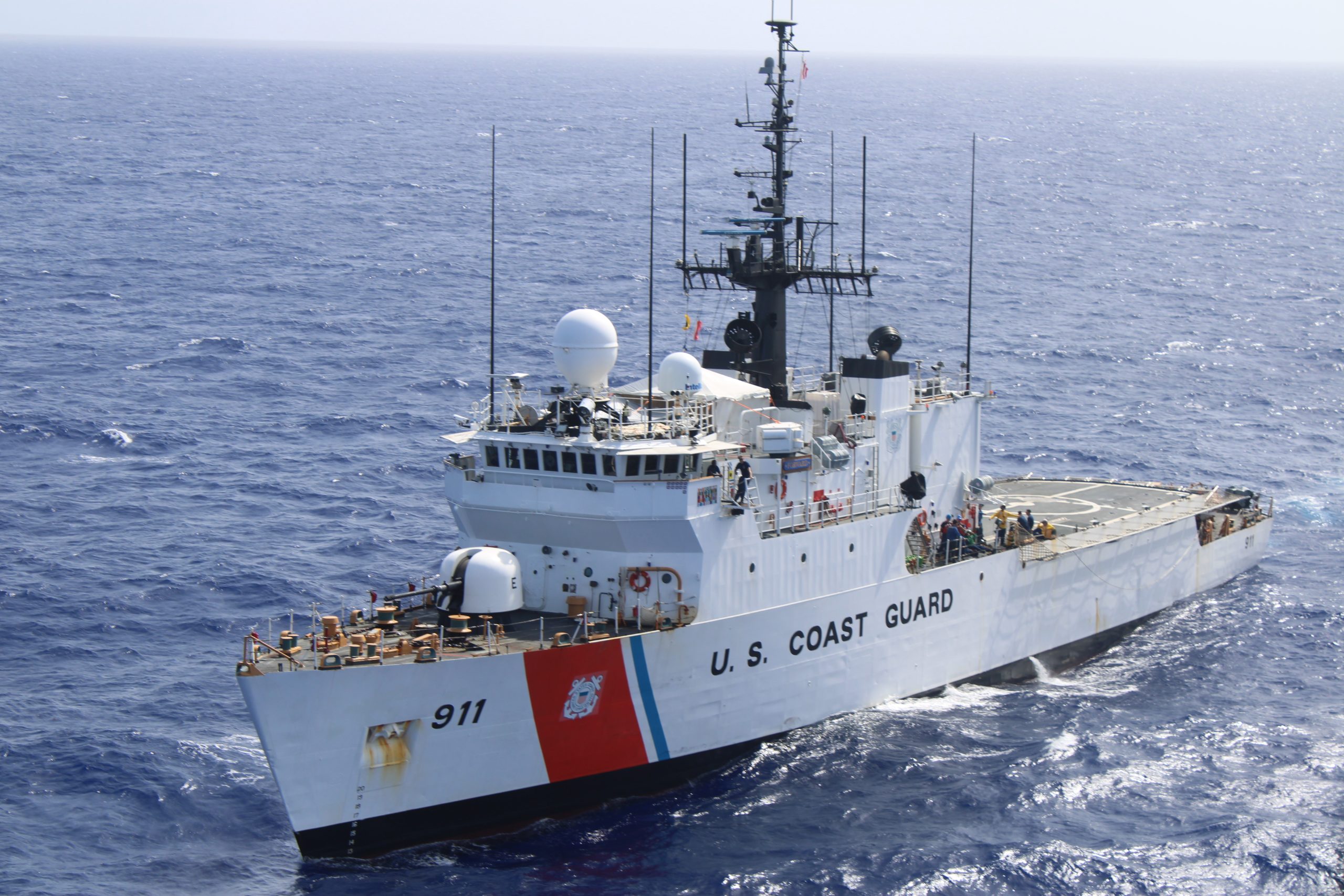
A recent maritime drug seizure in the Eastern Pacific Ocean is drawing renewed attention to the scale, sophistication, and evolving nature of narcotics trafficking operations targeting the United States. Federal authorities confirmed that more than 4,500 pounds of cocaine, with an estimated street value of $34 million, were intercepted during a coordinated operation involving aerial surveillance and a Coast Guard cutter operating off the coast of Ecuador.
According to official accounts, the operation began when a U.S. maritime patrol aircraft identified a suspicious vessel traveling through a known trafficking corridor. The vessel’s crew was observed discarding packages into the ocean, a tactic frequently used by traffickers attempting to eliminate evidence once they suspect detection. A nearby Coast Guard cutter, supported by a helicopter aircrew and pursuit boats, responded to the scene and successfully recovered approximately 4,510 pounds of cocaine from the water.
While the seizure itself represents a measurable disruption to the flow of illegal narcotics, the classification of the vessel involved has drawn particular attention. Authorities have described the operation as involving suspected “narco-terrorist” elements, a term used in cases where drug trafficking networks are believed to operate with paramilitary structures or maintain connections to violent or destabilizing activities. The designation reflects a broader shift in how certain transnational criminal organizations are being viewed by U.S. enforcement agencies, particularly when their operations extend beyond traditional smuggling into areas that raise national security concerns.
This incident is one of many tied to a broader federal initiative aimed at intercepting narcotics shipments before they reach North American shores. Since its launch, ongoing operations in the Eastern Pacific have resulted in the seizure of more than 215,000 pounds of cocaine and the detention of over 160 suspected traffickers. These figures illustrate the sheer volume of illicit drugs moving through maritime routes and the persistent demand that drives the trade.
The Eastern Pacific remains one of the most heavily trafficked corridors for cocaine shipments originating in South America. Vessels departing from countries such as Colombia and Ecuador often travel along established maritime routes toward Central America and Mexico before drugs are transported overland into the United States. Traffickers rely on a range of methods, including high-speed “go-fast” boats and semi-submersible vessels designed to evade radar and aerial detection. The use of coordinated dumping and retrieval strategies, as seen in this case, further underscores the adaptability of these networks in response to enforcement pressure.
Recent developments suggest that U.S. counter-drug efforts in the region are becoming more assertive. In addition to traditional interdiction and arrest operations, there have been instances in which suspected trafficking vessels were disabled or destroyed when deemed a threat or when noncompliance escalated during encounters at sea. This shift reflects a broader emphasis on disrupting trafficking operations at their source, rather than allowing shipments to progress closer to U.S. territory.
Despite these efforts, the scale of recent seizures indicates that maritime trafficking remains a resilient and highly organized enterprise. Large-volume interceptions, including record-setting hauls in recent years, suggest that even substantial losses are often absorbed by trafficking networks as part of the cost of doing business. As a result, federal agencies continue to prioritize intelligence-driven operations, international coordination, and persistent surveillance across key maritime zones.
The implications of these interdictions extend well beyond the waters where they occur. By targeting shipments early in their transit, authorities aim to reduce the availability of illicit drugs within the United States and disrupt the financial networks that sustain trafficking organizations. However, the ongoing volume of seizures also highlights the challenges faced by enforcement agencies in curbing a global trade that continues to evolve in both scale and complexity.
As maritime operations intensify, the latest seizure serves as a reminder that the front lines of the nation’s drug enforcement strategy are often far from its borders, unfolding across vast stretches of ocean where surveillance, speed, and coordination determine the outcome.