


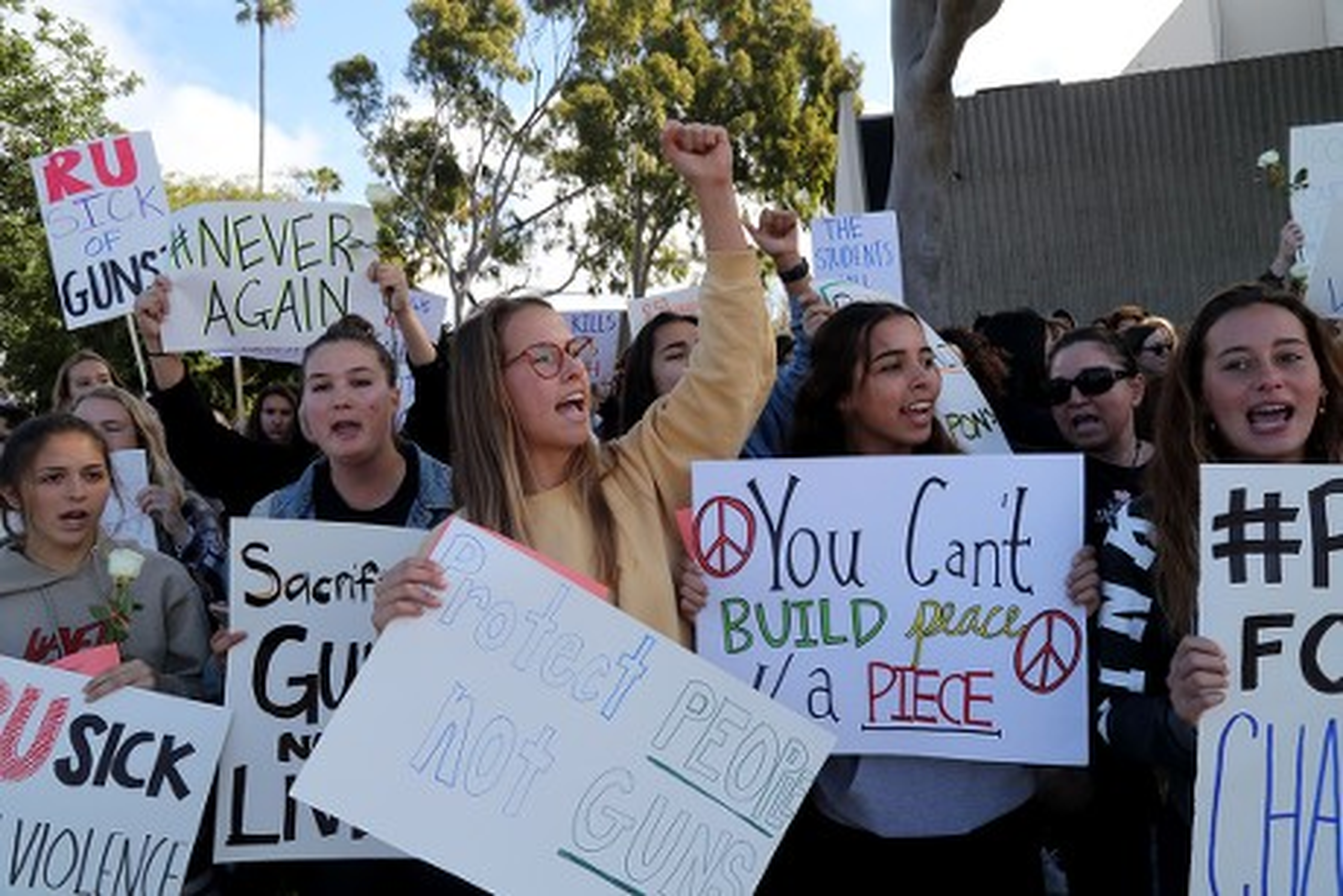
A wave of student walkouts protesting federal immigration enforcement policies has spread across the United States, leading to hundreds of suspensions, increased administrative oversight, and renewed debate over how public schools should respond when political activism intersects with classroom expectations.
The demonstrations, largely organized by students through social media platforms, have unfolded in multiple states including Virginia, California, Texas, and Colorado. In many cases, students left school campuses during instructional hours to participate in coordinated protests opposing Immigration and Customs Enforcement operations and broader federal immigration policies. What began as localized demonstrations quickly evolved into a national trend, drawing attention from educators, lawmakers, and law enforcement agencies.
One of the most widely reported incidents occurred in Virginia, where more than 300 students at a single high school were suspended after leaving campus without authorization during a protest. Similar disciplinary actions have followed elsewhere as school districts enforce attendance policies that classify unsanctioned walkouts as truancy or safety violations. Administrators across the country have emphasized that while students retain the ability to express political views, leaving campus during school hours creates liability concerns and disrupts instructional schedules.
The protests reflect a growing level of political awareness among younger Americans, particularly on immigration issues that directly affect classmates, families, and local communities. Students participating in the walkouts have framed the demonstrations as acts of solidarity with immigrant populations and as efforts to draw national attention to enforcement practices. The decentralized nature of the movement has allowed protests to appear almost simultaneously in distant regions, signaling the influence of digital communication networks in organizing youth activism.
School officials now find themselves navigating a complex balance between maintaining order and respecting civic participation. District leaders have increasingly coordinated with local law enforcement not to suppress demonstrations but to manage crowd safety when large numbers of students gather or leave campuses at once. Traffic disruptions, concerns about student supervision, and the possibility of counterprotests have prompted schools to adopt stricter monitoring procedures during periods of anticipated activism.
State governments have also begun responding. In Texas, state authorities launched inquiries into whether certain districts appropriately enforced attendance rules during walkouts. Political leaders in some states have warned that repeated disruptions could carry financial consequences for school systems if instructional time is significantly affected. These developments have added another layer of pressure on administrators already facing heightened public scrutiny.
The controversy highlights an enduring tension within American education: public schools serve as both learning environments and civic spaces where young people first engage with political issues. Student protests are not new, but the scale and speed of the current demonstrations have placed administrators in unfamiliar territory. Unlike previous generations of activism organized through local groups or student clubs, today’s walkouts can mobilize hundreds of participants within hours.
Education experts note that districts nationwide are adopting varied responses. Some schools are attempting to create structured forums for student expression that allow participation without leaving campus, while others are reinforcing disciplinary policies to discourage future walkouts. The differing approaches underscore the absence of a unified national standard for handling political demonstrations within K–12 education.
Beyond disciplinary outcomes, the walkouts have sparked broader conversations about civic engagement among young Americans. Supporters view the protests as evidence of democratic participation and social awareness, while critics argue that academic responsibilities should remain the primary focus during school hours. Regardless of perspective, the events have pushed immigration policy debates into classrooms and school hallways across the country.
As additional demonstrations are anticipated in the coming weeks, many districts remain on heightened alert, monitoring social media activity and communicating expectations to families and students in advance. The situation continues to evolve as educators attempt to preserve classroom stability while responding to a generation increasingly willing to express political convictions in public spaces.
What began as scattered protests has become a national education issue, illustrating how deeply federal policy debates can influence local schools. The ongoing walkouts reveal a changing landscape in which student activism, institutional responsibility, and political controversy now intersect on campuses from coast to coast.