


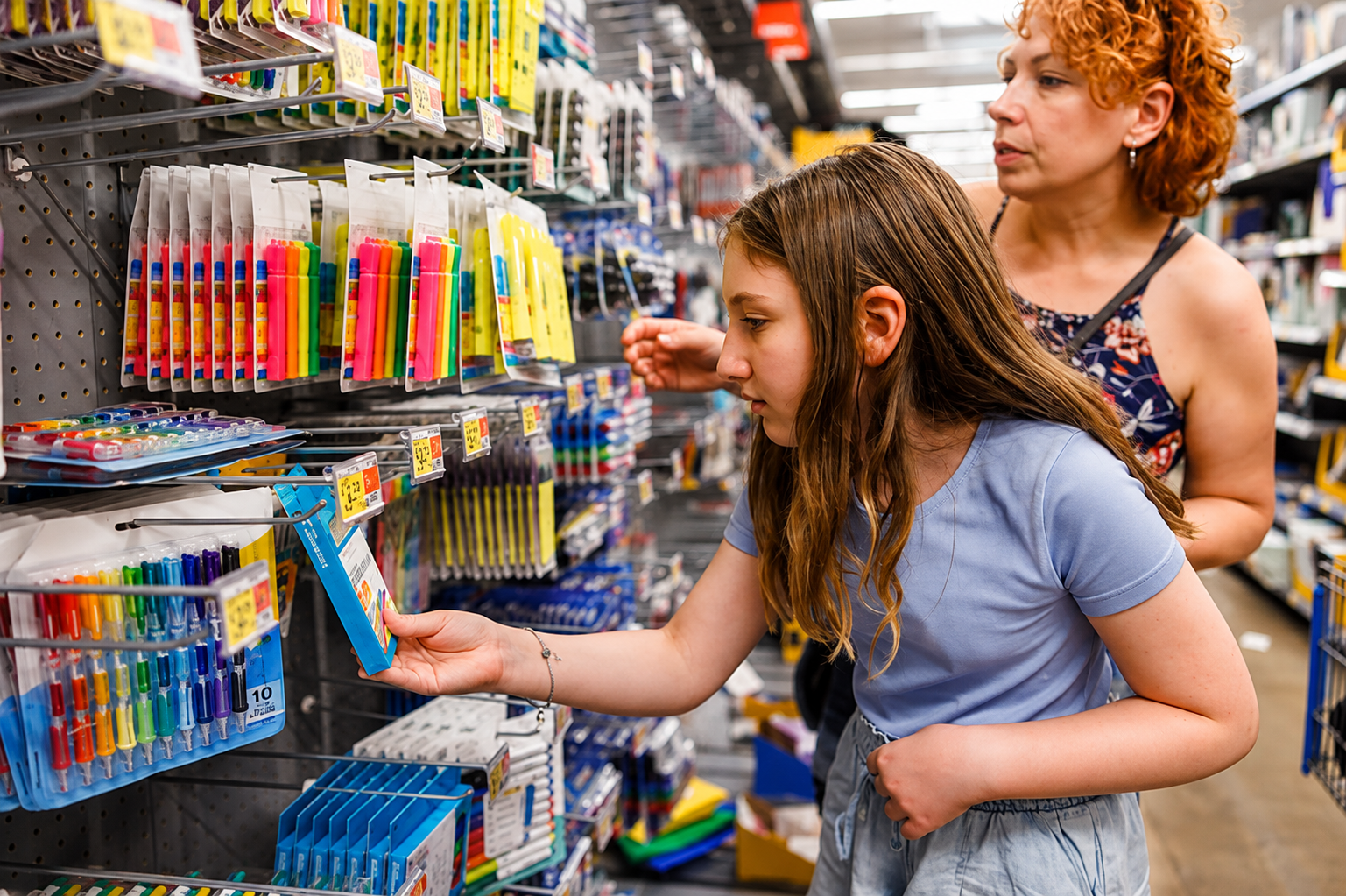
With the first day of school rapidly approaching across Southern Oregon, families who have not finished back-to-school shopping are entering one of the shortest but potentially useful bargain-hunting periods of the season. The calendar may be running down, but retailers are still competing for families purchasing clothing, shoes, backpacks, notebooks, classroom supplies and electronics, leaving opportunities to control costs without sacrificing the necessities students need.
The financial stakes are considerable. National Retail Federation estimates cited in current retail reporting put expected 2026 spending by families with children in kindergarten through 12th grade at an average of approximately $864. Total K-12 back-to-school spending nationwide is projected at roughly $43.3 billion. College students and their families face substantially larger expenses, with projected spending averaging more than $1,400 per student when electronics, furnishings, clothing and other college necessities are included.
Those numbers do not mean every Southern Oregon household needs to spend anywhere close to the national average. In fact, families shopping during the final days before classes begin can benefit from a simple financial strategy: separate what a student actually needs immediately from what can wait until September.
Pens, pencils, notebooks, folders and required classroom materials should take priority. A new wardrobe, multiple pairs of shoes, extra accessories and replacement items that remain usable from last year can be purchased gradually. Waiting can also prevent families from buying supplies that teachers ultimately do not require.
Online shopping remains one of the quickest ways to compare prices before leaving home. Amazon continues to feature back-to-school merchandise across school supplies, backpacks, electronics and classroom necessities, and current national back-to-school promotions have included discounts across several of those categories. For Southern Oregon households, however, the advertised price should never be the only number considered. Delivery dates have become increasingly important this late in August.
An inexpensive backpack arriving after school begins may provide less practical value than one costing several dollars more that can be purchased locally today. Families ordering online should check the promised delivery date before submitting an order, particularly for necessities needed on the first morning of school.
Temu and other marketplace-style shopping platforms can provide another avenue for inexpensive pencil cases, organizers, accessories, clothing and miscellaneous supplies. The same basic rule applies: compare the final checkout price, estimated delivery date, product specifications, customer reviews and return terms rather than assuming the lowest advertised price represents the best overall purchase. Extremely inexpensive merchandise can cease being a bargain when it arrives too late, does not meet the required dimensions or must be replaced quickly.
Clothing offers families considerably more flexibility. Students generally do not need an entirely new wardrobe before the first day. Purchasing several practical outfits now and filling remaining needs later can spread the expense across multiple pay periods while allowing parents to take advantage of later markdowns.
Southern Oregon shoppers also have an advantage that families in most states do not: Oregon has no general state sales tax. There is no special back-to-school sales-tax holiday because ordinary retail purchases in Oregon are already made without a statewide sales tax. On a large clothing, electronics or school-supply purchase, that can make the final checkout price particularly competitive compared with purchases made in states that impose sales taxes.
Off-price stores can be especially useful for families who still need clothing and shoes quickly. Ross Dress for Less and T.J. Maxx both operate in Grants Pass, giving Josephine County families local options for last-minute shopping. Their inventories typically change frequently, making them better suited to flexible shoppers than families searching for one exact brand, color or style.
That distinction can work in a family’s favor. Instead of entering an off-price retailer looking for one particular $50 shirt, shoppers can establish a maximum price and look for the best available option within that budget. The same approach works for jeans, athletic clothing, shoes, jackets and backpacks. Families traveling to Medford have additional off-price and major retail choices, although the cost of fuel and the additional travel should be considered before making a special trip solely to save a few dollars.
Traditional discount retailers remain valuable for basic classroom supplies because inexpensive individual items can sometimes beat the price of elaborate bundled school-supply packages. Current retail listings illustrate how wide the price differences can be. Complete supply kits are available at various price points, while individual pencils, notebooks and other basics continue to sell for only a few dollars. A preassembled kit may offer convenience, but it is not automatically the least expensive choice if half of its contents are unnecessary.
The most effective shopping tool may therefore be the school supply list itself. Families can place the required list beside whatever remains from last year and physically check the house before buying anything. Scissors, rulers, pencil boxes, calculators, binders, reusable water bottles and backpacks frequently survive more than one school year. Every reusable item effectively becomes a 100 percent discount.
Electronics deserve greater caution because the dollar amounts are larger. A laptop advertised at a substantial percentage discount is not a savings if the student’s school already provides a Chromebook or if the device does not meet course requirements. Families considering computers, calculators, headphones or tablets should verify school requirements before purchasing and compare model numbers rather than simply comparing brand names.
Back-to-school shopping also presents an opportunity to teach older students practical household economics. Giving a student a fixed clothing or supply budget turns price comparison into a real-world exercise. Choosing between a $60 pair of shoes and a $35 alternative becomes easier to understand when the remaining $25 can be used for another necessary item.
Parents using credit cards or buy-now-pay-later services should also distinguish between a discount and deferred spending. Saving $20 on merchandise provides little financial benefit if carrying the balance ultimately generates comparable interest or fees. For families working within a tight August budget, purchasing the necessities first and postponing optional purchases can be more economical than financing an entire back-to-school shopping trip.
Receipts should be kept until the school year is underway. Teachers sometimes modify supply requirements after students arrive, clothing sizes can prove inconsistent between manufacturers, and online merchandise may look considerably different when it reaches the doorstep. Keeping packaging and receipts intact until an item is confirmed useful preserves the ability to return unnecessary purchases.
There is still enough time for Southern Oregon families to shop carefully rather than simply shop quickly. Online retailers can fill gaps when delivery dates cooperate, while Ross, T.J. Maxx and other Rogue Valley retailers provide immediate options for families who cannot wait for a package to arrive.
The most economical back-to-school cart is not necessarily the one carrying the cheapest merchandise. It is the one containing the fewest unnecessary purchases. Checking what is already at home, following the school’s actual supply list, comparing online and local prices, delaying nonessential clothing purchases and setting a firm household budget can cut the cost of returning to the classroom even when the first bell is only days away.