


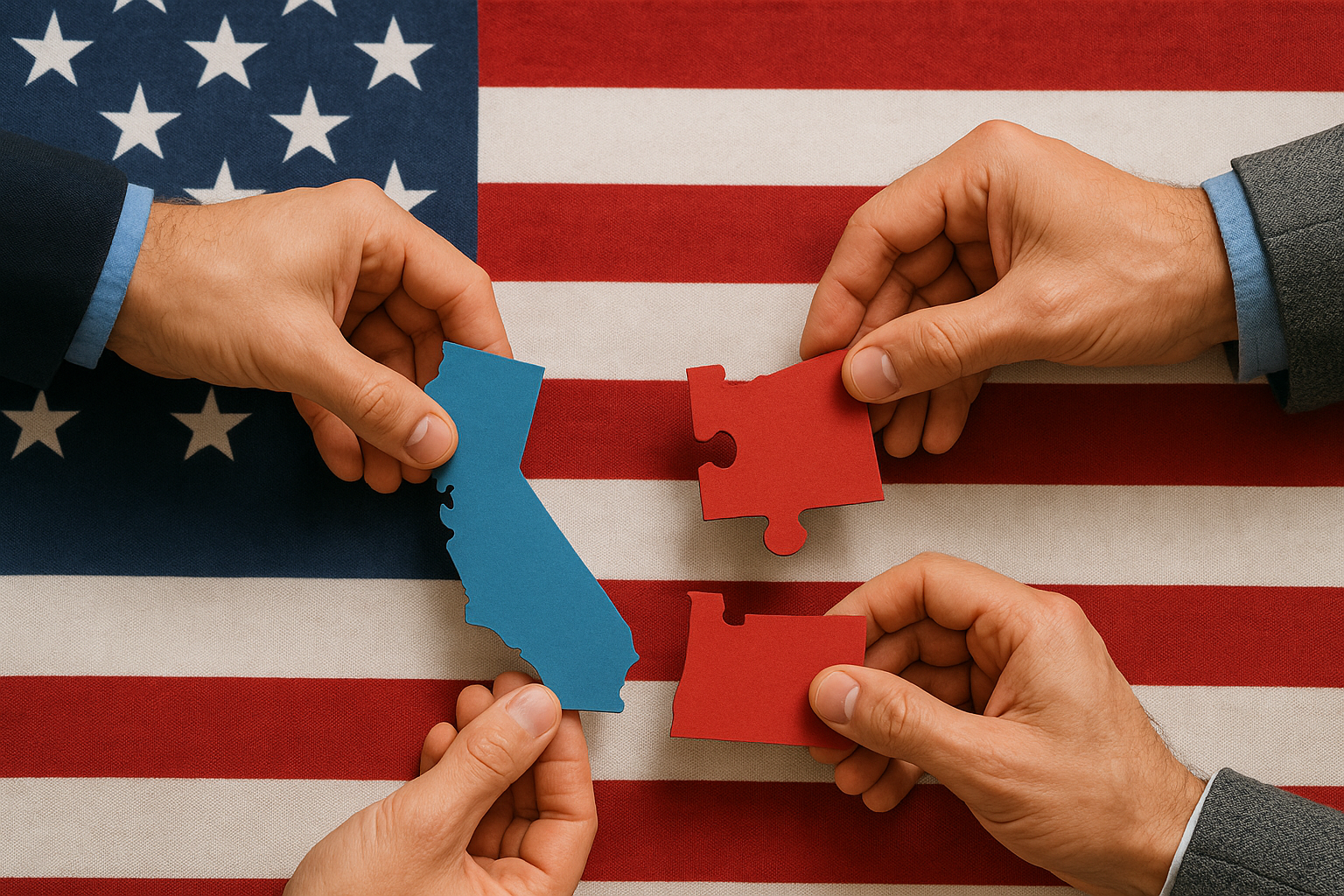
Oregon has joined Washington and California in creating a regional health partnership to oversee vaccine guidance and access, marking a rare public break with the federal government. The decision comes at a time of sweeping changes at the Centers for Disease Control and Prevention, where federal leadership under Health and Human Services Secretary Robert F. Kennedy Jr. has carried out sharp reductions in staffing and altered long-standing vaccine policy.
The three governors announced the alliance in early September, describing it as an effort to maintain consistent, science-based standards in the face of what they consider a weakened national system. At the center of their concern are the mass layoffs and program cuts that have taken place at the CDC in recent months. More than a thousand employees have lost their jobs, including specialists responsible for tracking outbreaks and monitoring antibiotic resistance. The Advisory Committee on Immunization Practices, which historically guided vaccine schedules for the country, was disbanded in June and replaced with a panel of appointees who lack deep medical or epidemiological backgrounds.
Tension escalated further in late August when CDC Director Susan Monarez was dismissed after resisting pressure to narrow vaccine eligibility. Several senior officials resigned in protest, leaving the agency with gaps in leadership at a time when many states rely on federal direction to prepare for the fall respiratory virus season. Among the changes introduced by the administration is a rollback of COVID-19 booster eligibility. Where vaccines were once widely available for children, pregnant people, and younger adults, the current recommendation covers only those over 65 and individuals with certain medical conditions.
This shift has left Oregon officials concerned about access, especially in rural areas such as Southern Oregon. Communities in Josephine and Jackson Counties are already navigating strained public health budgets, limited hospital capacity, and an uneven supply of providers. Without clear national guidance, counties may face greater responsibility for public messaging, vaccine distribution, and outbreak response. That burden could fall heavily on local clinics and health departments, which are often the first point of contact for residents.
The new West Coast alliance is expected to coordinate its own advisory panels, relying on scientists and medical professionals from universities and state health agencies to evaluate vaccines and issue recommendations. While details are still emerging, the governors have emphasized that they want residents to have confidence that decisions are being made with evidence, not politics, at the center. For Southern Oregon, that could mean separate state-issued vaccine schedules or public information campaigns designed to address confusion created by the federal changes.
The alliance also underscores the broader divide between states on vaccine policy. Florida and several other Republican-led states have moved in the opposite direction, loosening or even eliminating long-standing vaccine mandates. The competing approaches highlight a growing patchwork of health rules that vary by geography rather than by national consensus.
For Oregonians, and particularly those in the southern part of the state where access to health care is already uneven, the alliance represents an effort to preserve stability. Whether it succeeds will depend on how quickly the states can organize their guidance and maintain reliable vaccine supply chains. Residents can expect more updates from Salem in the weeks ahead, as the state prepares for the winter season with a new layer of regional coordination in place