


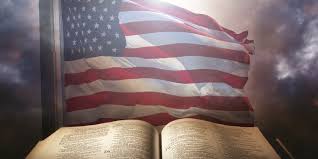
In any diverse and growing community, people from different backgrounds, cultures, and beliefs must learn to coexist. While disagreements are inevitable, few topics are as toxic to public discourse as the mixing of politics and religion. History has repeatedly demonstrated that when these two forces collide, conflict is unavoidable, understanding disappears, and community cohesion crumbles.
Politics and religion serve entirely different purposes. Politics is meant to govern society through laws, policies, and decisions that consider the needs of all citizens, regardless of personal belief systems. It requires negotiation, compromise, and a rational approach to problem-solving. Religion, on the other hand, is rooted in faith, personal morality, and spiritual convictions that guide an individual’s private life. When these two overlap, the result is not governance—it is division. The very fabric of a non-partisan community depends on collaboration, yet injecting religious ideology into political matters creates rigid, uncompromising positions that destroy the ability to work together.
A community that aims to be inclusive cannot function when individuals bring their religious beliefs into political discussions as absolute truths. Partisan individuals, especially those who refuse to engage in civil discourse, often weaponize faith to justify their political agendas, alienating those who think differently. Once politics is driven by religious doctrine rather than practical governance, compromise becomes impossible because religiously motivated policies leave no room for debate. When someone believes they are on a divine mission, they are unwilling to listen to reason.
History offers countless warnings about what happens when politics and religion are allowed to merge. The founding principles of the United States established a clear separation between church and state precisely to prevent governance from being dictated by religious institutions. Nations that have blurred this line have suffered civil unrest, oppression, and even outright violence. The consequences are not limited to global events—right here in local communities, religiously influenced political agendas have resulted in discrimination, social exclusion, and policies that do not serve the interests of the entire population.
One of the greatest dangers of mixing religion and politics is the breakdown of communication. People who hold strong religious and political convictions often struggle to engage in meaningful dialogue with those who disagree. Rather than discussing policy based on logic and practicality, conversations devolve into moral judgments and self-righteous proclamations. In a community setting, this only fuels division. The moment public decisions—such as those regarding education, healthcare, or social services—become dictated by religious beliefs, they cease to serve the broader public. Community policies should be made based on facts and collective needs, not religious doctrine that only applies to certain groups.
For a community to function properly, governance must remain neutral. No one is asking individuals to abandon their personal beliefs, but faith should never be used as a political weapon. Leaders must be held accountable for keeping personal religion out of public policy. The law exists to protect all citizens equally, and any attempt to govern based on religious ideology only guarantees exclusion and resentment.
If a community wishes to avoid unnecessary strife, it must make one thing clear: religion is a private matter, and politics must serve the interests of all, not just those of a particular faith. The moment one group attempts to impose their religious views on public decision-making, the foundation of fairness is shattered. A non-partisan community does not mean the absence of belief—it means that no belief system is given preferential treatment in governance.
The wise understand that religion and politics must remain separate for a society to remain fair, functional, and free. The ability to work together despite differences is the cornerstone of a strong community. The moment religious ideology takes precedence over reason in governance, that community is on a path to division and dysfunction. If the goal is unity, then religion must remain in the personal sphere, and politics must be driven by fairness, not faith.