


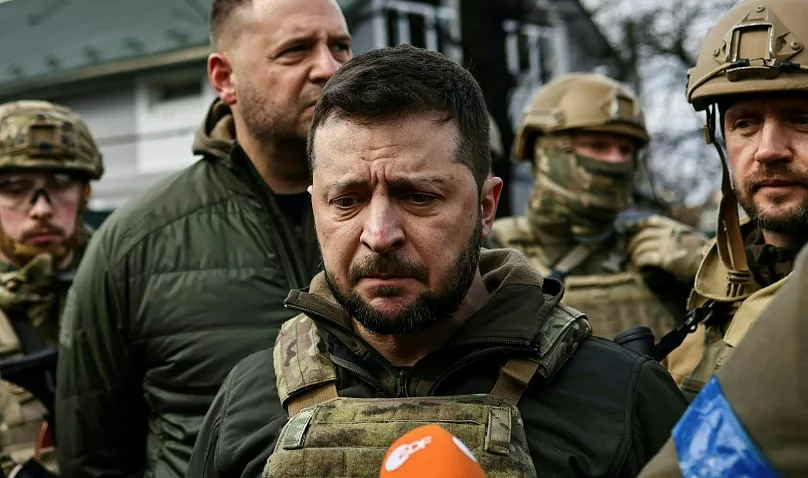
Ukrainian President Volodymyr Zelenskyy has issued a direct warning to Russian President Vladimir Putin, signaling that Kyiv will not accept any ceasefire deal without binding, NATO-style security commitments. Speaking in Denmark alongside Nordic and Baltic leaders, Zelenskyy emphasized that Ukraine’s future stability depends on enforceable guarantees rather than diplomatic gestures.
The comments come at a pivotal moment in the war, with both sides calculating potential next steps after years of conflict. For Ukraine, the strategy is clear: ensure that any pause in fighting cannot simply allow Russia to regroup and renew aggression. By insisting on Article 5-style protections—similar to those enshrined in the North Atlantic Treaty Organization—Zelenskyy is seeking to lock in long-term defense assurances that would deter Moscow from resuming hostilities.
Ukraine has already signed a series of bilateral agreements with allied nations, including Denmark, which formalize commitments to military assistance and economic support. These deals, while not full NATO membership, are designed to create a layered shield of protection. Zelenskyy described this network as a “solid basis” for collective security, arguing that it represents the minimum condition for entering discussions about a ceasefire. Kyiv is making it clear that the mistakes of the past—agreements without enforcement mechanisms—cannot be repeated.
The push for security guarantees comes amid continued Russian strikes across Ukraine and ongoing battles in contested regions. Moscow has repeatedly warned that closer alignment between Ukraine and NATO members crosses a red line. From the Kremlin’s perspective, such agreements could escalate the conflict, potentially drawing more European states into direct confrontation. Yet for Ukraine, the alternative—signing a ceasefire without guarantees—would risk leaving the country vulnerable to future attacks once international focus fades.
Denmark’s participation is particularly significant. As a NATO member and strong supporter of Kyiv, Copenhagen has positioned itself as a leader in ensuring Ukraine’s survival and rebuilding. By hosting Zelenskyy alongside Nordic-Baltic allies, Denmark underscored the region’s united front against Russian aggression. Other European governments have echoed the call for credible security mechanisms, though the precise nature and enforcement of such guarantees remain under negotiation.
The challenge now is whether these measures can be made credible enough to deter further Russian aggression. NATO’s Article 5 obliges all member states to treat an attack on one as an attack on all—a standard Ukraine seeks to emulate through its network of bilateral accords. While not equivalent to full NATO membership, this framework is intended to approximate the deterrent effect of the alliance’s collective defense clause.
How Putin will respond remains uncertain. The Kremlin has consistently rejected any steps that deepen Ukraine’s ties to NATO, framing them as existential threats to Russian security. At the same time, Russia faces ongoing battlefield losses, sanctions pressure, and an uncertain domestic political climate. For Moscow, Zelenskyy’s warning underscores the growing costs of prolonging the war without clear gains.
As Ukraine positions itself for eventual negotiations, the stakes are high. Zelenskyy’s demand for binding security guarantees reflects both lessons learned from previous conflicts and the realities of Russia’s ongoing threat. Whether this stance escalates tensions or paves the way toward a more stable settlement will depend on how far allies are willing to go in backing Kyiv—and how Moscow chooses to react.