


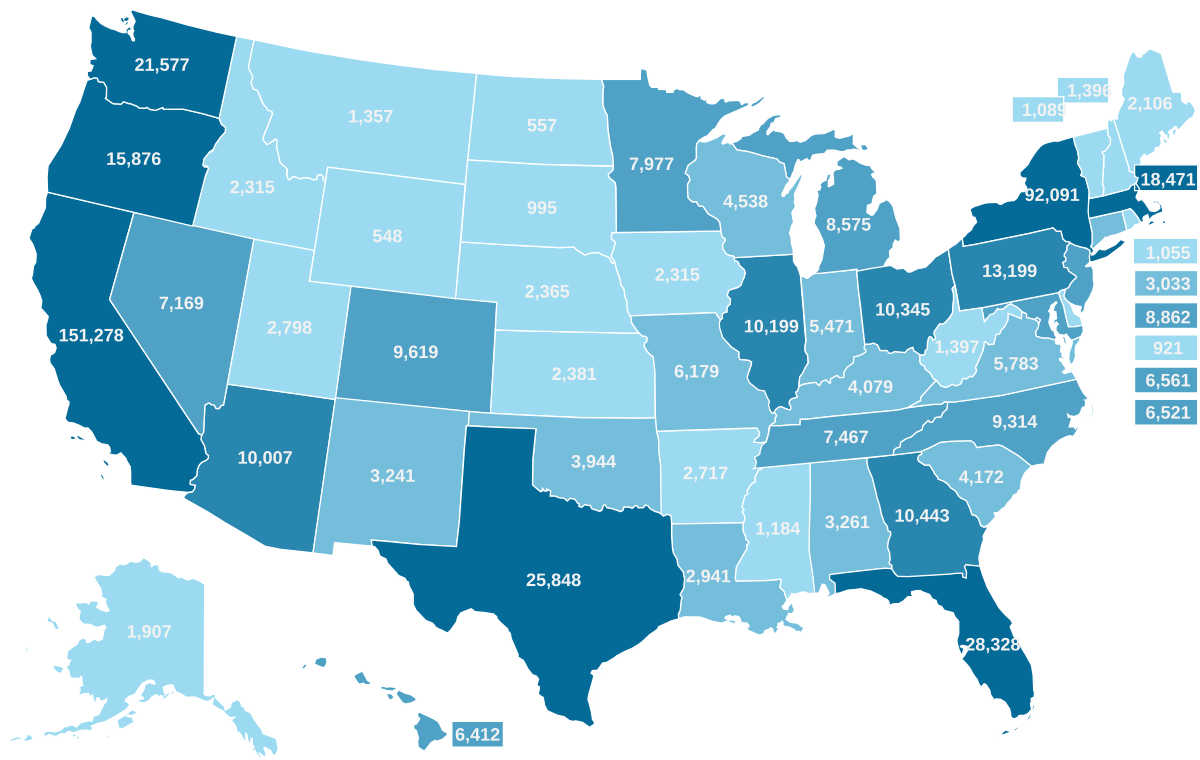
Across the United States, homelessness has surged to its highest level in decades, affecting people in every corner of the country—from sprawling urban centers to quiet rural towns. According to the U.S. Department of Housing and Urban Development, over 770,000 individuals experienced homelessness on a single night in 2024, an 18% increase from the previous year. And while large states like California and New York dominate the headlines, it is a small town in Southern Oregon that now finds itself at the center of the national conversation.
Grants Pass, with a population of just over 40,000, may seem like an unlikely epicenter for a legal and moral battle over how America addresses its unhoused population. Yet the town is currently embroiled in lawsuits that could shape the future of homeless policy across the country.
In 2018, a group of unhoused residents filed a lawsuit against the City of Grants Pass, arguing that ordinances penalizing sleeping in public spaces violated their constitutional rights. In 2023, the Ninth Circuit Court of Appeals agreed, ruling that punishing people for sleeping outdoors when no shelter is available constitutes cruel and unusual punishment under the Eighth Amendment. Despite the ruling, enforcement continued, prompting additional legal action from advocacy groups like Disability Rights Oregon and the Oregon Law Center.
This legal tug-of-war has drawn national attention, but it also raises deeper questions: What is driving the rise in homelessness across the country? And how do small towns like Grants Pass truly compare to major cities in terms of their unhoused populations?
The answers are complex. California leads the nation with more than 187,000 homeless individuals, a crisis fueled by sky-high housing costs, a lack of affordable units, and widespread economic disparity. New York follows closely, with more than 158,000 people experiencing homelessness, including a growing number of families. Even states with smaller populations, like Vermont and Montana, report homelessness rates higher than the national average when adjusted for population size.
Washington, Oregon, and Colorado are also facing steep challenges. In Oregon, nearly 20,000 people are homeless on any given night. What sets Grants Pass apart isn’t just its size, but its ratio of unhoused residents to the total population. Estimates suggest there are between 500 and 600 homeless individuals in the town. That equates to roughly 125 per 10,000 residents—a rate far surpassing that of New York or even California.
So what’s driving the crisis? Experts point to three major factors: a lack of affordable housing, untreated mental illness, and substance abuse. Many communities, especially smaller ones, lack the infrastructure to adequately address these issues. Mental health services are often underfunded or inaccessible, while addiction treatment remains fragmented and difficult to navigate.
This has led to a painful truth: many of those experiencing homelessness are not just in need of a bed, but of comprehensive medical, psychological, and addiction-related care. Without addressing these root causes, critics argue, well-meaning programs and policies risk becoming temporary fixes that fail to produce lasting change.
And yet, efforts continue. In cities like New York and San Francisco, Housing First initiatives aim to provide stable shelter before tackling other issues like employment or substance use. Meanwhile, in smaller towns, the response has often included stricter regulations on public camping and loitering—policies that sometimes run afoul of legal and ethical boundaries.
In Grants Pass, the tension between public order and human dignity is now playing out on a national stage. Local officials argue that their ordinances are necessary to maintain safety and cleanliness in parks and public spaces. Advocates for the unhoused counter that without sufficient shelter beds or social services, these laws simply criminalize poverty.
For residents, the issue is personal. Some express frustration at the growing number of tents along the river or downtown streets. Others, including many with lived experience of homelessness, push for more compassion, more services, and more permanent solutions.
As the legal battles continue, the rest of the nation is watching closely. The U.S. Supreme Court is expected to weigh in on the issue this year, a decision that could reshape how cities and towns nationwide respond to homelessness.
Ultimately, the story of Grants Pass is a reflection of a much larger American dilemma. Homelessness is not just a big-city problem, nor is it one that can be solved with citations and court appearances. Until the country seriously invests in mental health care, substance abuse treatment, and affordable housing, the cycle will continue—and towns like Grants Pass will remain caught in the middle, struggling to find a way forward.