


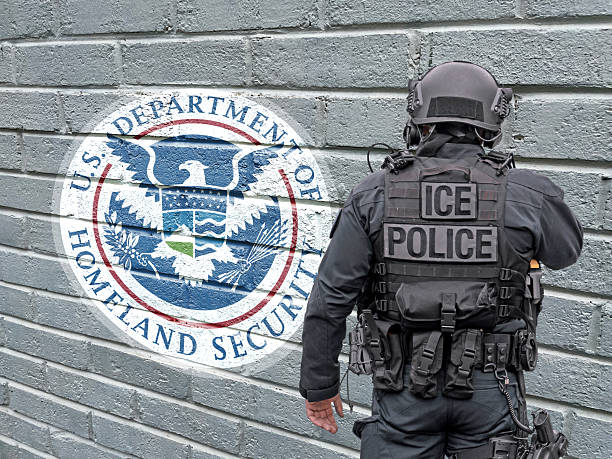
During the first nine months after Donald Trump took office, immigration enforcement in the United States intensified sharply, resulting in well over two hundred thousand arrests. Federal data and independent reporting confirm that Immigration and Customs Enforcement significantly expanded its operations beginning in early 2017, leading to an immediate rise in both criminal and noncriminal immigration arrests. Early figures showed approximately 220,000 people taken into custody between January and October of that year, a notable shift from previous enforcement patterns and one that continued throughout Trump’s first term.
Fiscal year data reinforces the scale of this change. In 2017 ICE recorded more than 143,000 interior arrests, roughly 30 percent higher than the previous year. In 2018 that number increased again, exceeding 158,000 arrests. These figures represent arrests inside the country, not at the border, and therefore reflect stepped-up enforcement in neighborhoods, workplaces and communities nationwide. A significant portion of those detained during this period had no prior criminal record, indicating that enforcement priorities shifted toward a wider net rather than focusing exclusively on individuals with serious convictions.
The consequences of these actions extended well beyond the immigrant communities most directly affected. Undocumented workers play a measurable role in the American labor market, with more than eight million individuals participating in sectors that are essential to the nation’s economic stability. Agriculture, construction, hospitality, manufacturing and transportation all rely heavily on immigrant labor, documented and undocumented. Removing large numbers of workers from these fields produces immediate strain. Crops go unpicked, construction projects slow and restaurants and hotels struggle to maintain staffing levels necessary to operate at full capacity.
Economic research has consistently shown that mass immigration enforcement does not produce the expected gains for U.S. born workers. Instead it reduces the overall labor pool, lowers productivity and disrupts local economies. Businesses facing workforce shortages often downsize or close, and the communities surrounding them experience the effect through decreased consumer spending, reduced tax revenue and slower economic growth. Studies examining local crackdowns have found that increased deportations rarely improve employment outcomes for citizens but do reliably weaken regional economies.
The impact is felt on the consumer side as well. Immigrant households contribute billions in tax revenue and purchasing power each year. When arrests increase, immigrant communities respond with caution. Families limit trips to stores, avoid public spaces and reduce discretionary spending out of fear of encountering enforcement activity. That drop in spending affects grocery stores, retail shops, restaurants and service providers, harming American workers and business owners regardless of immigration status.
The federal government faces additional costs when enforcement intensifies. Detention facilities, transportation, court proceedings and administrative processes require significant funding. As ICE operations expand, so do the associated expenses. Local governments cooperating with federal enforcement sometimes experience added strain on law enforcement resources, as well as legal challenges that can result in further financial burdens.
Public safety outcomes remain mixed. Although the purpose of increased enforcement is often framed as a measure to protect communities, available research indicates little change in overall crime rates during periods of escalated immigration arrests. Many of those detained have no violent history, and wide-net enforcement sometimes creates tension between local authorities and immigrant residents, complicating policing and reducing trust.
The surge in ICE arrests under Trump therefore represents more than an administrative change. It is a policy shift with measurable economic, social and governmental consequences. The first nine months set the tone for a broader national strategy whose effects continue to generate debate over the balance between enforcement priorities, economic stability and community well-being.