


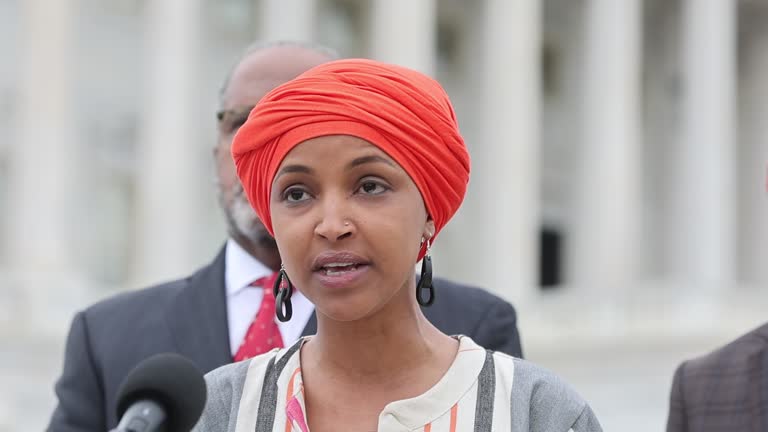
A renewed political controversy has emerged around Minnesota Representative Ilhan Omar following public statements by a senior Trump administration immigration official suggesting that her past immigration records may be reviewed for possible irregularities. The comments have generated national attention, though no formal criminal investigation or legal action has been publicly confirmed by federal authorities.
The controversy stems from remarks made by Tom Homan, a former acting director of Immigration and Customs Enforcement who now serves in a border enforcement role aligned with the Trump administration’s immigration agenda. Homan stated in a media appearance that federal officials were examining whether any immigration related violations may exist in Omar’s historical records, including whether the statute of limitations would apply. His comments emphasized a review of records rather than the initiation of charges or enforcement action.
As of now, the Department of Justice and the Department of Homeland Security have not issued any public statements confirming that Representative Omar is under an active investigation for immigration fraud. No indictments, subpoenas, or court filings have been disclosed, and no federal agency has verified that a criminal inquiry is underway. Legal experts note that reviewing historical records is not unusual and does not necessarily indicate wrongdoing or imminent prosecution.
The allegations referenced by Homan are not new. For several years, Omar has been the subject of online claims and political accusations regarding her marital history during the 1990s and whether those circumstances affected her immigration status. These claims have circulated largely within partisan media and social platforms and have never been substantiated through official findings or court proceedings. Omar has consistently denied the allegations, and no federal agency has previously confirmed any violation.
The renewed focus on Omar coincides with broader political rhetoric surrounding immigration enforcement, particularly in Minnesota, where federal authorities have pursued high profile fraud cases unrelated to the congresswoman. Those cases have involved misuse of public funds and immigration related benefit fraud by various individuals and organizations. While some political figures have attempted to link these cases to broader immigrant communities, law enforcement agencies have not publicly connected Omar to those investigations.
The situation has unfolded amid heightened political tensions as immigration once again becomes a central issue in national debate. Former President Donald Trump and several of his allies have repeatedly criticized Omar and other progressive lawmakers, framing them as symbols of what they describe as lax immigration policies. Critics of this rhetoric argue that it blurs the line between policy debate and personal targeting, particularly when allegations are repeated without supporting legal action.
In recent days, Omar has also drawn attention to what she described as increased immigration enforcement pressure in her community. She reported that her adult son, who is a United States citizen, was stopped by immigration agents and asked to provide proof of citizenship before being released. The incident has fueled concerns among civil rights advocates about racial profiling and the broader impact of intensified enforcement efforts on immigrant communities, even those with legal status.
Supporters of Omar argue that the current controversy reflects a pattern in which unproven claims are amplified during politically charged moments. They point to the absence of formal legal proceedings as evidence that the situation remains speculative rather than judicial. Critics counter that all public officials should be subject to scrutiny, though legal scholars emphasize that allegations alone do not equate to violations of law.
At present, the situation remains defined more by political statements than by legal developments. Without confirmation from federal prosecutors or immigration authorities, the claims exist in a gray area where rhetoric and process intersect. Observers note that if any formal investigation were to occur, it would likely become public through court filings or official agency announcements.
Until such confirmation exists, the matter stands as an example of how immigration enforcement, political messaging, and long standing allegations can converge in the public arena without clear legal resolution. For now, Representative Omar continues to serve in Congress, and federal agencies have not publicly indicated that any enforcement action against her is pending.