


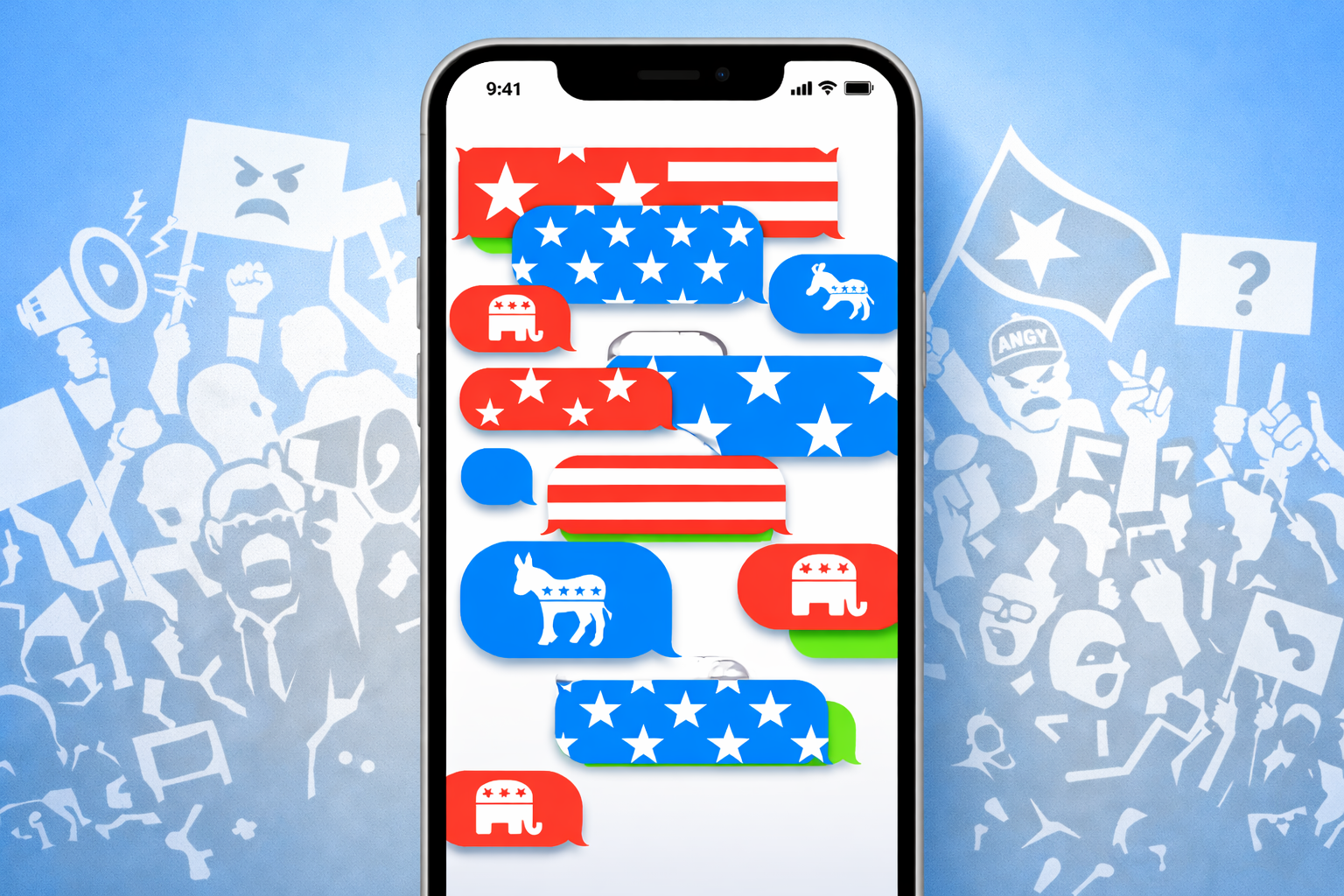
Unsolicited political text messages have become an increasingly common and increasingly aggravating feature of daily life in Southern Oregon, particularly as the debate over the current commissioner recall intensifies. Phones that once served primarily as tools for personal communication are now being used as direct pipelines for political messaging, often without warning, consent, or transparency. While such practices remain largely legal under current law, the growing volume and content of these messages are raising serious concerns about misinformation, voter trust, and ethical conduct in local politics.
In recent weeks, residents across Josephine County and surrounding areas have reported receiving unsolicited text messages urging them to vote against the recall. These messages frequently identify themselves as coming from partisan organizations and include links to political websites framed as informational resources. In many cases, recipients say they have no prior relationship with the sender, did not opt in to receive political messaging, and were unaware their phone numbers were being used for campaign purposes at all.
At the center of the concern is not simply the existence of political texts, but their tone, frequency, and content. Many of the unsolicited messages circulating in Southern Oregon repeat claims that have already been publicly challenged or disproven, yet they continue to be delivered directly to voters’ phones with little accountability. For residents on the receiving end, the experience feels less like civic engagement and more like coordinated spamming designed to overwhelm opposition through sheer repetition.
Under federal law, political text messages occupy a unique space. Unlike commercial advertising, political messaging is generally exempt from the strict consent requirements of the Telephone Consumer Protection Act. Campaigns, political parties, and action committees are allowed to send unsolicited political texts, particularly when those messages are sent manually or through peer-to-peer systems rather than fully automated dialers. Oregon law does not impose a blanket prohibition on such messaging either, creating a legal environment where campaigns are free to contact voters directly, even when the voters did not ask to be contacted.
That legal reality, however, does not resolve the ethical questions now surfacing in Southern Oregon. Many recipients report that these messages rely on vague language, selective framing, or outright false claims about the recall process, its supporters, or its legal implications. While election law prohibits knowingly false statements intended to mislead voters, enforcement often lags behind the pace of digital campaigning. By the time misinformation is corrected publicly, it may already have reached thousands of phones.
The use of voter registration data further complicates the issue. Oregon allows political organizations to access voter rolls for election-related purposes, including contact outreach. Phone numbers obtained through these records can legally be used for political messaging, but that legality does not equate to transparency. Voters are rarely informed how their information is being used, who is paying for the outreach, or whether the messaging reflects verified facts or partisan spin.
For many residents, the problem escalates when opt-out requests are ignored or when messages continue after recipients clearly state they do not wish to receive further communication. At that point, the issue moves beyond political speech and into potential harassment, undermining public confidence not only in the message but in the political actors behind it.
The broader concern emerging from this recall fight is one of trust. When political groups rely on mass unsolicited texting combined with disputed claims, it reinforces perceptions of opacity and manipulation rather than open civic dialogue. Even when such tactics remain within the bounds of the law, they contribute to growing voter fatigue and skepticism, particularly in a community already strained by political division.
As Southern Oregon continues to deal with contentious local elections, unsolicited political texting stands as a symbol of a larger problem. Legal does not always mean responsible, and lawful does not always mean ethical. Without stronger standards for transparency, accuracy, and respect for voter consent, political text messaging risks becoming another force that erodes, rather than strengthens, democratic participation at the local level.