


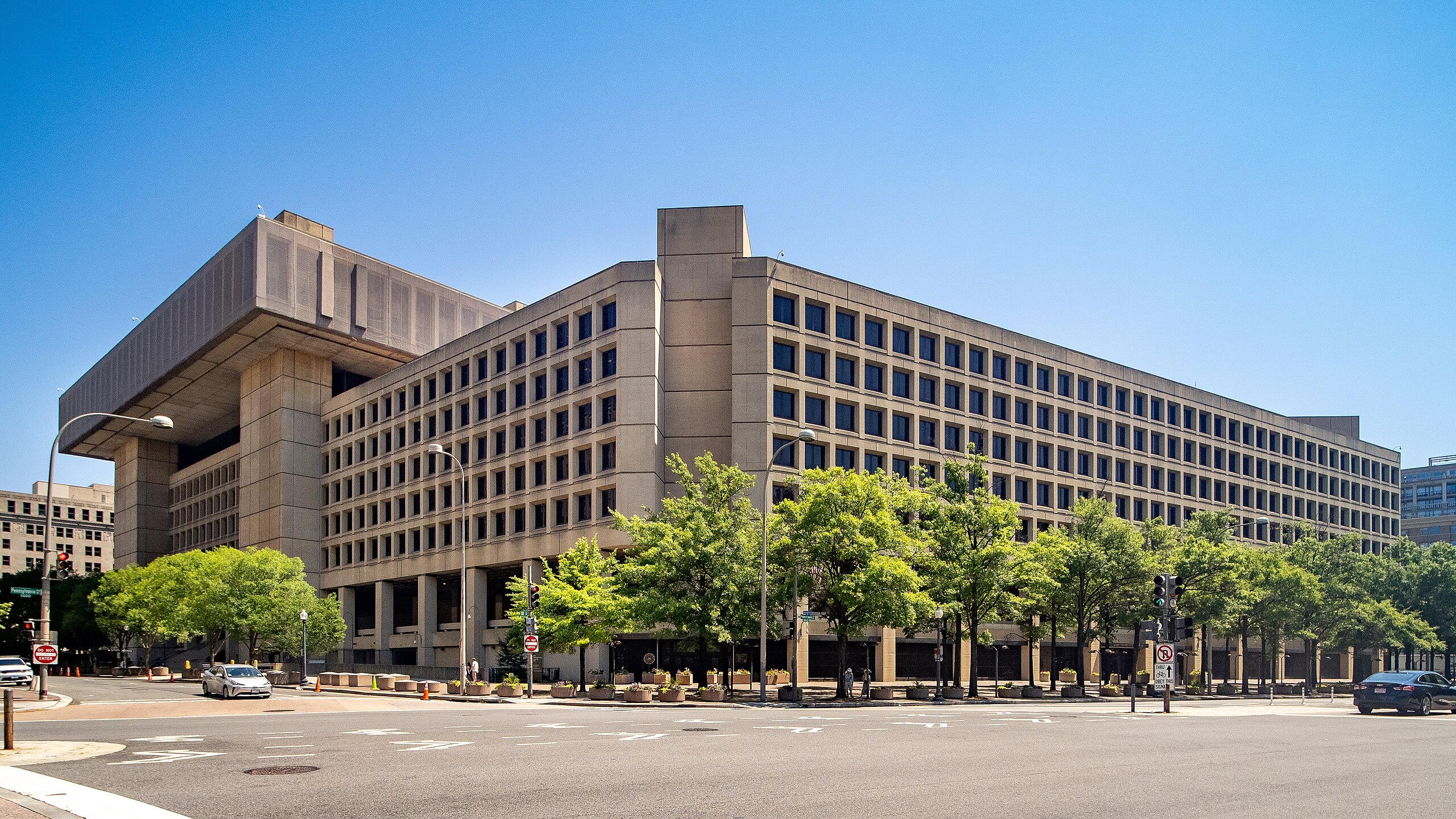
The Federal Bureau of Investigation has announced a permanent end to operations at its longtime headquarters in Washington, D.C., marking a significant institutional shift for one of the nation’s most prominent law enforcement agencies. FBI Director Kash Patel confirmed that the J. Edgar Hoover Building, which has housed the bureau for nearly five decades, will no longer serve as the agency’s central headquarters, closing the door on years of debate, delay, and costly redevelopment proposals.
Completed in the mid nineteen seventies, the Hoover Building has long been criticized for its aging infrastructure, security limitations, and escalating maintenance costs. Over the past two decades, multiple administrations explored options ranging from extensive renovation to complete replacement, including plans for a newly constructed headquarters outside the District of Columbia. Those efforts stalled repeatedly due to rising projected costs, interagency disputes, and lengthy construction timelines that pushed completion dates well into the next decade.
The decision to permanently close the Hoover Building represents a departure from those earlier plans. Rather than pursue a multibillion-dollar new construction project, the FBI will shift its headquarters operations to the Ronald Reagan Building and International Trade Center, a large federal facility located a short distance away. The move is expected to be completed in phases, with necessary security and infrastructure upgrades conducted to accommodate the bureau’s operational needs.
Federal officials have indicated that this approach significantly reduces long term costs and accelerates the transition compared to previous proposals. Earlier estimates placed the price of a new standalone FBI headquarters at several billion dollars, with an opening date projected well into the next decade. By repurposing an existing federal building, the bureau avoids extended construction delays while maintaining a presence in the nation’s capital.
The relocation also carries implications for staffing and organizational structure. While many headquarters employees are expected to move into the Reagan Building, the announcement aligns with broader efforts to redistribute certain administrative and operational roles beyond Washington. Officials have stated that this realignment is intended to strengthen field operations across the country, placing personnel closer to regional offices and investigative work rather than concentrating resources in a single central location.
The Hoover Building itself occupies a prominent site along Pennsylvania Avenue and has been a familiar symbol of federal law enforcement for generations. Its closure raises questions about the future use of the property, though no final determination has been made public. Decisions regarding redevelopment, sale, or repurposing are expected to involve multiple federal agencies and could take years to resolve.
Security considerations remain a central focus as the transition moves forward. The Reagan Building currently houses several federal entities, and modifications will be required to meet the FBI’s specialized operational and security standards. Officials have acknowledged that upgrades will be necessary but have emphasized that the overall cost and timeline remain more manageable than those associated with constructing a new headquarters from the ground up.
The announcement has drawn attention across Washington policy circles because it resolves a long running issue that had come to symbolize federal indecision and bureaucratic inertia. For decades, lawmakers and agency leaders debated how best to address the Hoover Building’s limitations, with no solution gaining lasting traction. The closure decision effectively ends those discussions by selecting a practical, if less ambitious, path forward.
As the FBI prepares for this transition, the change underscores a broader shift in how federal agencies manage infrastructure and operational priorities. Rather than pursuing expansive new facilities, the bureau’s move reflects an emphasis on cost control, adaptability, and redeployment of resources toward mission focused work. With the Hoover Building set to close permanently, a chapter in Washington’s architectural and institutional history comes to an end, while the FBI begins a new phase shaped by fiscal realities and evolving national security demands.