


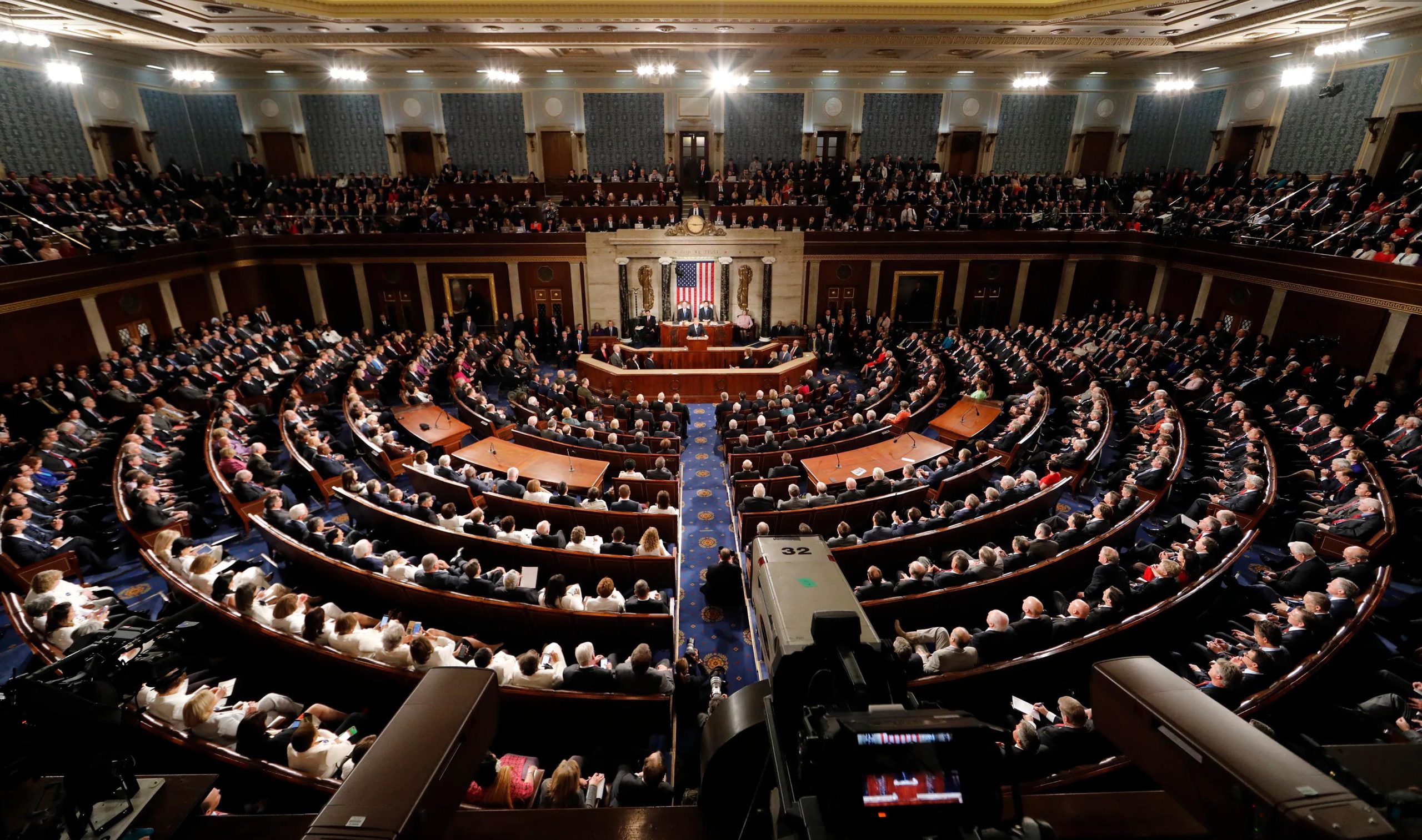
With a midnight deadline approaching, the United States Senate is working to finalize an agreement that would fund most of the federal government while temporarily separating the Department of Homeland Security from a broader spending package. The move is designed to prevent a partial government shutdown and provide additional time for lawmakers to negotiate proposed changes to immigration enforcement oversight.
According to reports from multiple national outlets, Senate leaders signaled that a vote could take place as early as Friday on a funding framework that advances several appropriations bills covering major federal agencies. However, funding for Homeland Security would be extended only on a short-term basis, allowing Congress additional time to debate proposed accountability measures affecting federal immigration agents.
The dispute centers on how immigration enforcement operations are conducted and overseen. Senate Democrats have pressed for additional guardrails and accountability provisions in response to recent immigration enforcement actions that have drawn public and political scrutiny. They have argued for clearer standards regarding identification procedures, operational transparency, and internal review processes for agents operating under Homeland Security authority.
Republicans, meanwhile, have generally advocated for a clean funding measure without additional policy conditions attached. The emerging compromise reflects a tactical decision by both parties: fund most of the government to avoid broader disruption, while isolating Homeland Security funding to allow continued negotiations without forcing an immediate resolution on immigration policy.
By separating Homeland Security from the larger spending bill, lawmakers are attempting to balance urgency with leverage. A failure to pass funding before the deadline would trigger a partial government shutdown, affecting certain federal operations. While essential services would continue, a lapse in funding could lead to furloughs of federal employees and disruptions in agency functions.
The House of Representatives must also approve any Senate-passed measure before it can be signed into law. Timing remains a critical factor. Even if the Senate reaches agreement, procedural hurdles or scheduling constraints in the House could complicate efforts to avoid at least a brief funding lapse.
Government funding debates have become increasingly complex in recent years, often blending fiscal negotiations with policy disputes. In this case, the broader budget framework appears to have bipartisan support, but immigration enforcement remains a politically sensitive issue. The short-term extension for Homeland Security effectively postpones that confrontation while preserving government operations in the near term.
Political analysts note that stopgap measures, commonly referred to as continuing resolutions, have become a frequent tool for managing budget impasses. While they provide temporary stability, they also extend uncertainty and push substantive policy debates further down the calendar.
As the deadline approaches, lawmakers face mounting pressure to demonstrate functionality and avoid disruption. Whether the proposed split funding strategy will fully resolve tensions or simply delay a larger policy showdown remains to be seen. For now, Senate leaders appear focused on preventing immediate shutdown consequences while carving out space for continued debate over immigration enforcement oversight.
The coming hours will determine whether Congress can finalize the agreement in time or whether federal agencies will once again face the uncertainty that accompanies a funding lapse.