


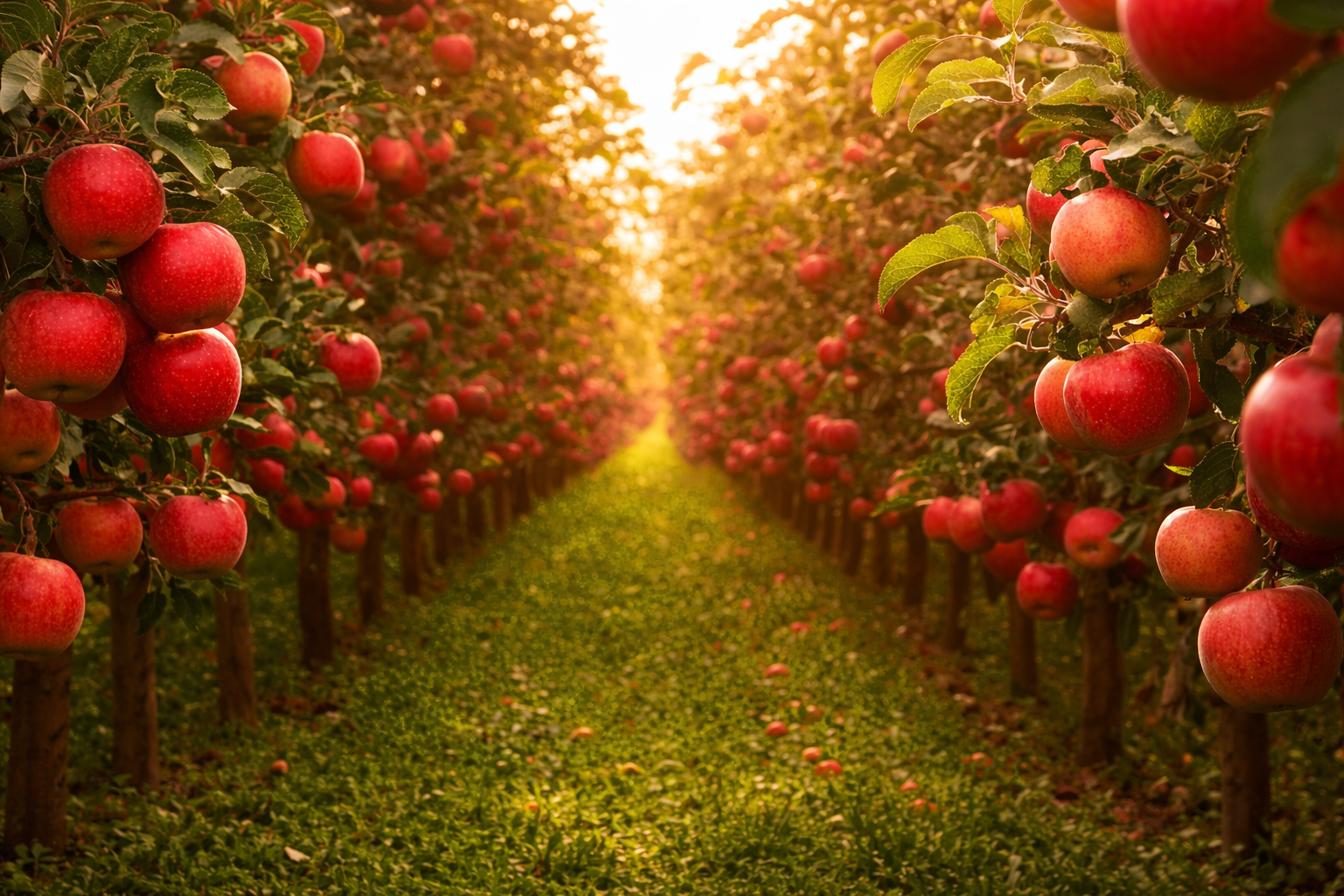
I will admit something before you read another word. I may have smoked a little marijuana during this creative moment. For inspirational purposes only, of course. Somewhere between the kitchen and the backyard, staring at nothing in particular, I found myself thinking about apples and onions and how they might explain people.
Stay with me.
An apple seed is small, almost forgettable. Yet inside that tiny speck lives the blueprint for an entire tree. Trunk, branches, blossoms, fruit. It is all encoded, waiting for the right conditions to emerge. Plant it in good soil and it rises straight and strong. Plant it in rocky ground and it may grow twisted, fighting for light. But no matter what, it will never become an onion.
Onions, on the other hand, grow in clusters. Layer upon layer, packed together in bushels. Pull one up and there are more just like it, growing shoulder to shoulder beneath the dirt. They are shaped by proximity. By repetition. By the closeness of their field.
And that is where my mind began to turn toward people.
How much of who we are is the seed, and how much is the soil? Is character inherited like eye color, or absorbed like moisture from the ground around us? You can often spot upbringing from across the street. Mannerisms echo parents. Speech patterns mirror households. Even confidence or insecurity can feel generational. We say someone was raised right or raised wrong as if morality were fertilizer.
But then there are the black sheep. The apple that rolls far from the tree. The onion that refuses to grow in neat rows. The child raised in chaos who becomes disciplined. The child raised in comfort who rebels against structure. If we were only products of environment, those exceptions would not exist. If we were only products of DNA, neighborhoods would not matter.
The truth, I suspect, lives somewhere in the tension.
DNA may be the blueprint, but upbringing is the weather. Some people are born with fire in their bones. In one household, that fire becomes leadership. In another, it becomes trouble. The same spark, different outcome. The same seed, different soil.
And yet, we are not crops. We are conscious. At some point, we look at the field we were planted in and decide whether to keep growing the same way. We can prune ourselves. We can transplant. We can choose different light.
That is the part that fascinates me.
Two children can grow up under the same roof and turn out entirely different. Two neighbors can share a fence line and carry opposite worldviews. An apple tree can stand beside onions and still bear fruit uniquely its own. Proximity influences, but it does not dictate destiny.
Maybe that is why this question lingers. We want simple explanations. We want to blame parents or praise genetics. We want to reduce complexity to something tidy. But human nature refuses to cooperate.
So yes, this reflection began in a slightly altered state of mind. But sometimes stepping outside the usual frame lets you see the field more clearly. We are seeds with stories. We are shaped by soil and storm. We are influenced by the rows around us. Yet we still choose how we grow.
And that, more than anything, is what makes the orchard worth watching.