


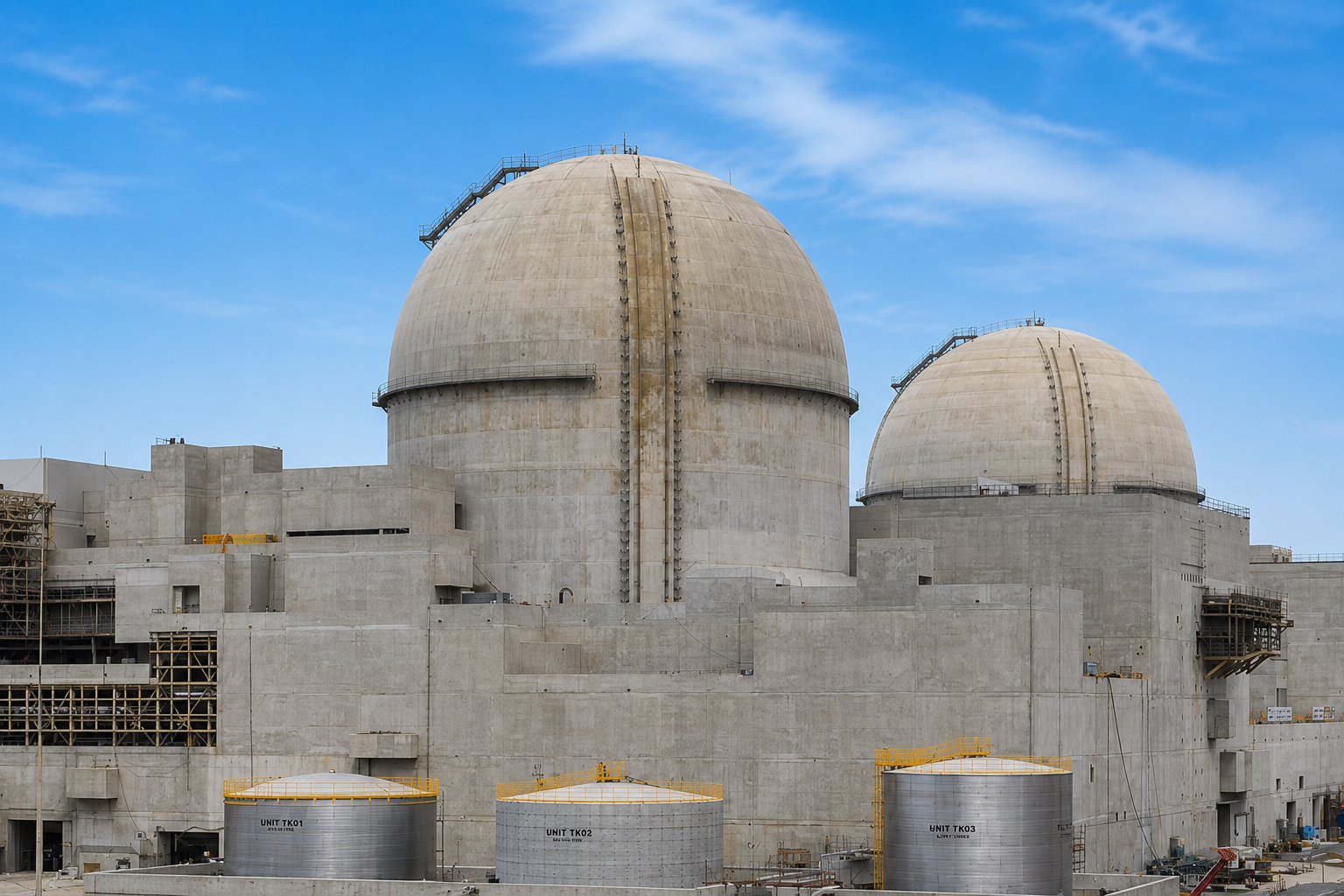
A fire reported at the Barakah Nuclear Power Plant in the United Arab Emirates after an alleged drone strike has intensified concerns across the international community, placing renewed attention on the growing instability surrounding the Persian Gulf and the increasingly fragile balance between regional powers and the United States.
The incident, which unfolded Sunday near the UAE’s western coastline along the Arabian Gulf, immediately triggered heightened security alerts throughout the region as officials worked to assess the extent of the damage and determine whether the strike represented a targeted escalation against one of the Gulf’s most strategically important infrastructure sites. Early reports indicated the fire was contained without evidence of radioactive contamination or reactor compromise, though the event nonetheless sent political and economic ripples far beyond the borders of the Emirates.
The Barakah facility occupies a unique position in the modern Middle East. It is the first operational commercial nuclear power plant in the Arab world and serves as a centerpiece of the UAE’s long-term strategy to diversify its economy beyond oil dependency. The plant supplies a substantial portion of the nation’s electricity and has become a symbol of technological modernization and regional influence for the Emirates.
Any attack near such a facility carries consequences extending beyond the immediate physical damage. Even limited incidents involving nuclear infrastructure introduce fears of environmental disaster, energy instability, military retaliation, and disruptions to global markets already strained by ongoing geopolitical conflicts.
Regional analysts have increasingly warned that Gulf infrastructure has become vulnerable amid expanding tensions involving Iran, Israel, American military operations, and various armed proxy groups operating throughout the Middle East. Oil terminals, desalination facilities, shipping corridors, airports, and energy sites have all become potential targets in an era where drones and missile systems have dramatically altered modern warfare.
What once required large-scale military campaigns can now be attempted with small, difficult-to-detect unmanned aircraft capable of traveling hundreds of miles and striking critical infrastructure with precision. The Barakah incident has reinforced growing fears among Gulf governments that civilian infrastructure may no longer remain insulated from broader regional disputes.
The political timing of the attack has also drawn intense scrutiny. The reported strike occurred during a period of uneasy diplomatic restraint between the United States and Iran following months of confrontation throughout the region. Military analysts have described the current environment as a volatile pause rather than a stable peace agreement, with both state and non-state actors continuing to test boundaries through indirect engagements and strategic signaling.
Although no government immediately claimed responsibility, suspicion quickly centered on Iranian-aligned groups or actors sympathetic to Tehran’s regional objectives. In recent months, warnings from Iranian military figures and affiliated organizations have increasingly referenced Gulf energy and infrastructure sites as possible strategic pressure points should hostilities deepen further.
For Gulf nations, the event highlights a growing security dilemma. Massive investments have transformed cities like Abu Dhabi, Dubai, Doha, and Riyadh into economic powerhouses built around energy exports, transportation hubs, tourism, finance, and technological development. Yet those same highly connected systems remain exposed to modern asymmetric warfare, where drones costing relatively little can threaten facilities worth billions of dollars.
International markets reacted cautiously as investors monitored developments across the Gulf. Concerns over shipping stability through the Strait of Hormuz once again resurfaced, reviving fears that further escalation could disrupt global oil supplies and intensify inflationary pressures already affecting economies worldwide. The Gulf region remains one of the most critical arteries in the international energy system, and even isolated attacks carry the potential to influence fuel prices, transportation costs, and broader economic confidence.
The incident has also reignited debate over the security of civilian nuclear infrastructure in politically unstable regions. While nuclear facilities are designed with extensive defensive and containment systems, security experts have long argued that the rise of drone warfare creates new vulnerabilities that traditional defense models were never fully designed to address.
As investigations continue, governments across the Middle East are expected to reevaluate defensive measures surrounding strategic infrastructure, particularly energy facilities and transportation networks. Additional military patrols, expanded air defense systems, and increased intelligence coordination between Gulf allies and Western nations are likely to follow in the coming weeks.
The fire at Barakah stands as another reminder that modern geopolitical conflict is no longer confined to battlefields. Increasingly, it unfolds around power stations, shipping lanes, communication systems, and civilian infrastructure that millions of people depend upon every day.