


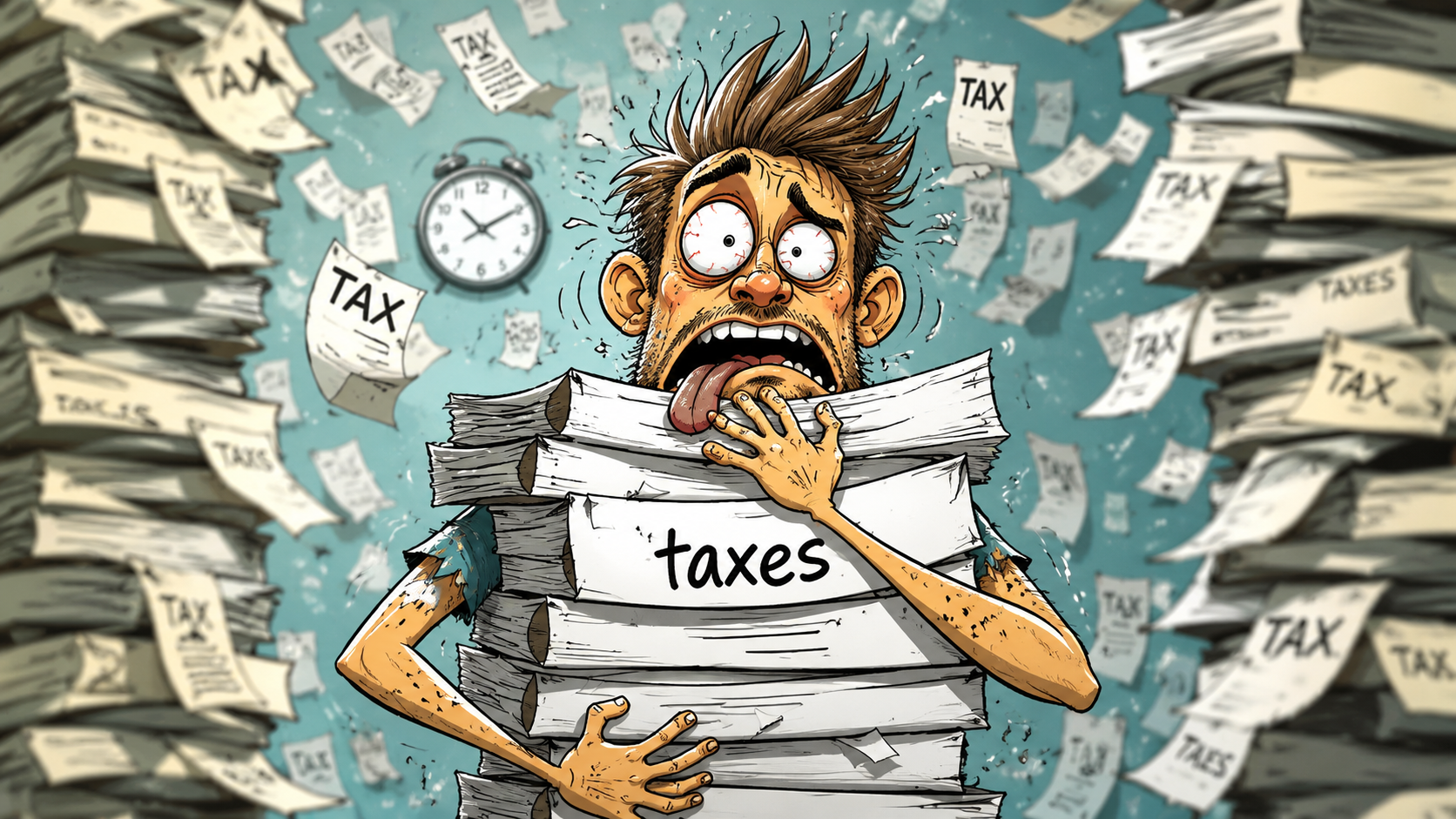
There was once a time in America when taxes were largely understood as a necessary contribution toward maintaining roads, schools, emergency services, national defense, and the basic machinery of government. Citizens may not have enjoyed paying them, but many at least believed there was a visible connection between the money leaving their pockets and the services being returned to their communities.
Today, that trust has nearly evaporated.
The average American no longer feels taxed for the purpose of maintaining a functioning nation. They feel hunted financially from every conceivable direction while simultaneously being told the government still does not have enough money. That contradiction has become one of the most maddening realities in modern American life.
A working citizen earns a paycheck and immediately watches federal taxes, state taxes, payroll taxes, Social Security deductions, and Medicare deductions disappear before the money even reaches the bank account. What remains is then spent inside a system designed to tax nearly every movement of daily existence. Americans pay taxes when they purchase a vehicle. They pay taxes to register it. They pay taxes on the fuel that powers it. In some states, they continue paying annual property taxes on the same vehicle they already purchased with taxed income. They pay taxes on repairs, taxes on replacement parts, taxes on insurance premiums, and taxes again if the vehicle changes ownership.
The same pattern follows homeownership. Americans save money that has already been taxed, use it to purchase property, then spend decades paying perpetual property taxes on land they supposedly own. Utility bills contain taxes. Construction materials are taxed. Permits are taxed. Services are taxed. Telecommunications are taxed. Internet usage is taxed. Food is taxed in many jurisdictions. Small businesses are buried beneath licensing fees, payroll obligations, compliance costs, and endless regulatory expenses that function as taxation by another name.
The issue is no longer whether taxes exist. The issue is whether the system has crossed the line from public necessity into institutional dependency and financial overreach.
Americans collectively contribute trillions of dollars in taxes every year, yet the federal government remains buried beneath staggering debt that continues climbing into historic territory. Citizens are repeatedly told there is not enough money for infrastructure, not enough money for Social Security stability, not enough money for healthcare, not enough money for border security, not enough money for schools, not enough money for veterans, not enough money for disaster relief, and not enough money to balance a budget that has not meaningfully reflected restraint in generations.
The obvious question grows louder every year: where is all the money going?
That question alone has become politically radioactive because it forces an uncomfortable national conversation about waste, inefficiency, bloated bureaucracy, and decades of unchecked spending habits from leaders in both political parties. Americans are expected to account for every dollar they earn while massive government agencies routinely fail audits, overspend budgets, mismanage programs, and authorize billions upon billions in spending packages that the average taxpayer could never fully comprehend if they tried.
Meanwhile, ordinary citizens are expected to simply continue paying.
For many Americans, the anger no longer stems solely from the amount being taxed. It comes from the feeling that government has become insulated from the financial realities of the people funding it. Families are cutting groceries, delaying medical care, skipping vacations, working multiple jobs, and living paycheck to paycheck while watching elected officials debate trillion-dollar expenditures with language so casual it no longer even sounds real.
At some point, citizens begin asking themselves whether the system still serves the people or whether the people merely serve the system.
This frustration is not confined to one political party, one income bracket, or one region of the country. It stretches from rural communities to urban centers, from small business owners to retirees, from union workers to veterans. Americans are exhausted by the constant financial bleeding disguised as necessity while accountability becomes harder and harder to locate.
What makes the situation even more volatile is the growing sense that questioning the system itself has become socially discouraged. Citizens can complain about inflation, healthcare, housing, or wages, but the moment they begin questioning the structure of taxation and spending itself, they are often dismissed as uninformed or anti-government. Yet there is nothing irrational about demanding transparency from institutions funded entirely by the public.
A republic cannot survive indefinitely on blind trust while the financial burden on its citizens continues to intensify year after year.
The deeper danger facing America is not merely economic. It is psychological. Millions of citizens increasingly feel trapped inside a system where no matter how hard they work, how responsibly they live, or how carefully they budget, the financial pressure never truly stops. Every increase in earnings is met by another increase in taxation, another fee, another surcharge, another adjustment, another justification for why more money must be extracted from the same shrinking middle class that continues carrying the country on its back.
The taxation system itself has become symbolic of a much larger national problem: a government that continuously expands its demands while struggling to explain why the results so often fail to match the sacrifice being made by the American people.
Americans are not asking for perfection. They are asking for honesty, accountability, restraint, and common sense. They are asking why generations of taxpayers continue pouring historic amounts of money into a system that still behaves as though it is perpetually starving for more.
Until that question is answered directly and transparently, distrust will continue growing, frustration will continue deepening, and more Americans will continue arriving at the same conclusion: the problem is no longer simply taxation itself. The problem is that the people funding the system no longer believe the system remembers who it is supposed to work for.