


Every once in a while, a question gets stuck in my head and refuses to leave.
Not a political question. Not a county commission question. Not even a newspaper question.
Just a simple question.
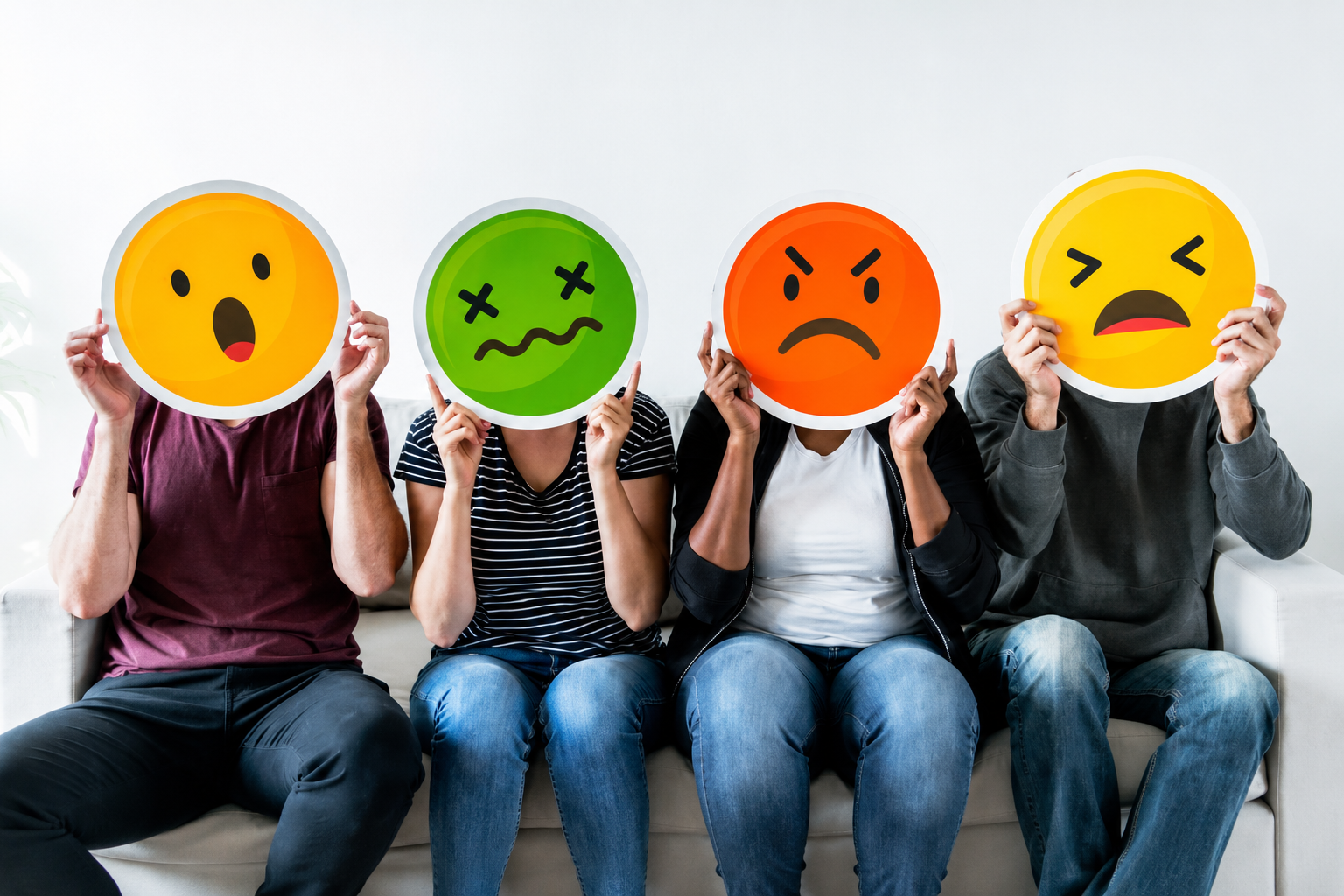
Does life feel different to you?
I have asked that question to friends, strangers, business owners, retirees, veterans, young people, and people I’ve met standing in line at the grocery store. More often than not, I get the same response.
They pause.
Then they say something along the lines of, “Actually, yeah. It does.”
The interesting part is that most people struggle to explain exactly what they mean.
It is not necessarily fear. It is not necessarily happiness either. It is not even a political feeling. It is something harder to describe. A sense that the world is moving faster than it used to. A feeling that time itself somehow feels compressed. A feeling that the pace of change has accelerated beyond what our minds were originally designed to process.
When I find myself wondering about something, I do what I have always done. I research. I read. I ask questions. I listen to experts. I compare viewpoints. I look for facts instead of assumptions.
What I discovered is that many researchers, psychologists, sociologists, and technology experts have been discussing this exact phenomenon for years.
The human brain evolved in a world that changed slowly. For thousands of years, generations lived and died with relatively little technological change. A farmer in one century often lived much like a farmer in the century before.
Today, a single decade can completely transform how people communicate, work, shop, travel, date, learn, and receive information.
Think about how much has changed just since 2020.
Artificial intelligence has become part of everyday life. Smartphones have become extensions of ourselves. Social media platforms shape public conversations. Streaming services replaced traditional television. Remote work became common. Digital payments are replacing cash. Information now travels around the planet in seconds.
Whether we realize it or not, our brains are constantly attempting to keep up.
Researchers have found that humans are exposed to more information in a single day than previous generations might have encountered in weeks. News arrives instantly. Notifications arrive instantly. Opinions arrive instantly. Crisis, controversy, celebration, tragedy, and entertainment all arrive through the same screen.
The result can create a subtle sense of disorientation.
Not because anything is necessarily wrong.
But because our minds rarely get a chance to catch up.
There is another factor as well.
As people age, many report that time feels like it moves faster. Psychologists believe this happens because familiar experiences require less mental processing than new experiences. When life becomes routine, weeks can seem to disappear. Years can feel shorter. Entire seasons can pass before we realize they are gone.
Combine that natural perception with modern technology, nonstop connectivity, and a rapidly changing world, and it is not difficult to understand why so many people feel like something is different.
Because something is.
The world of 2026 is not the world of 2016.
And it certainly is not the world of 1996.
That does not mean society is collapsing. It does not mean secret forces are controlling events. It does not mean reality itself has changed.
It simply means we are living through one of the most rapid periods of technological and cultural transformation in human history.
For many people, that creates excitement.
For others, it creates uncertainty.
For most of us, it creates a little of both.
The important thing to understand is this: if you have been feeling that life seems faster, stranger, or somehow different than it used to, you are not imagining it.
You are not alone.
Millions of people are asking the same questions.
The difference is that most never talk about it.
Perhaps that is one of the reasons I enjoy writing pieces like this. News is not always about government meetings, elections, court cases, or breaking headlines. Sometimes the most interesting stories are the questions people quietly carry around in their heads.
Questions they wonder about but rarely ask.
Questions that remind us we are all trying to make sense of the same world together.
And if you’ve been wondering whether things feel a little different lately, I can assure you of one thing.
You are not the only one asking.