


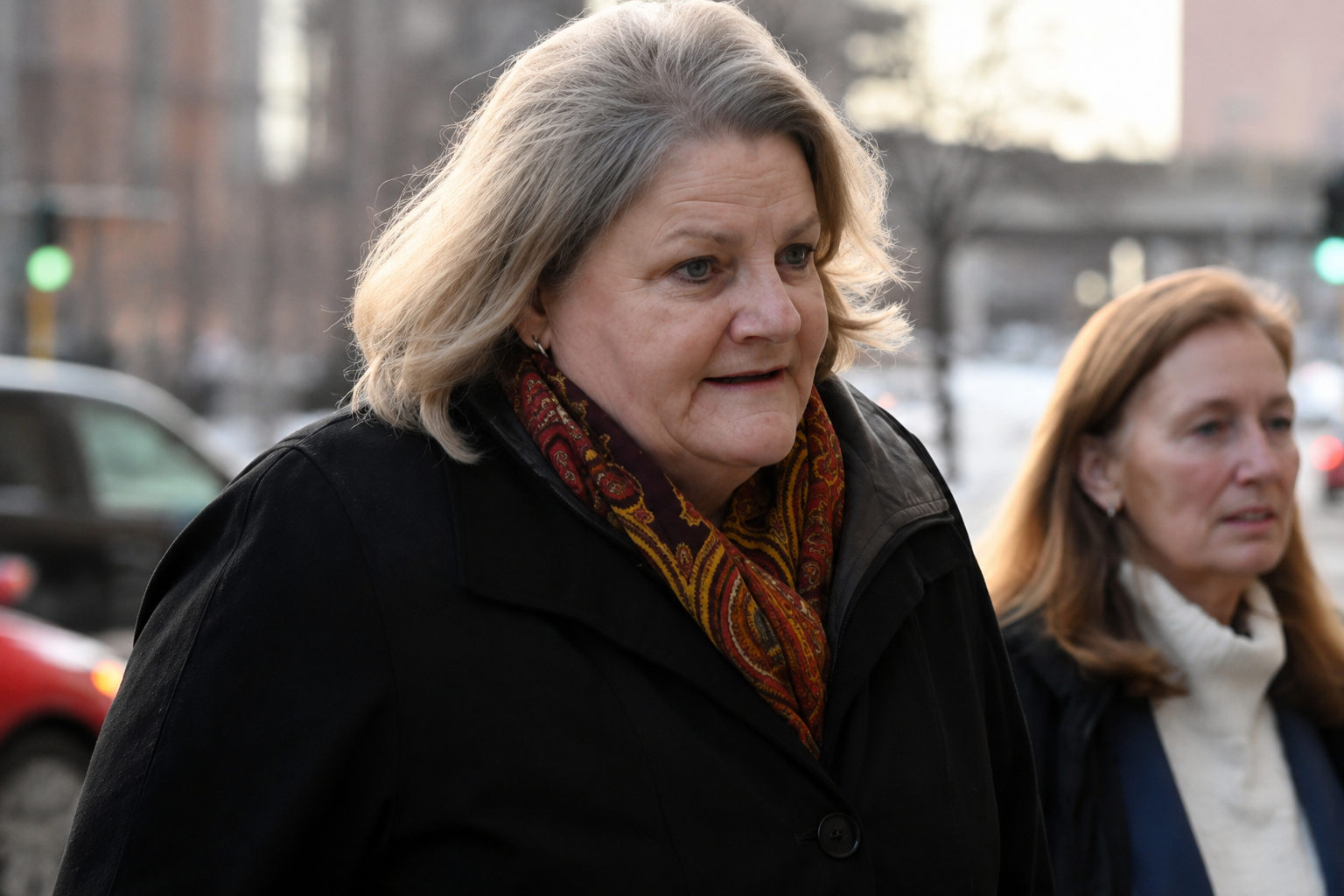
A former Wisconsin judge who was convicted of obstructing federal immigration agents has avoided prison after a federal court imposed a monetary penalty rather than a custodial sentence, bringing one of the nation’s most closely watched judicial misconduct cases to a significant milestone. The decision concludes the trial phase of a prosecution that attracted national attention because it involved the actions of a sitting state judge during a federal immigration enforcement operation inside a courthouse.
Hannah Dugan, formerly a judge with the Milwaukee County Circuit Court, was ordered to pay a $5,000 fine after a federal jury found her guilty of felony obstruction stemming from an incident that occurred in April 2025. Although federal sentencing guidelines suggested the possibility of a prison sentence, the court determined that incarceration was not appropriate under the circumstances.
The case centered on the attempted arrest of Eduardo Flores-Ruiz, a Mexican citizen accused of unlawfully returning to the United States following an earlier deportation. Flores-Ruiz had appeared before Dugan on a state criminal matter when federal Immigration and Customs Enforcement agents arrived at the courthouse intending to take him into custody after the hearing concluded.
Federal prosecutors alleged that Dugan became aware of the agents’ presence and intervened in a manner that delayed the arrest. According to evidence presented during trial, prosecutors argued that she directed federal officers away from the courtroom while Flores-Ruiz and his attorney exited through a restricted area of the courthouse not ordinarily used by the public. Although the delay allowed Flores-Ruiz to leave the building ahead of the waiting officers, immigration agents quickly located him outside the courthouse, pursued him on foot and completed the arrest a short distance away.
The prosecution maintained throughout the case that the issue was not immigration policy itself, but whether a public official knowingly interfered with federal law enforcement officers carrying out a lawful arrest. Prosecutors argued that judges, like all public officials, remain subject to federal criminal statutes when their actions obstruct the enforcement of federal law.
Dugan’s defense presented a different interpretation of the events. Her attorneys argued that she acted out of concern for courtroom security and the orderly administration of judicial proceedings rather than with the intent to prevent an arrest. They maintained that judges routinely make decisions intended to preserve safety, minimize disruptions and protect the integrity of court proceedings. The defense also argued that the prosecution raised broader constitutional questions regarding the independence of the judiciary and the extent to which judges may exercise discretion while managing their courtrooms.
Those arguments did not persuade the jury, which returned a guilty verdict on the felony obstruction charge while acquitting Dugan on a separate misdemeanor allegation related to concealing an individual from arrest. The conviction marked an extraordinary moment in American jurisprudence, as criminal prosecutions of sitting state judges involving federal immigration enforcement remain exceptionally uncommon.
During sentencing, the federal court acknowledged the seriousness of the offense but also considered several mitigating factors before deciding against imprisonment. Among those considerations were Dugan’s lengthy career in public service, the loss of her judicial office, the extensive public attention surrounding the case and the professional consequences that followed her conviction. The court concluded that those factors, combined with a financial penalty, were sufficient to satisfy the objectives of federal sentencing.
The outcome has generated nationwide discussion among legal scholars, former prosecutors and judicial ethics experts about the responsibilities of judges when federal and state authorities operate within the same courthouse. Courthouses frequently serve as places where multiple law enforcement agencies carry out independent responsibilities, occasionally creating situations in which competing legal interests intersect. The Dugan case has become one of the most visible examples of those tensions reaching the criminal justice system.
The prosecution also unfolded against the backdrop of increased federal immigration enforcement efforts, placing additional public attention on the role local courts play when immigration authorities seek to apprehend individuals appearing before state judges. While the criminal case focused on a specific set of actions inside one courthouse, its legal implications have extended well beyond Wisconsin and are expected to influence future discussions regarding cooperation between state judicial systems and federal immigration officials.
The conviction has effectively ended Dugan’s judicial career. She no longer serves on the Milwaukee County Circuit Court, and the criminal proceedings have become one of the most prominent cases involving allegations of judicial obstruction in recent years.
Despite the sentencing, the legal battle is not over. Dugan’s attorneys have indicated they intend to appeal the conviction, arguing that legal errors occurred during the proceedings and that the evidence presented at trial did not support a felony obstruction finding. As the appeal advances through the federal court system, the case is expected to remain under close scrutiny because of the legal questions it raises concerning judicial authority, federal law enforcement and the boundaries of official conduct inside America’s courtrooms.
With the trial complete and an appeal on the horizon, the case is poised to remain a significant point of reference in future debates involving the separation of state judicial functions and federal immigration enforcement, ensuring that its impact will likely extend well beyond the courtroom where it began.