


Oregon will get one of its most consequential financial updates of the summer Wednesday morning, when state economists present a new accounting of the money flowing into state government and the economic forces likely to shape revenue through the remainder of the current budget cycle. The report will offer considerably more than a revised balance sheet. It will measure personal and corporate tax collections against earlier expectations, update Oregon’s employment and income outlook and show whether the financial assumptions supporting the 2025–27 state budget remain aligned with economic conditions across the state.
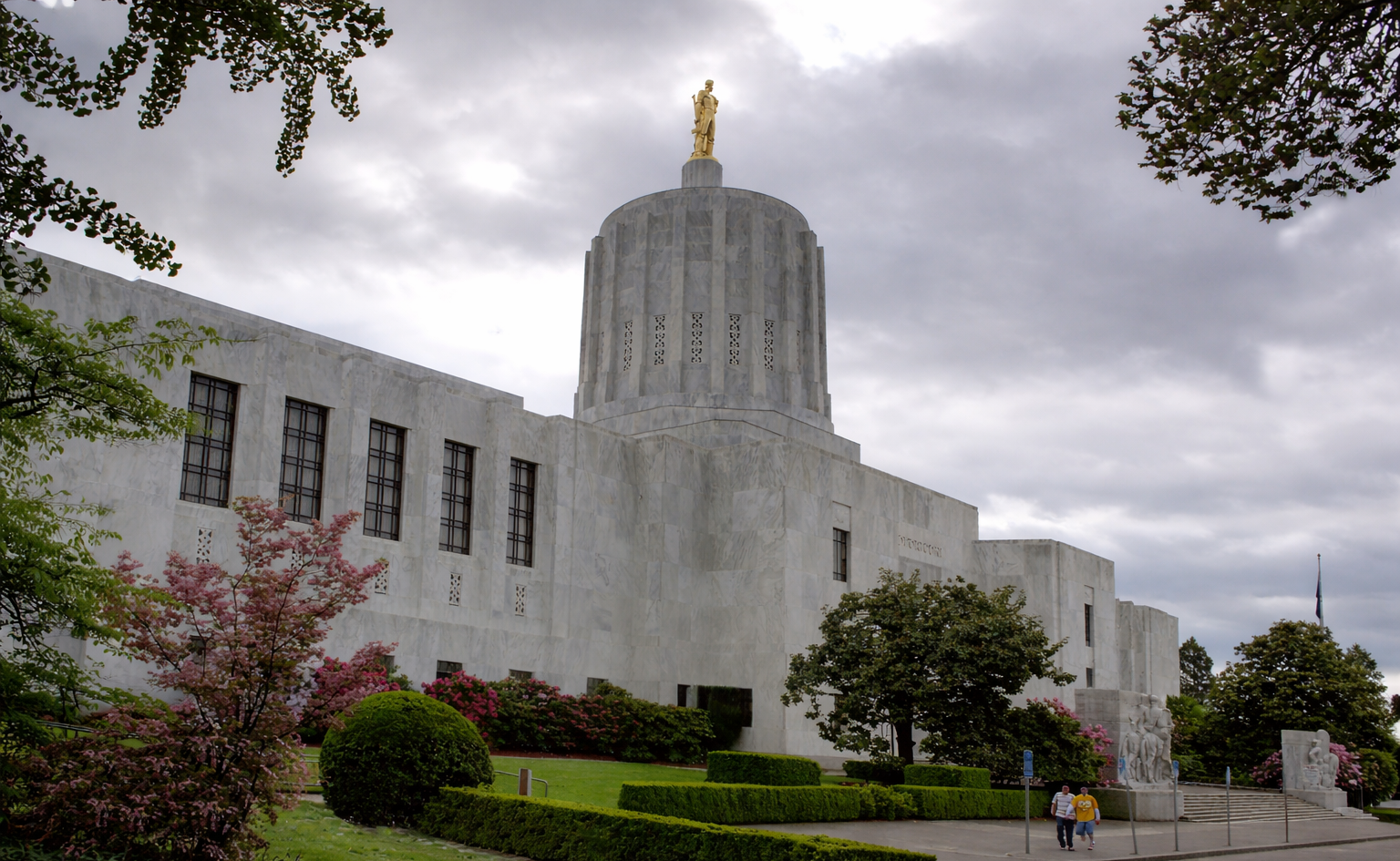
The Senate Interim Committee on Finance and Revenue and the House Interim Committee on Revenue are scheduled to meet jointly at 9 a.m. Wednesday, Aug. 26, at the Oregon State Capitol in Salem. Their agenda centers on the third-quarter Economic and Revenue Forecast prepared by the Oregon Office of Economic Analysis, which produces the quarterly projections used by lawmakers and state agencies to build and evaluate Oregon budgets. No new tax or spending proposal is scheduled for consideration as part of the forecast presentation. The hearing is designed to put the latest economic and revenue figures before lawmakers and establish an updated financial baseline.
The numbers will be measured against a June forecast that placed projected General Fund revenue for the 2025–27 biennium at approximately $36.9 billion. General Fund expenditures, including transfers and other budget components, were estimated at roughly $37.5 billion, while the projected General Fund ending balance stood at approximately $345 million. Although those are large statewide figures, the distance between expected revenue and committed spending leaves the state sensitive to revisions that can appear relatively small when compared with the full two-year budget.
June brought an improvement of approximately $351 million in expected General Fund revenue, but the increase was not simply the product of a rapidly strengthening Oregon economy. Legislative tax changes and transfers approved during the 2026 session accounted for a substantial portion of the movement. Personal income tax revenue was projected approximately $153 million higher, corporate income taxes added roughly $139 million and other revenue increased by about $53 million. Wednesday’s forecast will provide a clearer view of how collections have developed since those adjustments were incorporated into the state’s books and whether economic activity itself is producing stronger or weaker results.
That distinction carries particular weight in Oregon because personal income taxes provide a major share of the General Fund. Employment levels, wages, investment income and household earnings can quickly influence the amount available for state programs. Corporate profits and business activity add another layer to the calculation, while inflation, consumer spending and national economic conditions can alter both revenue and the cost of providing government services. A shift of even a few percentage points in the assumptions behind those categories can translate into hundreds of millions of dollars over a biennium.
Oregon taxpayers will also have reason to watch the updated kicker calculations. The June forecast did not project that noncorporate General Fund revenue would reach the level necessary to trigger the personal income tax kicker. At that time, projected revenue remained approximately $660 million below the applicable threshold. The corporate side had already moved beyond its threshold, with approximately $157 million projected to be directed toward education in the following biennium under Oregon’s corporate kicker provisions. Wednesday’s figures will update those calculations using newer revenue information, although the forecast itself should not be confused with a final determination that a personal kicker will or will not occur.
The broader economic forecast may prove just as revealing as the revenue totals. State economists evaluate employment, unemployment, personal income, population growth, inflation, consumer behavior and national economic trends when determining where Oregon’s finances are headed. The result is a statewide projection assembled from an economy that looks very different depending on where a person lives and works. Portland’s technology and professional sectors, the Willamette Valley’s manufacturing and agricultural base, Central Oregon’s construction and tourism economy, Eastern Oregon’s agricultural and natural-resource industries and Southern Oregon’s mixture of health care, retail, construction, tourism, agriculture and manufacturing all feed into the same statewide revenue system.
Southern Oregon residents have a direct stake in those calculations even though Wednesday’s hearing will take place hundreds of miles away in Salem. Josephine, Jackson, Douglas and Klamath counties rely on state-supported systems ranging from schools and courts to public safety, health and human services. State agencies employ workers throughout the region, while local organizations and governments operate programs supported in whole or in part by money appropriated at the state level. Significant deterioration in statewide revenue can place pressure on future appropriations, while stronger collections can give lawmakers additional room to manage existing obligations and emerging costs.
Economic conditions in Southern Oregon also contribute to the revenue forecast rather than merely responding to it. Paychecks earned in Grants Pass, Medford, Ashland, Roseburg and Klamath Falls generate personal income tax revenue. Business activity contributes through corporate and other taxes, while spending at stores, restaurants, hotels and service businesses forms part of the wider economic activity economists monitor. Housing construction, health care employment, tourism, agriculture and other regional industries help determine the income and employment trends eventually reflected in statewide projections.
Population is becoming another increasingly important piece of Oregon’s financial equation. State economists have projected relatively slow population growth over the next decade, with migration expected to provide future gains as deaths exceed births. The consequences reach beyond a simple count of residents. Population growth affects the available workforce, housing demand, school enrollment, consumer spending and the number of people earning taxable income. For rural and smaller metropolitan communities, where employers can already face difficulty filling specialized positions, changes in migration and workforce participation can have economic effects well beyond population statistics.
Oregon’s connections to the national and international economies add further uncertainty. Interest rates influence mortgages, construction and business investment. Inflation affects household purchasing power and government operating costs. Federal tax decisions can change taxable income and business behavior, while international trade conditions can reach Oregon through agriculture, manufacturing and other export-dependent industries. Recent analysis by the Office of Economic Analysis has identified Oregon as particularly exposed to changes in trade conditions, giving Wednesday’s assumptions about the national economy additional relevance to the state forecast.
The approximately $345 million General Fund ending balance projected in June will be among the figures worth examining closely because it represents only a small fraction of the tens of billions of dollars moving through the General Fund during the biennium. An upward revision would increase the financial cushion available within the existing budget framework. A substantial downward revision would narrow that margin and could complicate future decisions as lawmakers balance existing commitments against new costs and revenue expectations.
Wednesday’s presentation also offers an opportunity to determine whether the state’s revenue performance is being driven by recurring economic activity or by factors less likely to continue. Tax payment timing, capital gains, corporate earnings, legislative changes and one-time transfers can move revenue sharply without producing the same long-term effect as sustained employment and wage growth. The Office of Economic Analysis separates and evaluates those factors because a temporary surge in collections carries different budget implications than durable growth in household income and employment.
No single quarterly report will settle Oregon’s long-term financial questions. The Office of Economic Analysis produces four forecasts each year as additional tax receipts, employment figures and national economic information become available, and another forecast is scheduled for November. Wednesday’s report nevertheless arrives with enough of the current biennium completed to provide a meaningful comparison between earlier assumptions and the revenue actually developing across the state.
For Oregon households, businesses and communities, the practical importance of the forecast rests in what the numbers eventually mean for state finances rather than in the mechanics of the Salem hearing. Personal income tax collections will show how a major pillar of Oregon’s revenue system is performing. Corporate collections will provide another measure of business activity and the corporate kicker calculation. Employment and income projections will show what economists expect from the workforce, while the General Fund estimate will establish how much financial room remains within the current state budget.
By the time Wednesday’s hearing concludes, lawmakers should have a considerably sharper picture of Oregon’s finances than they carried into the summer. The comparison with June will show whether the state’s projected $36.9 billion General Fund revenue estimate is holding, whether the $345 million ending balance has expanded or contracted and whether Oregon’s economy is producing enough income and employment growth to support the assumptions already built into the state budget. Those figures will reach far beyond the Capitol, shaping the financial calculations behind state government and the programs serving communities from the Portland metropolitan area to the Rogue Valley and every region between.