


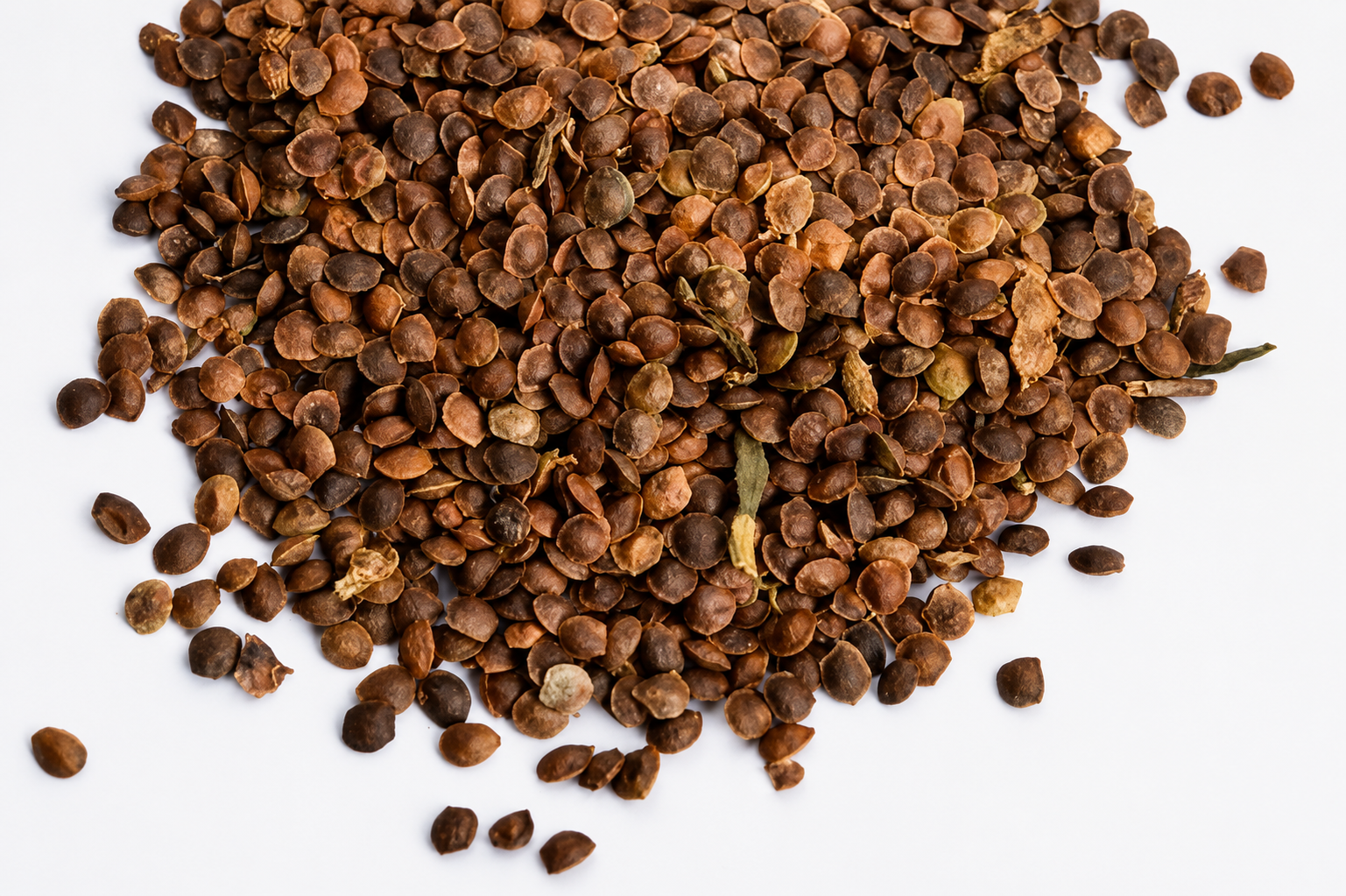
Mimosa pudica seed has earned an unusual place in traditional botanical medicine. Small and unassuming when dry, the seed undergoes a remarkable transformation when exposed to moisture, developing a slippery, gelatinous coating created by its mucilage. That physical characteristic has helped inspire generations of traditional uses and, more recently, considerable interest in the seed as a botanical supplement.
The plant itself, commonly known as the sensitive plant or touch-me-not, is perhaps best known for leaves that rapidly fold when touched. Its seeds are considerably less theatrical until water enters the picture. Once hydrated, the outer seed coating swells and produces mucilage, creating a gel-like material rich in complex plant polysaccharides. It is this transformation, rather than any mystical property, that provides the most scientifically plausible foundation for the seed’s reputation as a soothing and protective botanical.
Mimosa pudica has a long history of use in traditional medicine, particularly Ayurveda, where different parts of the plant have been employed for a wide variety of purposes. Traditional preparations have been associated with digestive complaints, wounds, inflammation and other ailments. Various folk-medicine traditions elsewhere have also made use of the plant, although preparations, plant parts and intended purposes have differed considerably among cultures.
The seed’s ability to produce mucilage is particularly interesting from a digestive-health perspective. Mucilage is not unique to Mimosa pudica. Similar gel-forming plant compounds are found in familiar substances such as psyllium, flaxseed, chia and certain other seeds. These complex carbohydrates absorb water and develop a viscous consistency that can influence how material moves through the gastrointestinal tract.
That property has contributed to modern marketing of Mimosa pudica seed as a so-called intestinal binder. The concept is easy to visualize: a dry seed encounters water, develops a sticky gel and moves through the digestive tract surrounded by hydrated plant material. However, the popular description of the seed as a toxin catcher should not be confused with clinical proof that it selectively captures and removes specific toxins, parasites or other harmful substances from the human body. Those are substantially stronger medical claims and require substantially stronger evidence.
The same caution is especially important when discussing venom. Mimosa pudica has appeared in traditional medicinal practices involving snakebite and other serious conditions, and laboratory researchers have investigated numerous plants for possible interactions with venom components. Such research can be scientifically interesting, but it does not establish Mimosa pudica seed as an effective treatment for envenomation.
Snakebite is a medical emergency. Plant mucilage, supplements and traditional preparations should never substitute for emergency medical evaluation and appropriate antivenom when antivenom is indicated. The speed with which some venoms can damage tissue, disrupt blood clotting, impair nerves or threaten breathing makes delay particularly dangerous.
Where Mimosa pudica becomes especially fascinating is in the chemistry of mucilage itself. When exposed to water, hydrophilic polysaccharides within the seed coat absorb and retain moisture, producing the characteristic gel surrounding the seed. This creates a hydrated physical matrix capable of coating surfaces and changing the movement of material around it. Scientists study similar plant-derived polysaccharides for their rheological, adhesive and biomaterial properties.
The chemistry is complex, but the visual demonstration is wonderfully simple. Dry Mimosa pudica seeds can appear almost ordinary. Add moisture and their exterior begins to swell, creating the gelatinous coating that has attracted attention for generations. What earlier cultures could observe directly with their eyes can now be examined through botany, chemistry and materials science.
Mimosa pudica also contains numerous phytochemicals, although their concentrations and biological significance vary according to the part of the plant being examined. Research into compounds associated with the plant has included phenolics, flavonoids, tannins, alkaloids and other constituents. Mimosine, an unusual amino acid associated with Mimosa species, has also attracted scientific attention. The presence of biologically active compounds, however, does not automatically establish a therapeutic benefit or demonstrate that a particular preparation is safe at every dose.
That is an important consideration in the modern supplement marketplace, where centuries of traditional use can sometimes become intertwined with much newer claims about detoxification, parasites, gut cleansing and immune function. Traditional knowledge can provide valuable clues for scientific investigation, but history and laboratory chemistry are not substitutes for controlled human clinical trials.
The more compelling story of Mimosa pudica seed does not require exaggeration. Here is a botanical material capable of dramatically altering its physical structure simply by encountering water. Its mucilage forms a hydrated matrix, its chemistry has generated legitimate scientific interest, and the plant occupies a longstanding place in traditional medicine. Those characteristics alone make it worthy of study.
Perhaps that is also the best way to understand why Mimosa pudica has survived centuries of changing medical thought. Ancient healers did not need modern terminology such as polysaccharides, hydrocolloids or biopolymers to recognize that the seed behaved differently once hydrated. They observed a physical transformation and incorporated the plant into their medicinal traditions according to the knowledge available to them.
Today, science gives us a different vocabulary and a much higher standard of evidence. Mimosa pudica seed can be appreciated for what researchers know about its remarkable gel-forming properties while questions about toxin binding, parasite removal, mucosal protection and other proposed health effects continue to be investigated.
That balance between traditional knowledge and modern evidence ultimately makes the seed more interesting, not less. Mimosa pudica does not need to be portrayed as a miracle detoxifier or an ancient substitute for emergency medicine to deserve attention. Its extraordinary transformation from an inconspicuous dry seed into a hydrated botanical gel is already an impressive example of plant chemistry at work—and another reminder that some of nature’s most intriguing mechanisms were being observed long before science had names for them.