


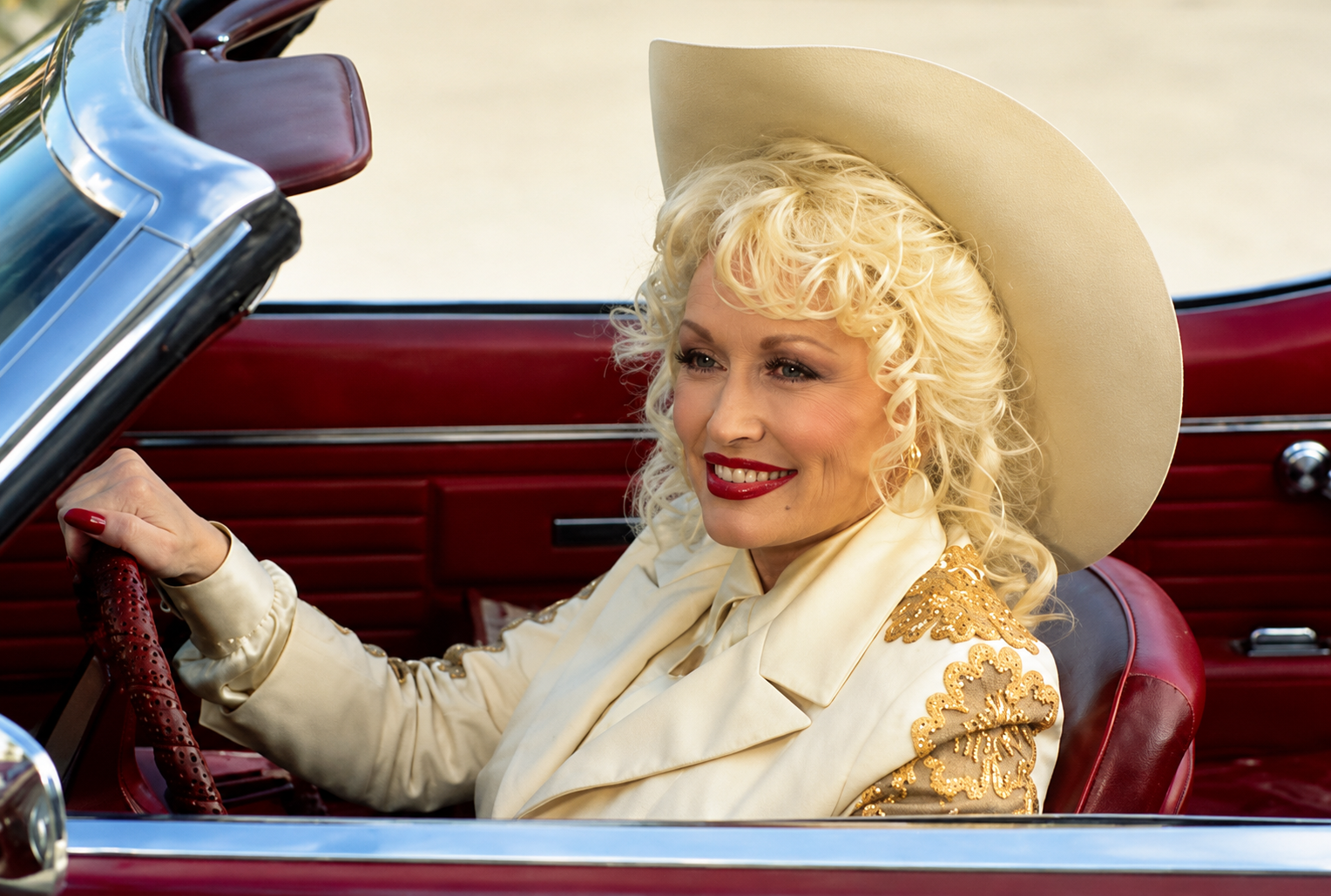
Dolly Parton spent more than six decades turning an impoverished childhood in the mountains of East Tennessee into songs, performances, films, businesses and acts of generosity that reached far beyond country music. By the time her unmistakable voice fell silent Tuesday, she had become one of America’s most prolific songwriters, an internationally recognized entertainer, a successful entrepreneur and a philanthropist whose literacy program placed hundreds of millions of books into the hands of children.
Parton died Tuesday, August 25, 2026, in Nashville at age 80, according to her family and representatives. A cause of death was not immediately announced. Her death ended a career that stretched from childhood performances in rural Tennessee to Nashville television, country and pop stardom, Hollywood, Broadway and charitable work extending around the world.
Dolly Rebecca Parton was born January 19, 1946, in Locust Ridge, Tennessee, the fourth of 12 children. Her father, Robert Lee Parton, worked to support the large household, while her mother, Avie Lee, filled their home with songs and stories. Music was woven through church, family gatherings and everyday Appalachian life, giving Parton a foundation she carried into her songwriting for the remainder of her career.
She never concealed the poverty of her childhood or separated herself from it after becoming wealthy and famous. Instead, she wrote about family, hardship, faith, humiliation, love and home. “Coat of Many Colors” grew directly from her childhood and a coat her mother made from scraps of fabric, transforming a painful school memory into one of the defining songs of her career.
Parton began performing publicly as a child and appeared on local radio and television in East Tennessee before she was a teenager. After graduating from high school in 1964, she left for Nashville and initially gained attention as a songwriter. Other performers recorded her material before the broader public became familiar with the woman writing it.
Her breakthrough came in 1967 when she joined Porter Wagoner on his nationally syndicated television program. Their successful musical partnership introduced Parton to a much larger country audience, while her solo recordings increasingly demonstrated that she was capable of building a career independent of Wagoner.
By the early 1970s, Parton was emerging as one of country music’s most important performers and songwriters. “Joshua,” “Coat of Many Colors,” “Jolene” and “I Will Always Love You” established a body of work built around memorable melodies and sharply drawn human stories. Women in her songs possessed their own desires, frustrations and decisions, giving her writing a distinctive place in an industry still largely controlled by men.
Her departure from Wagoner inspired “I Will Always Love You,” released in 1974. Parton’s recording became a country hit, and she later returned the song to the country chart with another version. Whitney Houston recorded the composition for the 1992 film “The Bodyguard,” turning Parton’s song into a worldwide phenomenon and introducing her songwriting to another generation.
“Jolene” followed an equally remarkable path. Its urgent vocal and simple but powerful narrative survived changing musical eras and became one of Parton’s most frequently recorded songs, interpreted by performers across country, rock and pop.
During the late 1970s, Parton deliberately expanded beyond country music. “Here You Come Again” became a major crossover success, while her humor, distinctive appearance and conversational personality made her increasingly familiar to audiences outside Nashville.
Hollywood followed. Parton made her major motion picture debut in the 1980 comedy “9 to 5,” starring alongside Jane Fonda and Lily Tomlin. Despite having no established film career, she emerged as a successful screen performer. She also wrote and performed the title song, using the sound of a typewriter as part of its rhythmic identity and creating another enduring recording.
Her film career continued with “The Best Little Whorehouse in Texas” opposite Burt Reynolds, “Rhinestone” with Sylvester Stallone, “Steel Magnolias,” “Straight Talk” and later television and film projects. In “Steel Magnolias,” Parton joined Sally Field, Shirley MacLaine, Olympia Dukakis, Daryl Hannah and Julia Roberts, bringing to Truvy Jones the humor and warmth audiences had long associated with her public personality.
Acting never displaced songwriting. Parton wrote thousands of songs during her lifetime and sold more than 100 million records worldwide. Her music moved through country, pop, bluegrass, gospel and eventually rock, earning major honors across the entertainment industry.
She was inducted into the Country Music Hall of Fame in 1999 and the Songwriters Hall of Fame in 2001. The Library of Congress named her a Living Legend in 2004. She received the National Medal of Arts in 2005, Kennedy Center Honors in 2006 and the Recording Academy’s Lifetime Achievement Award in 2011.
Her 2022 induction into the Rock and Roll Hall of Fame initially prompted Parton to question whether she belonged because she did not consider herself a rock performer. She ultimately accepted the honor and later recorded “Rockstar,” a 2023 album that paired her with performers from across rock and popular music.
Her accomplishments away from recording studios were equally substantial.
Dollywood opened in Pigeon Forge, Tennessee, in 1986 and developed into one of the state’s major tourism attractions, employing thousands of people and anchoring a collection of entertainment and hospitality businesses in the Great Smoky Mountains. Parton had left East Tennessee seeking greater opportunity, yet repeatedly directed investment back into the region where she was raised.
Her most expansive charitable undertaking began in 1995. Dolly Parton’s Imagination Library was created through the Dollywood Foundation to provide free books to young children in her home county. Parton developed the program in honor of her father, who could not read or write.
The local project eventually became an international childhood literacy program. Enrolled children receive books by mail from birth until age 5 regardless of family income. Hundreds of millions of books have been distributed, with millions more mailed each month. The program gave Parton a legacy reaching homes far removed from concert halls and recording studios.
Her philanthropy also responded directly to emergencies. After devastating 2016 wildfires struck the Great Smoky Mountains region, killing residents and destroying homes, Parton established the My People Fund, which distributed millions of dollars in direct assistance to families who lost their residences.
In 2020, she donated $1 million to Vanderbilt University Medical Center for coronavirus research. Part of that research supported work associated with development of the Moderna COVID 19 vaccine.
Parton’s elaborate public appearance became nearly as recognizable as her voice. Towering blond hair, rhinestones, vivid clothing and long fingernails formed a deliberately exaggerated stage identity she frequently joked about herself. Behind that image was a disciplined songwriter and businesswoman who maintained substantial control over her work and intellectual property.
That combination allowed Parton to move comfortably between worlds that rarely shared the same audience. She could appear at the Grand Ole Opry, in a Hollywood comedy, on a bluegrass recording, beside a rock musician or before children celebrating the arrival of a new book without abandoning the identity that first made her recognizable.
She also maintained an unusually private marriage while spending most of her adult life in public. Parton married Carl Dean in 1966 after meeting him shortly after arriving in Nashville. Dean largely avoided the entertainment industry and public appearances. Their marriage lasted nearly six decades, and they had no children. Dean died in March 2025 at age 82.
His death marked a profound change in Parton’s personal life. During the months that followed, she spoke publicly about grief while continuing to work, although health problems increasingly forced her to reduce appearances. She postponed and later canceled planned performances and acknowledged dealing with medical issues.
Parton turned 80 in January 2026 and remained connected to Dollywood, music, publishing and projects based on her life and career. Her final months included periods away from public appearances because of health concerns, but she continued working and communicating with audiences.
Her death closes a life that began in a crowded Appalachian household and expanded into nearly every corner of American popular culture. More than 100 million records were sold, thousands of songs were written, major awards accumulated and businesses were built around a name recognized internationally. Beyond those achievements stands another measurement of her life: generations of children received books because a daughter remembered that her father had never learned to read.
Tennessee remained present throughout Parton’s career. It lived in her songs, businesses, philanthropy and stories about family and childhood. The girl from Locust Ridge never disappeared beneath the rhinestones. She carried that beginning onto stages considerably larger than anyone surrounding her childhood home could have imagined.
Across more than six decades, Dolly Parton became a country singer, songwriter, actress, businesswoman, philanthropist, author and international celebrity. Through those transformations, songwriting remained at the center. Stories created from poverty, family, heartbreak, ambition and home traveled around the world.
Parton was 80. Her husband, Carl Dean, preceded her in death in 2025. She leaves behind siblings, nieces, nephews, extended family, an immense catalog of recorded and written work and charitable institutions designed to continue beyond her lifetime.
For generations who encountered her through a country record, a movie screen, a Dollywood vacation, a television appearance or a book arriving in a child’s mailbox, those different pieces belonged to the same extraordinary American life. The music began in the Tennessee mountains more than eight decades ago. By the time Dolly Parton finished singing, much of the world knew the songs.