


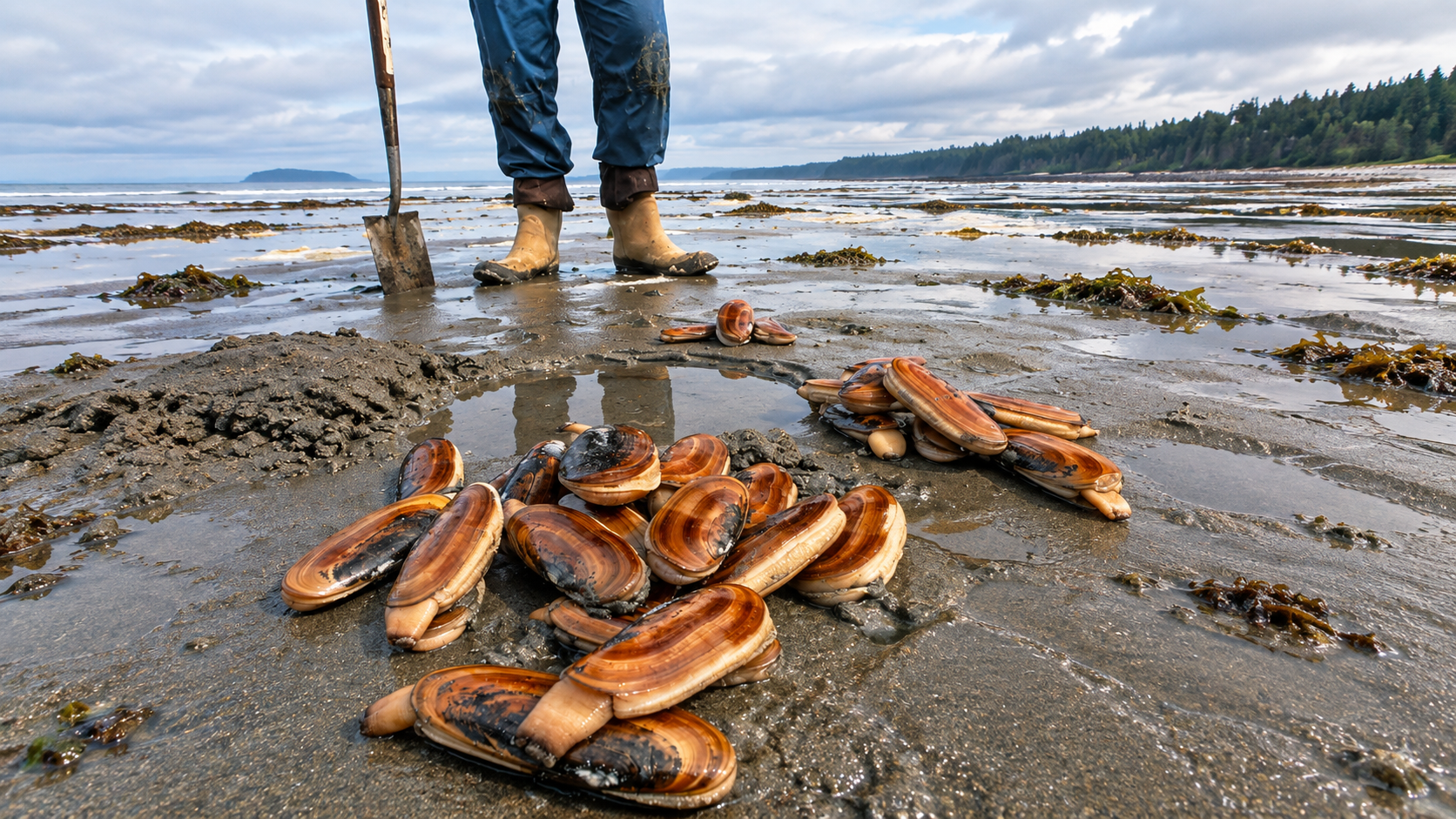
Oregon has closed razor-clam harvesting along its entire coastline after shellfish samples exceeded the safety limit for domoic acid, prohibiting digging from the Washington border to California with no reopening date established. The closure includes Clatsop Beach and all razor-clam harvesting areas along the central and southern coast.
The Oregon Department of Agriculture and Oregon Department of Fish and Wildlife issued the closure October 2, while reopening South Coast mussel harvesting after testing showed toxin concentrations below the alert level. Mussels, bay clams and recreational crab remain open coastwide under the state’s biotoxin classifications, subject to separate licensing requirements, seasons, harvest limits and other restrictions.
The closure affects Southern Oregon residents traveling to the coast to collect razor clams, including those planning outings near Brookings, Gold Beach, Port Orford and Bandon. Beach access remains available, but razor-clam harvesting is prohibited regardless of location along Oregon’s shoreline. Other shellfish harvesting opportunities remain available where permitted by existing regulations and current health notices.
Recent laboratory results prompted the coastwide action. Oregon’s closure limit for domoic acid is 20 parts per million, equivalent to the federal Food and Drug Administration’s shellfish action level of 20 milligrams per kilogram. The state announcement did not disclose individual sample concentrations or identify a related outbreak of human illness.
Domoic acid is a naturally occurring toxin produced by certain microscopic marine algae, including species of Pseudo-nitzschia. Shellfish absorb the toxin as they feed, and contaminated seafood can cause amnesic shellfish poisoning when consumed. The illness can begin with digestive symptoms and progress to neurological complications.
Abdominal pain, vomiting and diarrhea generally develop within 24 hours after contaminated shellfish are eaten. Headache, cognitive impairment and memory loss can follow, with neurological illness developing within 48 hours. Severe cases are rare but can involve coma or death, according to federal health guidance.
Cooking does not eliminate the contamination. Freezing and pickling also fail to reliably inactivate marine biotoxins, meaning razor clams collected from closed beaches cannot be made safe through ordinary kitchen preparation. The harvesting prohibition remains in effect until testing demonstrates that toxin concentrations have fallen below the closure limit.
Razor clams can retain domoic acid for extended periods, a characteristic that can prolong closures after other shellfish qualify for reopening. Different species can therefore carry different harvesting classifications along the same coastline. The South Coast mussel reopening does not establish that nearby razor clams are safe to collect or consume.
Agriculture officials will continue sampling shellfish at least twice monthly as tides and weather allow. Reopening requires two consecutive samples below the closure limit, collected at least one week apart. Until those requirements are met, the statewide restriction remains in place.
The simultaneous mussel reopening restores a harvesting option on the southern coast, where domoic-acid contamination had kept that activity closed. Bay clams and recreational crab also remain open under the current biotoxin notice, although those classifications do not override other fishing regulations.
Crab harvesters are advised to remove and discard the internal organs before cooking. Domoic acid can move from crab guts into cooking liquid and then into the meat when whole crab are cooked in liquid. State guidance also calls for discarding that liquid rather than using it in soups, sauces, broths or other dishes.
Commercial shellfish products remain safe for consumers under the agriculture department’s current notice. Licensed commercial dealers operate under harvesting and distribution controls intended to keep contaminated shellfish out of the food supply. The coastwide razor-clam closure does not establish that all seafood sold in Oregon stores or served in restaurants is affected.
For residents of Grants Pass, Medford and other inland communities planning shellfish outings, conditions should be checked immediately before departure. Oregon’s Shellfish Safety Hotline, 800-448-2474, provides current biotoxin closure information, and the agriculture department maintains an updated recreational shellfish status webpage. Anyone who becomes ill after eating shellfish should seek medical care and report the suspected illness to their county health department.