


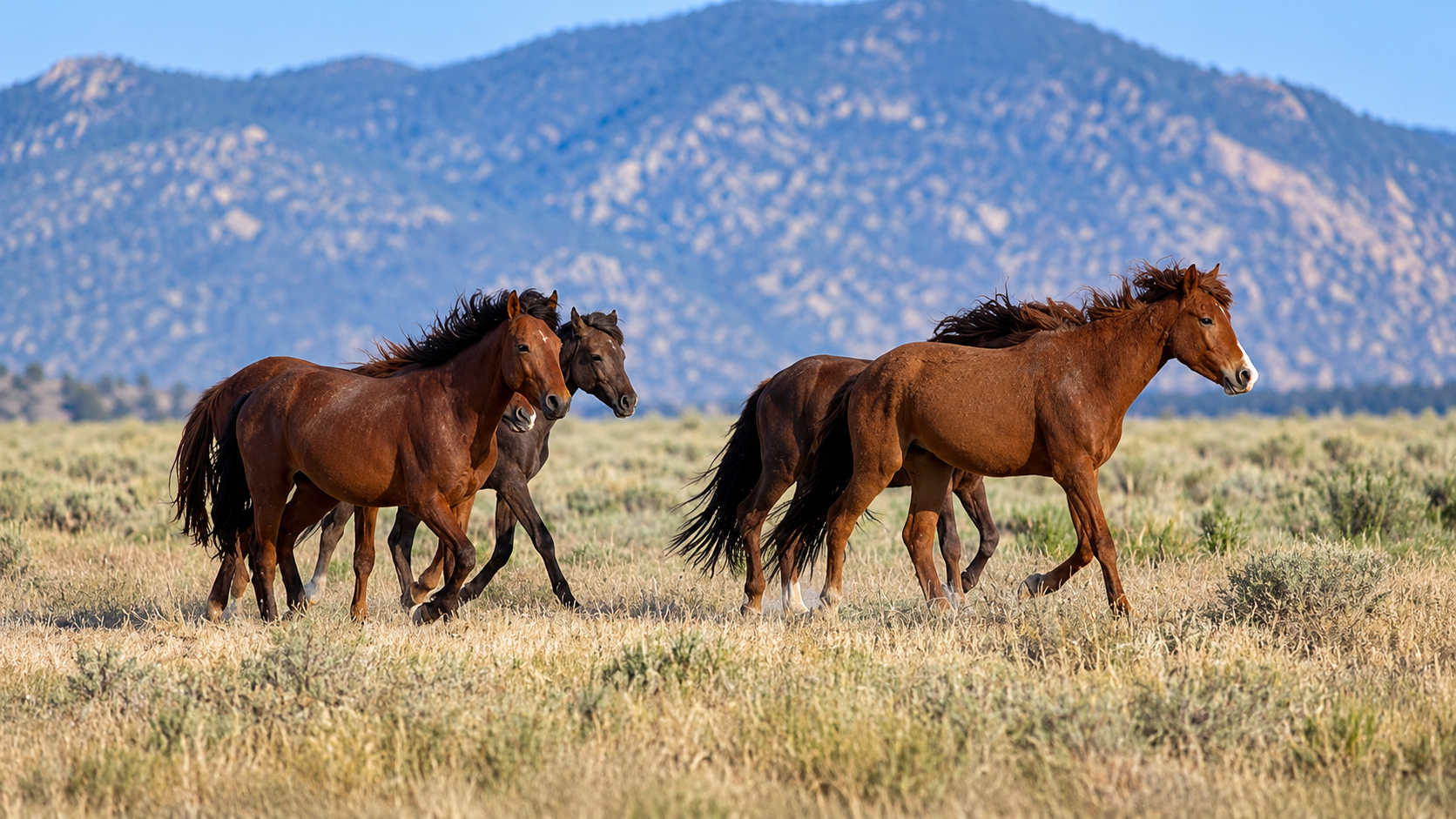
The U.S. Forest Service announced Monday that it will begin removing wild horses from the Big Summit Wild Horse Territory and surrounding areas of the Ochoco National Forest, initiating a series of population management operations expected to continue throughout 2027. The announcement comes as federal population estimates indicate that the number of free-roaming horses in the region has grown to approximately 321, substantially exceeding established management objectives.
The initial operation is expected to begin in late November or December, depending on weather conditions, accessibility and herd movements. Federal officials anticipate removing approximately 50 horses during the first phase, with subsequent operations dependent upon available space at federal holding facilities and conditions across the Central Oregon landscape.
Located approximately 25 to 30 miles east of Prineville, the Big Summit Wild Horse Territory encompasses roughly 27,300 acres of public land within the Ochoco National Forest. The mountainous landscape features elevations ranging from approximately 4,000 to 7,000 feet, with expansive meadows, forested hillsides and seasonal waterways supporting a diverse population of wildlife.
Wild horses have inhabited the region for approximately a century, with their presence historically attributed to domestic breeding stock released onto the open range by local ranchers during the 1920s. Big Summit remains Oregon’s only federally designated wild horse territory managed exclusively by the U.S. Forest Service.
Of the estimated 321 horses currently occupying the region, approximately 132 are believed to be roaming beyond the designated territory’s boundaries. The Forest Service established a management population of between 47 and 57 horses under a revised herd management plan approved in May 2021.
Federal land managers have identified concerns involving available forage, seasonal water supplies, winter grazing conditions and the long-term health of surrounding habitats. The management plan authorizes population reductions alongside fertility control measures, genetic monitoring and continued assessments of environmental conditions.
The upcoming operation will rely on bait trapping rather than helicopter-assisted gathering. Capture personnel will establish designated enclosures and use attractants to encourage horses to enter the holding areas. The timing and duration of trapping will depend largely on environmental conditions and the movement of horses across the territory.
Public and media observation will not be permitted during trapping operations. Forest officials are requesting that recreational visitors avoid designated capture areas to prevent interference with the operation and the movement of animals.
Horses removed from the Ochoco National Forest will be transported to the Double Devil Wild Horse Corrals in California, where they will be prepared for potential adoption. Federal management protocols establish requirements for transportation, handling, nutrition, hydration and veterinary care throughout the removal and holding process.
The Forest Service has not announced a final number of horses scheduled for removal throughout 2027 or specified the eventual disposition of animals that cannot be placed through adoption programs.
The Big Summit herd has experienced substantial population growth since the revised management plan was approved. Federal estimates placed the population at approximately 135 horses in 2021. The latest estimate represents an increase of approximately 138 percent over five years.
The management plan has also been the subject of federal litigation involving the Central Oregon Wild Horse Coalition and two Prineville residents who challenged the proposed population reductions. Their legal challenge raised concerns about genetic diversity, reproductive viability and the ability of a smaller herd to survive severe winters and other environmental pressures.
U.S. District Judge Michael H. Simon subsequently upheld the Forest Service’s management decision, finding that the agency had complied with applicable federal environmental and wild horse protection laws. The ruling allowed the agency to proceed under its approved management framework.
The Central Oregon operation follows several wild horse management activities conducted elsewhere in Oregon during 2026 under the authority of the Bureau of Land Management.
In September, federal officials authorized an emergency gathering operation targeting up to 499 horses in the Sheepshead and Heath Creek areas of southeastern Oregon after prolonged drought and wildfire damage severely diminished available food and water. Federal assessments determined that only two of the herd’s 63 customary water sources remained available.
A separate emergency gathering operation at Riddle Mountain concluded October 21 following similar concerns involving wildfire damage, drought and deteriorating range conditions.
Unlike those emergency operations, the upcoming Big Summit gathering is being conducted as part of an established, long-term population management strategy.
Across Oregon, the Bureau of Land Management oversees approximately 3 million acres designated for wild horse and burro management, with a combined management population target of 2,715 animals. Nearly 16,900 wild horses and burros have been removed from Oregon’s federally managed public rangelands since 1971.
Federal management authority originates primarily from the Wild Free-Roaming Horses and Burros Act of 1971, which established protections for wild horses and burros on designated public lands while authorizing federal agencies to manage populations and maintain ecological conditions. Additional land management responsibilities are established under the Federal Land Policy and Management Act of 1976.
Based on current population estimates, reducing the Big Summit herd and surrounding population to the upper management threshold of 57 horses would represent a reduction of approximately 82 percent. Federal officials have not established that figure as a definitive removal target, as births, deaths, migration and future population assessments could influence subsequent operations.
For the remainder of 2026 and throughout 2027, the Forest Service will continue evaluating herd movements, environmental conditions and holding facility capacity as it determines the timing and scale of additional removals. No definitive completion date has been announced for the broader Big Summit wild horse management operation.