


Homeland Nickel has signed a binding agreement to sell future nickel concentrate from its proposed Red Flat mine near Gold Beach to U.S. refiner Westwin Elements, establishing a prospective customer as the company prepares resource and economic studies for the Curry County project.
The September 28 agreement anticipates approximately 20,000 metric tons of concentrate annually if Red Flat enters production. Westwin would have exclusive purchasing rights and, subject to its acceptance of the preliminary economic findings, would finance a detailed feasibility study covering drilling, environmental assessment, permitting work and development economics.
Homeland expects to deliver an updated mineral resource estimate and preliminary economic analysis during the first or second quarter of 2027. Westwin would then have 90 days to review the reports. The companies previously signed a nonbinding memorandum in May before proceeding to the purchasing agreement.
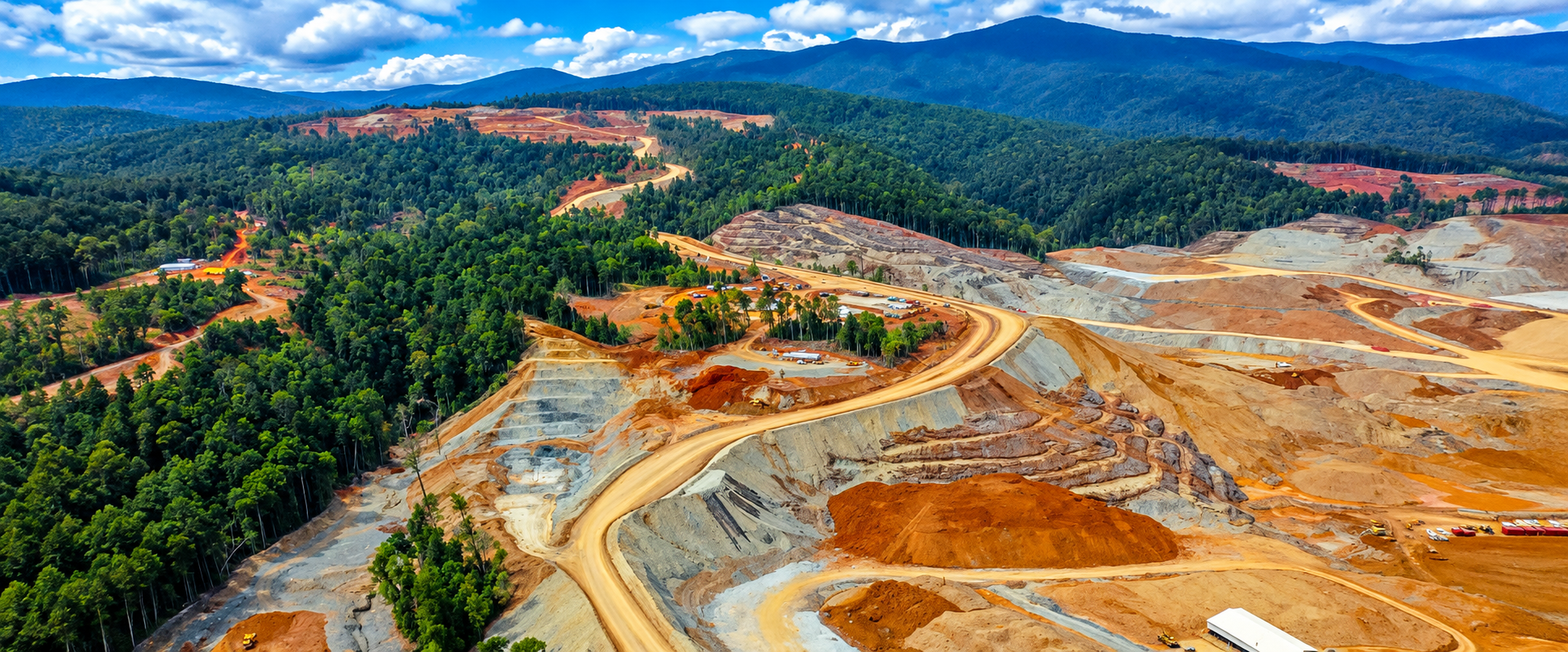
Red Flat consists of 84 mining claims covering approximately 2,015 acres in the coastal mountains about nine miles southeast of Gold Beach. The property is reached from Highway 101 through Hunter Creek Road and connecting forest roads. Its terrain contains nickel-bearing soil and rock formed through the weathering of underlying mineral formations.
The deposit is classified as nickel laterite. Iron in the weathered material gives portions of the ground a reddish appearance, while nickel occurs in both the soil and rock components. Homeland is updating historical exploration estimates to establish the mineral inventory that will support its economic calculations.
Those calculations will examine whether the deposit can support commercial production. The subsequent feasibility study would provide a more detailed assessment of mining, processing and development requirements, along with the environmental work needed to pursue approvals.
The agreement’s anticipated shipment volume refers to nickel concentrate, which contains nickel and other material requiring further processing. Westwin operates a pilot refinery in Lawton, Oklahoma, and is pursuing a larger commercial refining operation. The companies intend to connect future Oregon production with U.S. capacity to manufacture high-purity nickel.
Homeland, a Canadian mineral exploration company, holds nine nickel properties in Oregon. Red Flat is the property covered by the September purchasing agreement. The company has also identified the possibility of future purchasing arrangements involving its other deposits.
Nickel is used in steelmaking, rechargeable batteries and alloys manufactured for applications involving heat and corrosion. The U.S. Geological Survey included the metal on the federal government’s final 2025 critical minerals list, which identifies materials important to the economy and national security whose supplies face potential disruption.
The Oregon project would require development work on federal land and review under applicable state requirements. Federal mineral protections in southwestern Oregon also govern the treatment of existing claims in designated watersheds.
In January 2017, the Bureau of Land Management and Forest Service described a 20-year mineral withdrawal encompassing approximately 101,000 acres in Curry and Josephine counties. The order prohibited new mining claims in the covered areas while preserving valid existing rights.
The protected lands include portions of the Hunter Creek–North Fork Pistol River and Rough and Ready–Baldface Creek watersheds. Federal agencies identified rare plants, salmon and steelhead, recreation and other natural resources as reasons for protecting the areas from potential impacts associated with mineral development.
Under the withdrawal, exploration and extraction remain possible on valid pre-existing claims. Development proposals in the covered areas must address the mineral rights attached to the claims and obtain the approvals required for the proposed operations.
Oregon’s Department of Geology and Mineral Industries administers exploration, surface mining and reclamation approvals. An operating-permit application must describe the proposed site, its boundaries, mining plans and the restoration of disturbed land.
The department coordinates review with other natural-resource agencies. Reclamation security must be provided before an operating permit is issued, establishing financial backing for completion of restoration obligations. Permits remain in effect through mining and reclamation until the department determines that closure requirements have been met.
The processing method selected for Red Flat would help determine the state permitting route. Oregon uses a consolidated application process for chemical-process mines, with DOGAMI coordinating review involving the Department of Environmental Quality, Water Resources Department and other participating agencies.
That process includes environmental and socioeconomic evaluation, public participation and requirements addressing water protection, air emissions, chemical handling, fish and wildlife habitat and reclamation. Monitoring obligations can extend beyond the end of mining.
For residents of Southern Oregon, any eventual construction and production would bring decisions about land disturbance, water protection, access and restoration through the permitting process. The operation’s design would also establish its workforce, equipment and transportation requirements.
Future demand for contractors or suppliers could create opportunities for businesses elsewhere in Southern Oregon, including Josephine County, depending on how the Curry County project develops.
Homeland’s immediate work remains the updated resource estimate and preliminary economic analysis scheduled for delivery in the first half of 2027. Westwin’s review of those findings would determine whether the project proceeds with the refiner’s financing for the more extensive feasibility study.