


The Trump administration has suspended Microsoft and seven other major technology companies from a federal employment-based immigration certification program, accusing employers of manipulating foreign labor procedures at the expense of American workers. The sweeping enforcement action, disclosed Thursday, October 8, also includes federal investigations into nine prominent universities over allegations involving international exchange visas, employment practices and federally supported academic research.
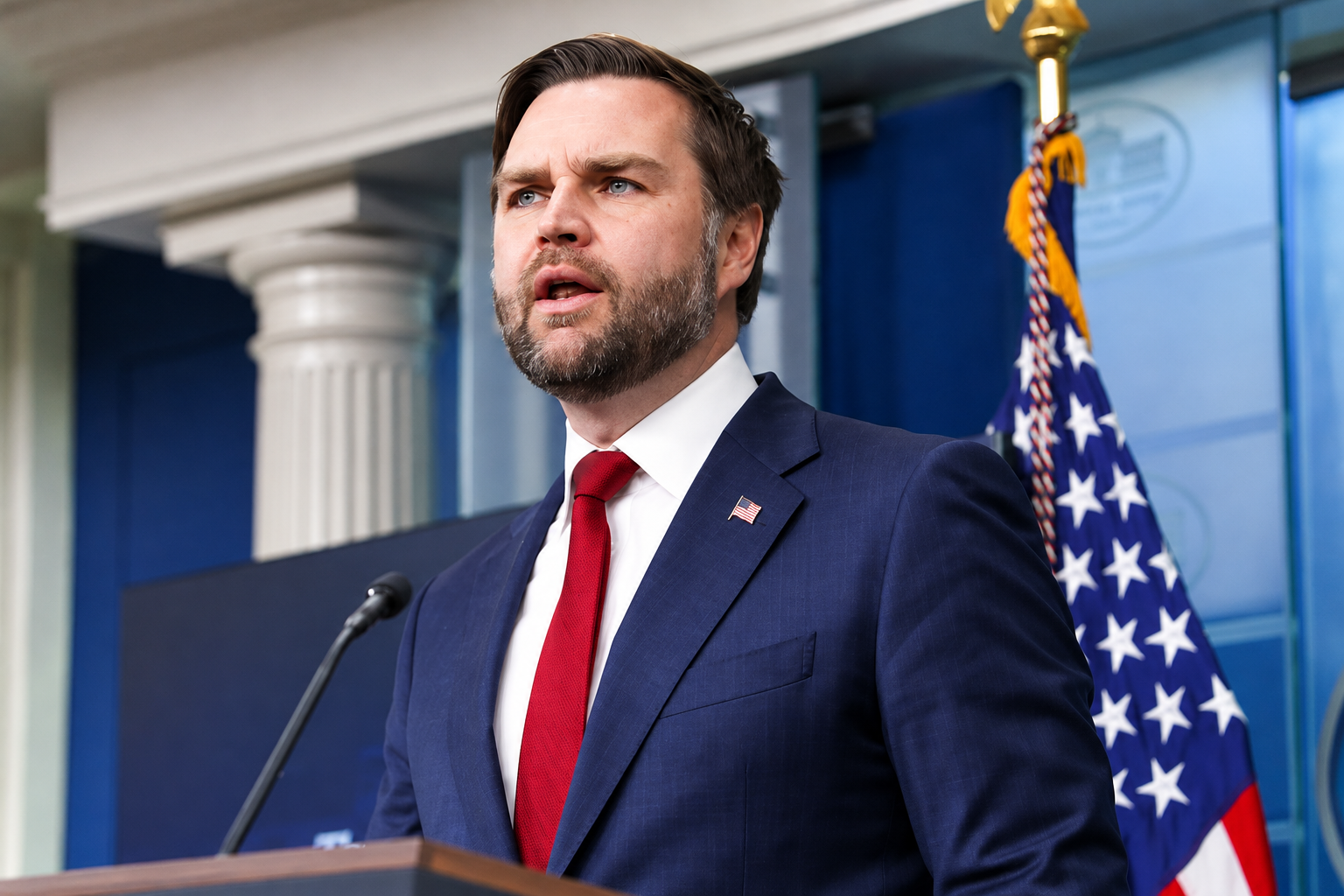
Vice President JD Vance, joined by senior administration officials at a White House news conference, identified Microsoft as a principal focus of the government’s investigation into the employment-based immigration system. The Department of Labor confirmed that it would immediately stop accepting new permanent labor certification applications and discontinue processing pending applications involving eight technology and information technology services companies.
The restrictions apply to Microsoft, Adobe, Cognizant, Infosys, Tata Consultancy Services, Wipro, HCL Technologies and Capgemini. Together, the companies represent a substantial portion of the American technology, software development and information technology consulting industries, employing workers across the United States and maintaining extensive international operations.
The federal action centers on the Permanent Labor Certification program, commonly known as PERM, which employers use when seeking to sponsor foreign nationals for employment-based permanent residency. Administered by the Department of Labor, the certification process requires employers to demonstrate that qualified, willing and available American workers cannot be found for particular positions and that employing foreign workers will not adversely affect prevailing wages or working conditions.
Federal officials allege that some employers have circumvented those requirements through recruitment practices designed to establish an artificial shortage of qualified American applicants. Investigators are examining whether job advertisements, recruitment procedures and employment certifications were manipulated to facilitate immigration approvals while American workers remained available for the same positions.
During Thursday’s announcement, Vance cited Microsoft’s employment and immigration figures as evidence supporting the administration’s concerns. According to the vice president, the company laid off approximately 6,000 American workers during the previous year while obtaining approximately 6,300 H-1B visa approvals and nearly 3,000 employment-based green cards.
Those figures formed a central component of the administration’s allegations, although the numerical comparison does not independently establish that foreign employees replaced specific American workers who lost their jobs. Immigration approvals can include extensions for existing employees, changes in immigration status and permanent residency applications for individuals already employed in the United States.
Microsoft challenged the characterization of its immigration activity, reporting that approximately 80 percent of its H-1B applications during its most recent fiscal year involved extensions or status changes for existing employees rather than the recruitment of new workers. The company also maintained that employees holding H-1B visas receive compensation comparable to other employees performing similar work.
Microsoft previously disclosed significant workforce reductions during 2026, including approximately 4,800 positions eliminated in July, representing roughly 2.1 percent of its global workforce. The administration has not publicly established a direct relationship between those reductions and particular foreign workers hired or retained through federal immigration programs.
Labor Secretary Keith Sonderling confirmed that the restrictions extend beyond Microsoft and affect all eight identified companies. The department will neither accept new PERM applications nor continue processing applications already submitted by those employers while the suspensions remain in effect.
According to figures presented by the Labor Department, the affected companies have collectively sought authorization for nearly three million foreign workers since 2009. Federal officials reported that the companies received more than 230,000 H-1B visa approvals and more than 100,000 permanent labor certifications during that period.
Those cumulative figures encompass more than 17 years of immigration activity and do not, by themselves, establish unlawful hiring practices. The administration has not publicly identified how many of the approvals are alleged to involve fraudulent submissions or whether each company faces identical accusations.
The suspension carries particular consequences for foreign professionals seeking permanent residency through employer sponsorship. The PERM certification process is a prerequisite for many employment-based green card applications, requiring employers to complete federal labor market testing before proceeding with immigration petitions.
H-1B visas and employment-based green cards serve different purposes under federal immigration law. The H-1B classification permits qualifying foreign professionals to work temporarily in specialized occupations, generally requiring relevant educational credentials or professional expertise. Employment-based permanent residency provides qualifying foreign nationals with authorization to live and work indefinitely in the United States.
Thursday’s restrictions specifically target the permanent labor certification process rather than automatically terminating existing H-1B employment authorizations. Foreign employees already working for the affected companies are not necessarily required to leave their positions or the United States because of the announcement. However, employees whose permanent residency applications depend on employer-sponsored labor certification may encounter substantial processing delays.
The duration of the suspensions remains undetermined. Vance indicated that the restrictions could continue until federal officials are satisfied that the affected employers have corrected the hiring practices identified by investigators.
The enforcement action follows a broader series of immigration policy changes undertaken during President Donald Trump’s second administration. Federal officials have increased investigations into employment-based immigration programs, expanded employer compliance reviews and pursued additional financial requirements for certain H-1B petitions.
The White House previously outlined concerns involving the H-1B system, arguing that some employers use foreign labor arrangements to reduce personnel expenses rather than address genuine shortages of specialized American workers. Administration directives have emphasized stronger verification of employment qualifications, more extensive interagency coordination and additional enforcement against suspected misrepresentation in visa applications.
The Department of Labor has also pursued investigations through its employment-based immigration enforcement initiative, Project Firewall, targeting employers suspected of violating wage protections, recruitment obligations and other requirements governing foreign workers.
The federal government maintains that legitimate employment-based immigration programs are intended to supplement the domestic workforce when employers cannot locate appropriately qualified American applicants. The current enforcement campaign is examining whether participating employers have complied with those obligations.
Technology companies have historically relied on international recruitment to fill specialized positions involving software engineering, artificial intelligence, cybersecurity, cloud computing and advanced technical research. Industry representatives maintain that access to qualified international professionals contributes to American innovation and enables businesses to compete in increasingly specialized global markets.
The administration’s restrictions arrive as the technology industry continues adjusting its workforce in response to changing business priorities, expanding artificial intelligence investments and corporate restructuring. Employment reductions and continued demand for highly specialized technical personnel have occurred simultaneously at several major companies, complicating comparisons between layoffs and immigration sponsorship activity.
Microsoft is among the largest corporate participants in employment-based immigration programs. Federal immigration statistics place the company among the leading American employers receiving H-1B approvals, alongside Amazon, Apple and several multinational technology consulting organizations.
The Department of Labor’s action also extends to companies headquartered outside the United States that maintain significant American operations. Infosys, Tata Consultancy Services, Wipro and HCL Technologies are major participants in international technology consulting and outsourcing, while Cognizant and Capgemini operate extensive technology services businesses serving American corporate clients.
India’s technology industry association, Nasscom, reported that Indian technology companies operating in the United States have substantially reduced their reliance on H-1B visas in recent years. The association also indicated that relatively few employees at those companies pursue permanent residency through the PERM certification process.
Several affected companies had not issued detailed public responses to the allegations by Thursday afternoon. Tata Consultancy Services declined to comment, while other companies had not immediately responded to requests for statements concerning the suspensions.
Federal investigators are conducting a separate examination of immigration practices at nine American universities, including Harvard, Yale, Brown, Stanford, the Massachusetts Institute of Technology, the California Institute of Technology, the University of Pittsburgh, the University of California, Davis, and Arizona State University.
The university investigations concern potential misuse of the J-1 exchange visitor visa program, which allows eligible international students, researchers, professors and other exchange participants to enter the United States for approved educational and cultural purposes.
Labor Department Inspector General Anthony D’Esposito confirmed that subpoenas had been issued as investigators examined whether university employment arrangements improperly reduced labor expenses or circumvented federal immigration requirements.
Investigators are also reviewing possible foreign influence, inappropriate financial relationships and circumstances in which immigration violations could compromise federally funded research. No final findings establishing wrongdoing by the nine institutions were disclosed during Thursday’s announcement.
The university investigations and corporate suspensions involve separate immigration classifications and different compliance requirements, although both fall within the administration’s expanded examination of foreign labor and employment practices.
The announcement coincided with a White House ceremony recognizing leading figures in American science and technology. President Trump presented Microsoft Chief Executive Officer Satya Nadella with the National Medal of Technology and Innovation, honoring his contributions to the technology industry only hours after administration officials disclosed the restrictions affecting his company.
The simultaneous events placed Microsoft’s technological achievements and its federal immigration compliance under separate consideration by the same administration.
The suspensions represent a significant intervention in the employment-based immigration certification system, affecting eight major companies while federal investigators continue examining their recruitment and sponsorship practices. The government has publicly alleged improper conduct, but the announcement did not establish final judicial findings of immigration fraud against the affected employers.
Further administrative proceedings, investigative findings and potential legal challenges could determine whether the restrictions remain in place, are modified or are eventually lifted.
For American technology employers and foreign professionals pursuing permanent residency, the immediate consequence is the interruption of an established federal certification process. The Department of Labor has not provided a timetable for resuming application processing, leaving pending cases and future employer-sponsored permanent residency requests dependent on the outcome of the administration’s continuing enforcement actions.