


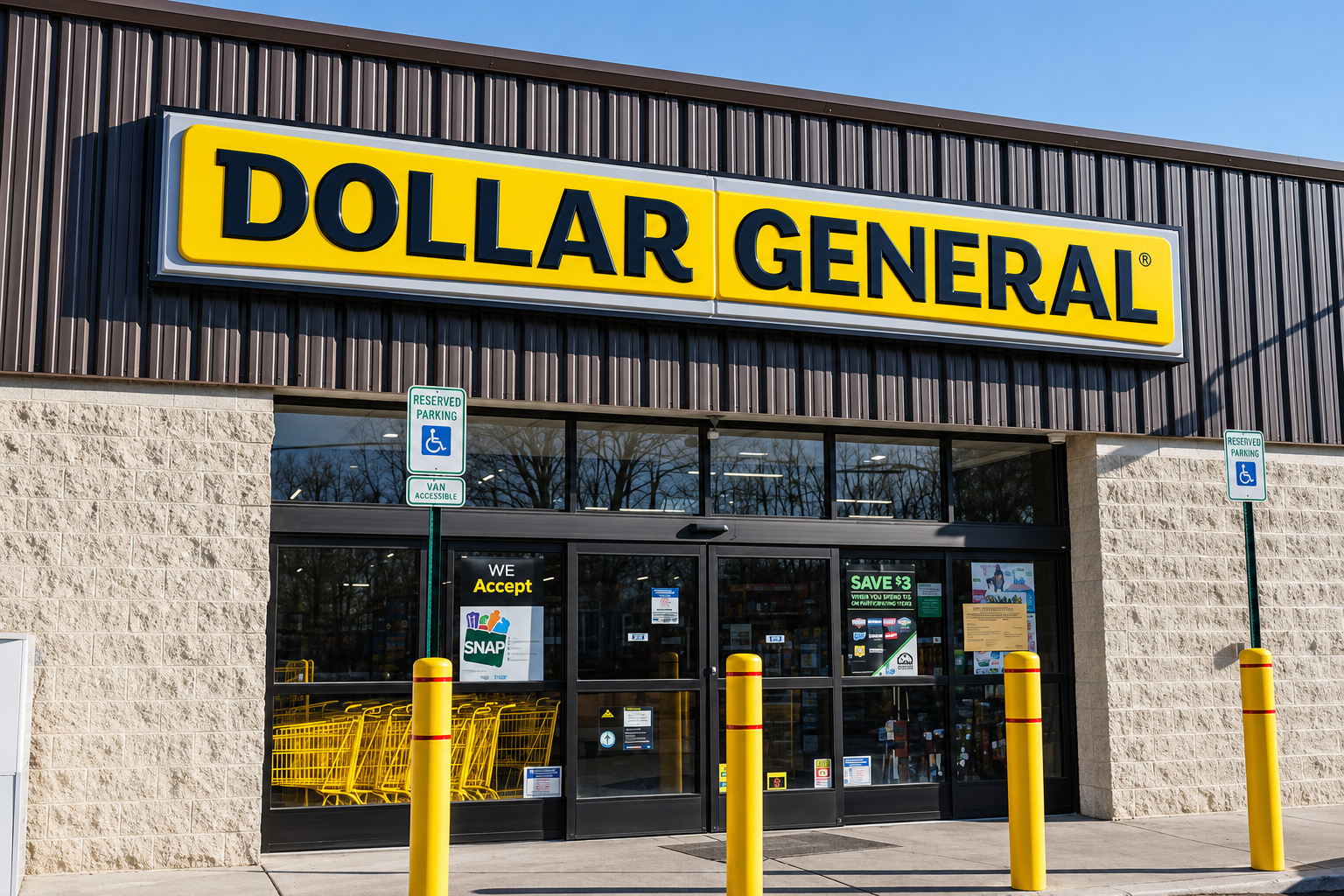
Oregon joined a federal lawsuit Friday seeking refunds for Dollar General shoppers who paid more at the register than the retailer advertised, bringing 30 states into a case that accuses the discount chain of collecting millions of dollars in overcharges on everyday purchases. Federal investigators who tested prices at four stores this year paid more than the marked prices added up to on every shopping trip.
Attorney General Dan Rayfield entered the case November 20 on behalf of a state where Dollar General operates 89 stores, most of them in small, rural communities. In John Day, Nyssa and Irrigon, among the towns Rayfield cited, residents have few nearby alternatives for groceries and household supplies. Oregon alleges that shoppers chose merchandise based on prices the company displayed on shelves, printed in sales flyers or promoted online, only to be charged a higher amount when they paid.
The Federal Trade Commission and 20 states filed the original lawsuit October 26 in the U.S. District Court for the Middle District of Tennessee. Oregon and nine other states joined through an amended complaint Friday. The FTC alleges the discrepancies persisted for years across thousands of stores, even as customers complained directly to the company and state authorities took enforcement action. Dollar General disputes the federal government’s calculation of customer losses and says it has strengthened its procedures for keeping prices accurate.
A January 16 shopping trip in Cleveland, Ohio, documented how the errors could run in both directions and still leave a customer paying too much. FTC investigators bought 58 items and found that 13 rang up at prices different from those displayed on a shelf or product label. The register charged less for five items and more for eight. After counting the savings as well as the overcharges, investigators paid $3.25 more than the marked prices totaled.
In Springfield, Missouri, investigators bought 59 items on February 27. Four rang up too high and two too low, leaving a net overcharge of $4.07. A 60-item purchase in Sharpsburg, Pennsylvania, produced a net overcharge of $2.60 in March. On April 1 in Baltimore, five of 59 items scanned above the displayed price, adding $3.65 to the bill. All four test purchases took place outside Oregon. The state has yet to put a dollar figure on losses claimed by Oregon shoppers.
Dollar General’s own complaint records figure prominently in the federal case. Between January 1, 2023, and March 31, 2026, the company logged 29,265 complaints nationwide in a category it used when customers reported that a store had failed to honor a marked price. The FTC cites the volume of complaints as evidence that the company knew shoppers were encountering the same problem repeatedly. The complaint also points to pricing errors found in store audits and earlier settlements with consumer protection authorities in eight states.
Individual complaints described discrepancies on purchases as small as a carton of milk. An Ohio shopper reported paying $4.25 for milk marked $3.95. In Massachusetts, a shopper said a sign advertised trail mix for $2.75, but the cashier rang it up at $5. When the shopper returned a week later, the sign still displayed the lower price.
Oregon brought its claim under the state’s Unlawful Trade Practices Act. The state alleges Dollar General misrepresented prices on merchandise and shelf signs as well as in circulars, on its website and through its mobile app. Before joining the lawsuit, Oregon notified the company of the conduct it considered unlawful and the remedies it intended to pursue. The state says Dollar General did not provide a written assurance that satisfied its demand for voluntary compliance.
Rayfield is asking the court to order Dollar General to correct its pricing practices and repay Oregon consumers who were overcharged. The state also seeks attorney fees and civil penalties of up to $25,000 for each violation it proves. The penalties would be separate from any money ordered returned to shoppers.
Dollar General acknowledged in its response to the October lawsuit that shelf and register prices can differ. The company said employees have the authority to correct a discrepancy for a customer and are expected to do so. It also challenged the FTC’s method for estimating how much shoppers lost and the agency’s legal authority to recover that money. Dollar General said it had offered a different way to calculate a settlement and remained willing to negotiate while defending the case.
The amended complaint is pending before U.S. District Judge Aleta A. Trauger. The court has yet to determine whether Dollar General violated federal or state law, how much shoppers may be owed or whether the company must change the way its stores handle price differences at checkout.