


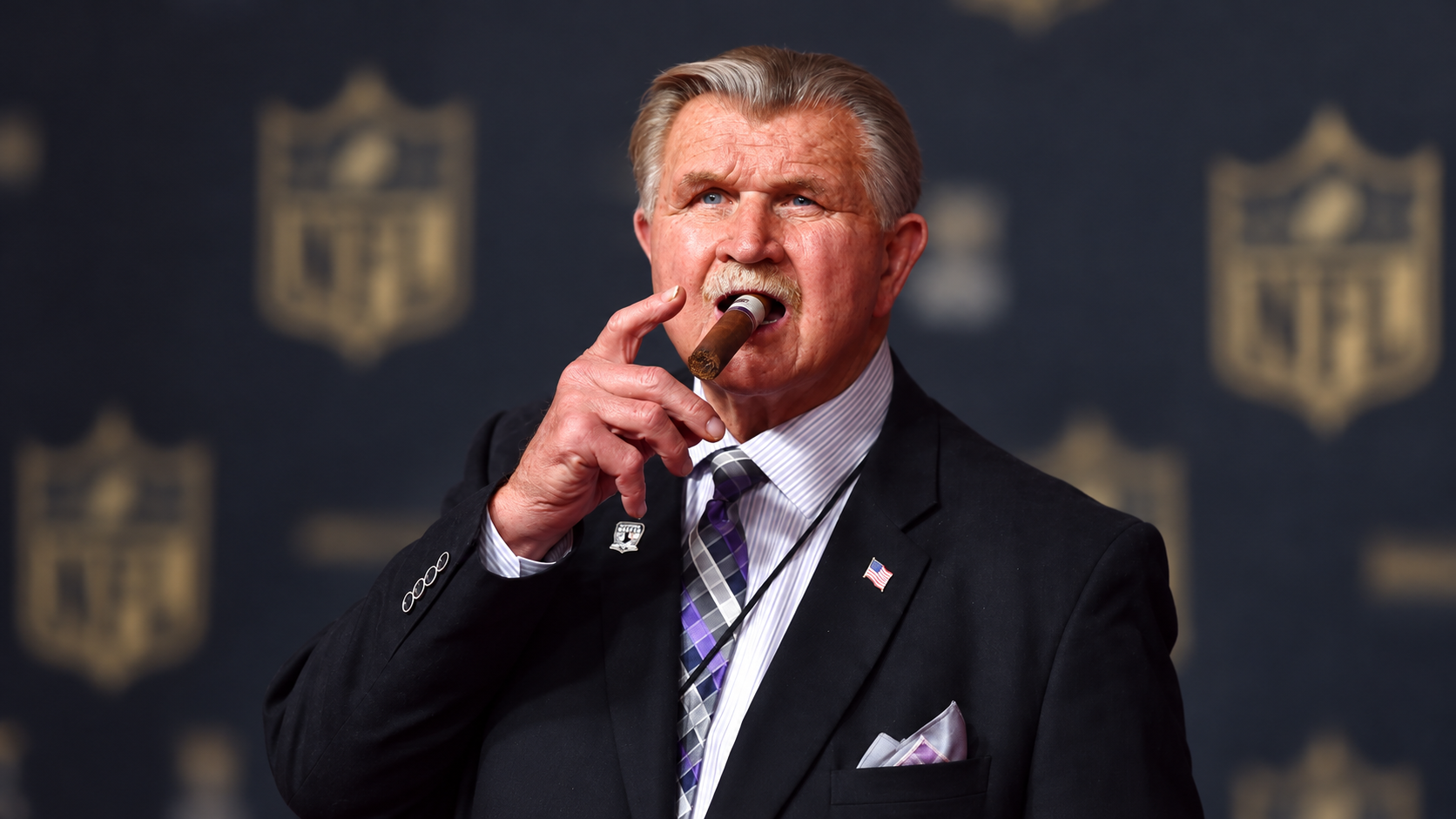
A cigar and a conversation. That is how I will remember Mike Ditka when I think back to the times I met him in Chicago. The man whose sideline intensity had become part of American football was often at the popular bar he owned, smoking his cigars and chatting with patrons. He was funny, witty and easy to talk to, with a presence that left little doubt about who was the boss.
Ditka died Friday, October 9, at 86, nine days before his 87th birthday. His family confirmed his death. No cause was disclosed. His passing closes a life that brought championships to Chicago, helped change the tight end position and made a football coach recognizable to people who rarely watched a game.
For me, the loss brings back memories that have little to do with a scoreboard. Being from Wisconsin and spending considerable time in Chicago as a youth, I had the opportunity to meet Ditka a few times at his bar, a place we frequented. I later met him again in Scottsdale. Each encounter left me with the same impression: he was a very nice, personable man.
There was something memorable about seeing him in that setting, enjoying his cigar and talking with the people around him. His humor belonged to the same personality that football fans knew so well. The wit and the authority existed together. He could be approachable and still be unmistakably Mike Ditka.
I would never confuse those encounters with knowing him as his family, friends or players did. But meeting someone several times can leave an impression that lasts for years. His did. When I think of him now, I remember how pleasant he was to meet and how naturally the description fit him: he was the boss.
Long before that personality filled television screens, Ditka was a young athlete from western Pennsylvania. Born in Carnegie on October 18, 1939, he grew up in Aliquippa and played college football at the University of Pittsburgh. Chicago selected him fifth overall in the 1961 NFL draft, bringing him to the city that would become inseparable from his name.
He arrived with the ability to block and the hands to make tight end a far more dangerous receiving position. His rookie season produced 56 catches, 1,076 yards and 12 touchdowns, earning him Rookie of the Year honors. He made five consecutive Pro Bowls and helped the Bears win the 1963 NFL championship.
His playing career later took him to Philadelphia and Dallas. With the Cowboys, he won Super Bowl VI, then joined Tom Landry’s coaching staff after retiring and earned another championship as an assistant in Super Bowl XII. He had learned the game through the demands of playing it and through years working beside one of its most accomplished coaches.
George Halas brought Ditka back to Chicago as head coach in 1982. Three seasons later, the Bears assembled the team that remains central to his legacy. Walter Payton, Jim McMahon, Mike Singletary and their teammates finished the 1985 regular season 15–1. Defensive coordinator Buddy Ryan’s unit shut out both NFC playoff opponents before Chicago defeated New England 46–10 in Super Bowl XX in January 1986.
That team gave Chicago a championship and a collection of personalities that became familiar far beyond the city. Ditka stood at its center, carrying the expectations of a franchise he had once helped lead as a player. His years coaching the Bears lasted through 1992, and he later coached New Orleans from 1997 through 1999.
The honors accumulated across both careers. He received NFL Coach of the Year recognition in 1985 and 1988. In 1988, he became the first tight end inducted into the Pro Football Hall of Fame. Chicago retired his No. 89 in 2013.
Beyond football, there were restaurants, broadcasting jobs and television appearances. There was also his advocacy for retired players struggling with medical bills or financial hardship. Ditka supported efforts to improve their pensions and health benefits, using the influence his career had given him to help men whose own playing days were over.
His family has lost someone whose place in their lives was far greater than any championship. Chicago has lost a man woven into its sporting identity. Those of us fortunate enough to meet him have our own smaller memories to hold onto.
Mine are of a cigar, his wit and the conversations that made meeting him a pleasure. He referred to me as “that little guy,” a detail that makes those memories all the more personal now. I am grateful I had the opportunity to meet him in Chicago and again in Scottsdale. He was funny, personable and unmistakably the boss. I will remember him with affection, and I will miss knowing he is still out there, being Mike Ditka.