


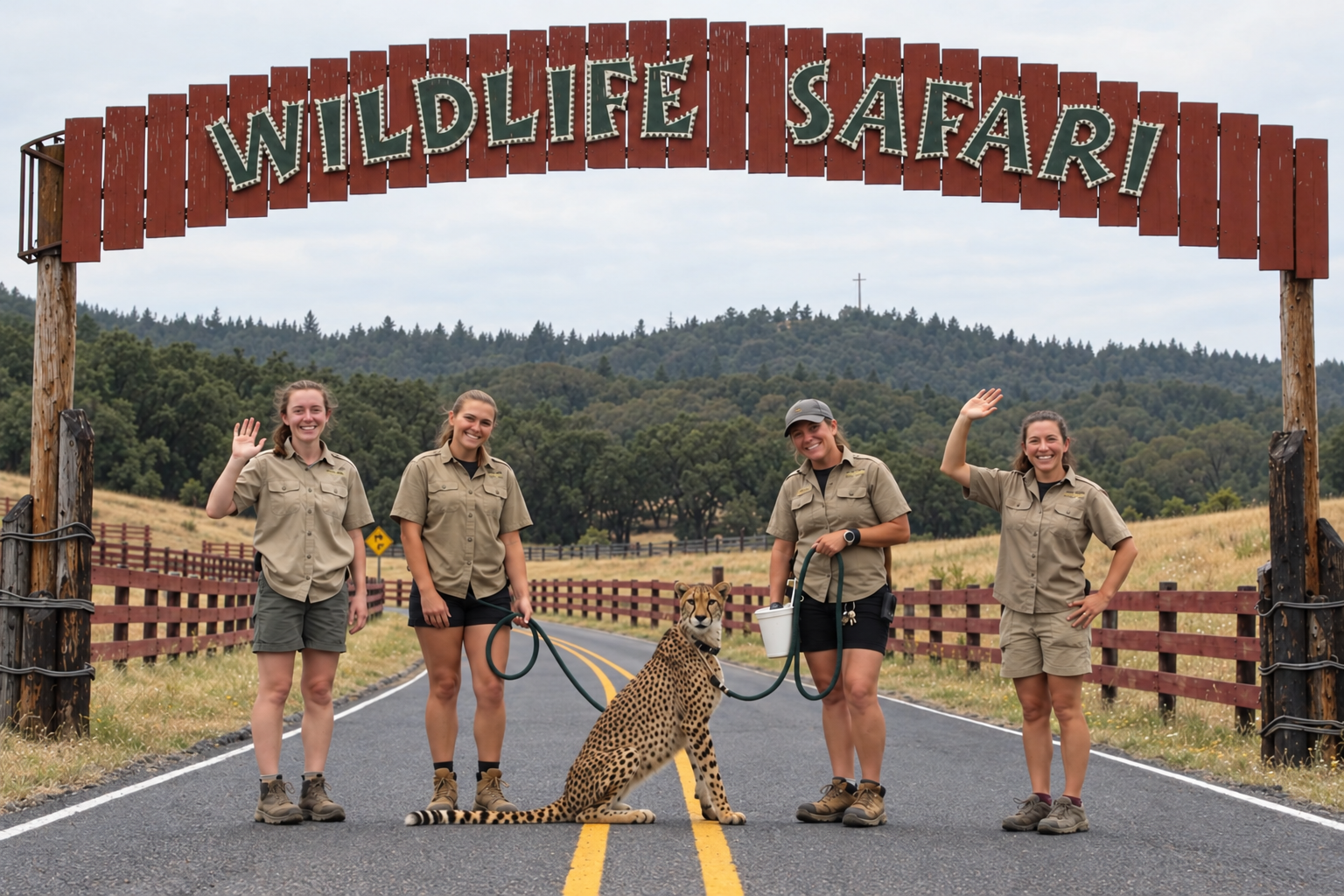
Wildlife Safari’s bid to retain its national zoo accreditation was rejected in Portland last month, interrupting a record dating to 1986 and leaving the Southern Oregon attraction awaiting a public explanation of why its application failed.
The Association of Zoos and Aquariums identified the Winston facility among three applicants denied accreditation in results released September 29. Its independent Accreditation Commission approved 30 other facilities during the fall review, including the Oregon Zoo in Portland.
Wildlife Safari continues to sell admission tickets and advertise daily operations. Its drive-through safari and Safari Village remain listed as open from 9 a.m. to 5 p.m., with October events still on the calendar. The denial has brought no publicly reported closure order, government fine or license revocation connected to the accreditation review.
The unanswered issue is the commission’s assessment of the facility. AZA has not publicly detailed the grounds for its decision, and Wildlife Safari’s initial response offered no explanation of the findings.
In comments published October 6 by the Eugene Register-Guard, Wildlife Safari said it had not received an official letter explaining the accreditation change and could not comment further. The facility subsequently did not respond to KLCC public radio’s request for comment before the station’s October 9 report.
Existing AZA members denied accreditation have 30 days to appeal to the organization’s board of directors. Available reporting has not established whether Wildlife Safari will pursue that option or what corrective measures the commission may have recommended.
Opened in 1972, Wildlife Safari houses more than 550 animals and operates a cheetah breeding research center and an international veterinary medicine program. Lions, giraffes and ostriches are among the animals at the Winston attraction, where visitors travel through the drive-through grounds in their vehicles.
The facility received its first AZA accreditation in 1986. Maintaining that standing requires a full review every five years, rather than an automatic extension based on earlier approval.
The accreditation examination reaches across the operation, from veterinary treatment and animal welfare to employee training, conservation, education, safety and financial stability. An independent inspection team spends multiple days at the facility after reviewing its application. The team’s findings proceed to the Accreditation Commission, which questions senior facility representatives at a formal hearing.
The commission can approve accreditation, grant provisional approval for one year or reject the application. Wildlife Safari received a denial, but the public results do not identify which part of its operation failed to satisfy the requirements.
KLCC’s reporting raised a potential concern involving photographs with leashed cheetahs. AZA President and CEO Dan Ashe told the station that animals participating in encounters must have control over whether they interact with visitors.
The station described Wildlife Safari’s leashed-cheetah photographs as a possible conflict with that standard. It did not establish that the encounters prompted the accreditation denial. No publicly available commission finding cited in the coverage links the photographs to the decision.
The effect on Wildlife Safari’s breeding and research activities also remains unsettled. No detailed public explanation has established whether its cooperative arrangements with other institutions will change or whether particular programs will be affected.
Baylor University Bear Habitat in Waco, Texas, and the Indianapolis Zoological Society were the other applicants denied accreditation during the fall cycle. Their inclusion in the same announcement identifies the scope of the review; it provides no explanation of the findings against the Winston facility.
At Wildlife Safari, admission sales and seasonal programming continue while the accreditation questions remain unresolved. The facility’s response to the commission’s findings, along with any appeal, will determine its next steps toward recovering the standing it first earned four decades ago.