


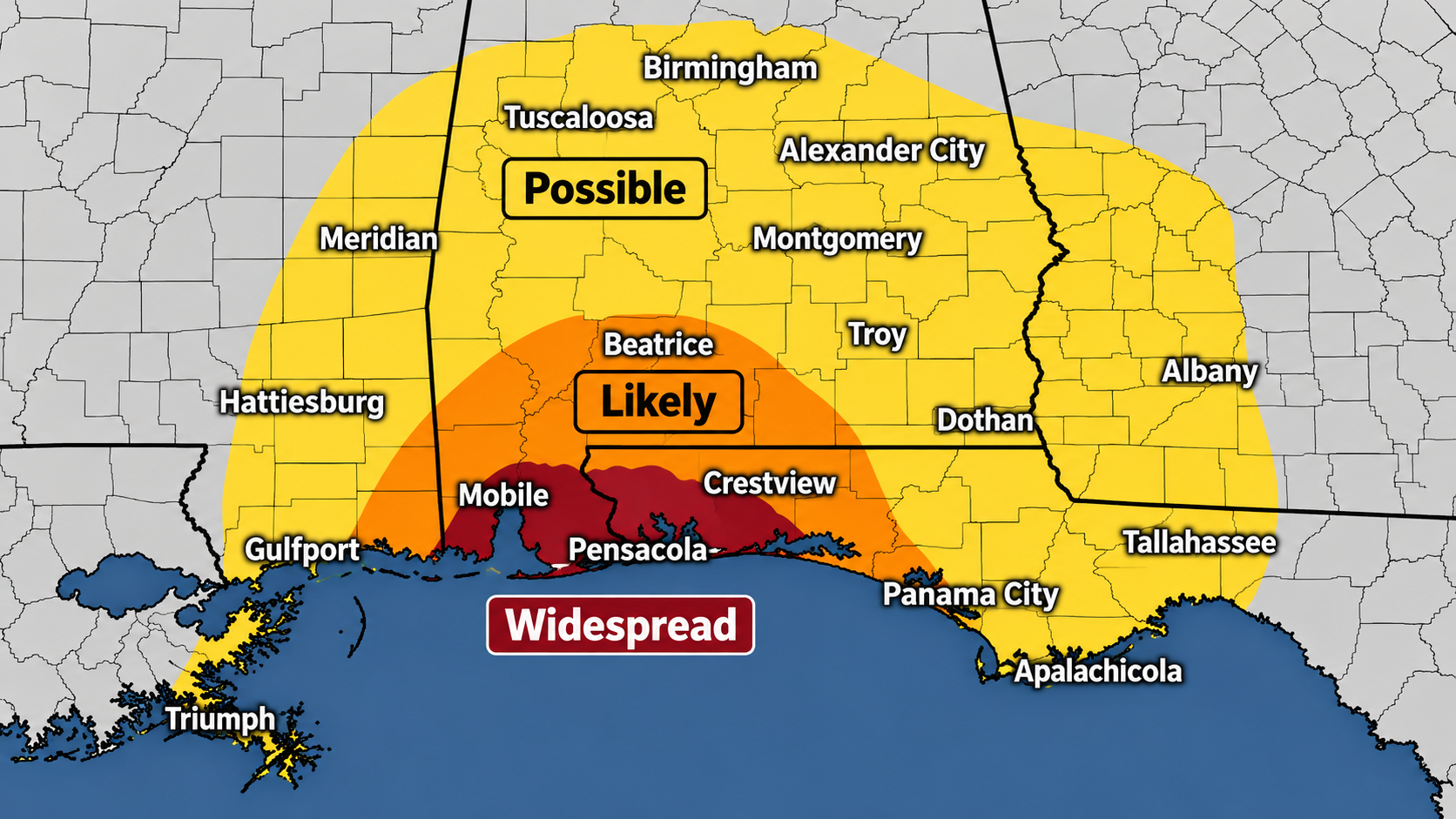
Hurricane Isaias knocked out electricity to nearly 900,000 homes and businesses across Florida, Alabama and Georgia by Saturday morning, leaving utilities confronting widespread damage as residents emerged from a night of powerful winds, falling trees and flooding.
The outages reached far beyond the Florida shoreline where the storm made landfall. Coastal neighborhoods and inland communities lost service as Isaias drove north through the Southeast, bringing down electrical lines and obstructing roads needed by repair crews. Florida positioned approximately 16,000 utility workers to support restoration, while damage assessments began across the affected region.
Hundreds of thousands of customers remained without electricity into the afternoon. At 1:10 p.m. Eastern time, a tracker covering the storm’s affected area across eight states reported approximately 731,000 accounts without service. The continuing outages left a substantial recovery effort underway even after Isaias weakened below hurricane strength.
Florida’s Panhandle absorbed some of the most concentrated electrical failures. Gov. Ron DeSantis reported about 448,000 accounts without power statewide at 7 a.m. Saturday. In several northwestern counties, the storm had interrupted service to more than four out of every five customers.
Approximately 90% of customers in Santa Rosa County were without electricity, along with 89% in Holmes County, 86% in Washington County and 85% in Walton County. Escambia County reported outages affecting roughly 75% of customers, while about 53% were without service in Okaloosa County, which includes Destin and Fort Walton Beach.
Isaias came ashore near Destin Friday night as a Category 2 hurricane with maximum sustained winds of 105 mph. Coastal gusts exceeded 100 mph, sending trees into electrical lines and damaging buildings across the Panhandle. Days of rain had saturated the ground in parts of the region before the strongest winds arrived, contributing to trees falling across utility service areas.
The electrical damage continued into Alabama and Georgia as the storm moved inland. Electric cooperatives in those two states alone reported approximately 103,000 and 45,000 members, respectively, without service by daybreak. Those figures covered only cooperative customers and formed part of the broader regional total.
Southern Alabama communities faced downed trees, fallen power lines and flooding. Houston County closed roads because of hazardous conditions, creating another barrier to movement through storm-damaged neighborhoods. The same obstructions confronting residents also complicated access to areas where electrical repairs were needed.
Florida transportation crews worked overnight to clear debris and inspect bridges. Interstate 10, U.S. 98 and all state-owned bridges had reopened by 8:30 a.m. Saturday, improving access across the Panhandle. Crews continued clearing smaller roads where debris remained.
The state had staged more than 1,400 generators, along with fuel, food and water supplies, ahead of landfall. Utility workers prepared to begin restoration once conditions permitted, with Saturday’s inspections determining the extent of damaged equipment and the work required to reconnect communities.
For households, the interruption reached into kitchens, communications and the equipment needed for daily care. Refrigerated food, charging phones and maintaining electrically powered medical devices become immediate concerns during prolonged outages. Businesses face similar pressures when refrigeration, payment systems and other equipment cannot operate.
The outage figures represent utility accounts, including homes and businesses, rather than individual residents. Each residential account can serve several people, placing the number affected above the reported customer total.
Although Isaias had become a post-tropical cyclone by Saturday morning, heavy rainfall and gusty winds persisted inland. Forecasters warned of flash flooding and possible tornadoes across parts of the Southeast as coastal communities began repairs.
Restoration proceeded alongside road clearing and infrastructure inspections across the region. In the hardest-hit Florida counties, most customers were still waiting for electricity Saturday morning, while crews in neighboring states confronted damage spread along the storm’s inland path.