


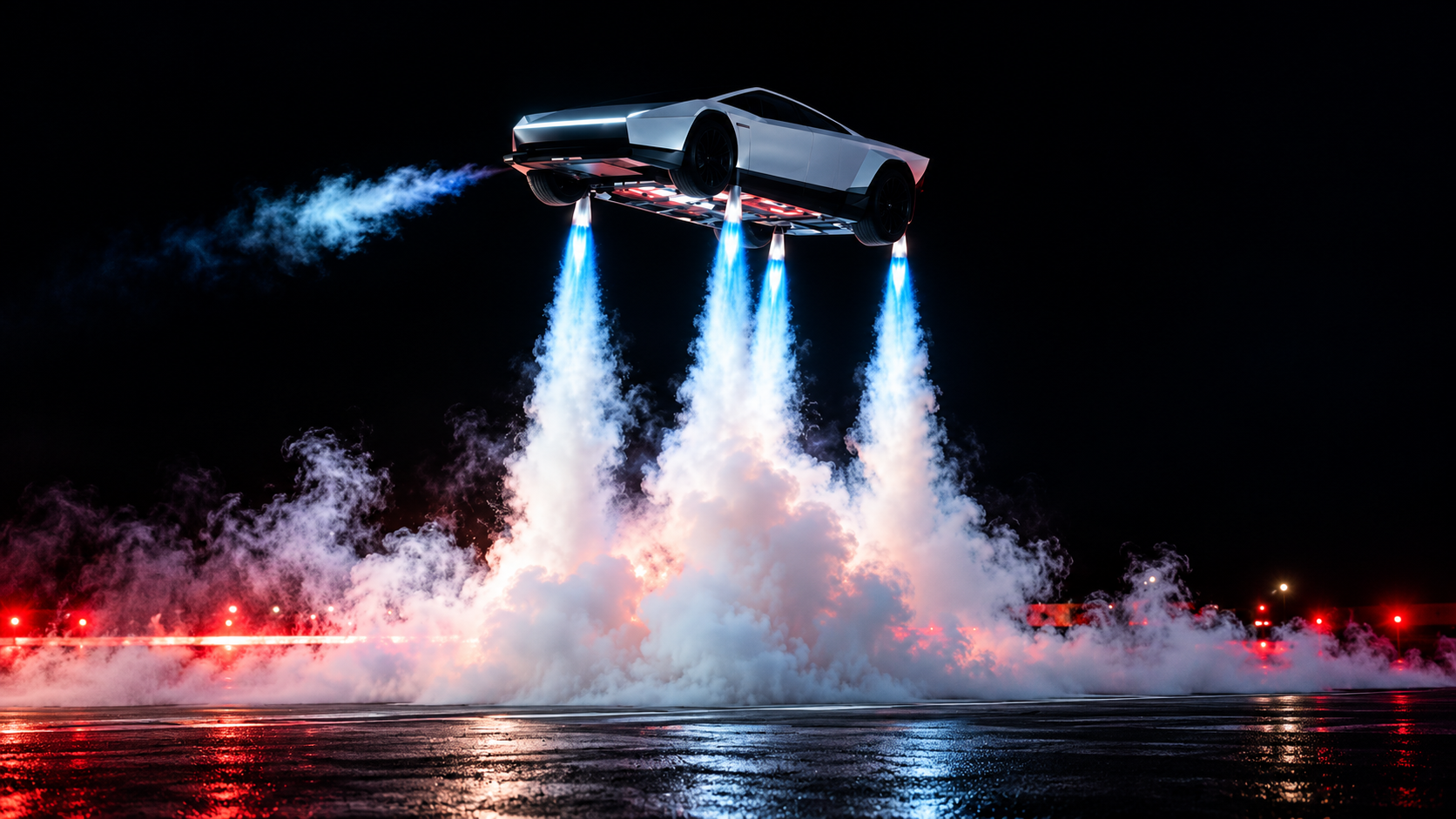
Tesla’s redesigned Roadster climbed an inverted ramp, turned through the air and returned to the ground during an October 15 demonstration in Texas, bringing the company’s long-promised thruster-equipped sports car before an audience nearly nine years after its original unveiling.
Videos of the maneuvers have carried that spectacle onto social media, drawing disbelief over whether the airborne car was real. Even spectators at SpaceX’s McGregor testing facility expressed astonishment afterward. The footage captured a physical demonstration of a working vehicle, with Tesla and SpaceX engineering behind movements that appeared more suited to a movie screen.
The Roadster used a suction system to travel upside down along a ramp, then built-in thrusters to maneuver through the air and land. Later, it cleared parked vehicles while twisting above them. The demonstration brought years of promises about rocket-assisted automotive performance into public view.
Tesla is targeting production in 2028. Its most extreme Rocket configuration remains invitation-only and is not approved for public-road use. The airborne maneuvers are real; an approved flying car available for everyday transportation has yet to reach customers.
Engineers from Tesla and SpaceX combined electric vehicle systems with aerospace propulsion hardware inside a low sports-car body. The Roadster retains its wheels, but directional thrusters give it another means of applying force, extending its capabilities beyond power delivered through tires gripping pavement.
Cold-gas thrusters release pressurized gas through nozzles without combustion. Downward-facing outlets provide lift, while other outlets supply forward thrust and directional control. The equipment can change the vehicle’s position and orientation during brief airborne maneuvers without the extending propeller assemblies associated with many flying-car concepts.
Underbody fans handle a different task, generating suction and downforce to hold the vehicle against a surface. That system supported the inverted ramp maneuver. The demonstration combined surface adhesion, propulsion and controlled movement through the air within a single vehicle.
Tesla’s proposed lineup includes Performance, Thrust and Rocket configurations. Performance centers on electric driving and aerodynamic grip. Thrust adds acceleration thrusters. Rocket carries additional pressure-vessel capacity and directional outlets, with propulsion equipment occupying the space otherwise reserved for a passenger.
Tesla vehicle engineering chief Lars Moravy described acceleration from zero to 60 mph in less than one second and a top speed exceeding 230 mph. The company also presented a driving range above 300 miles per charge. Independent testing has yet to establish those figures for a customer production vehicle.
Reservations require a $50,000 deposit for Performance and $250,000 for Thrust. Final purchase prices were not established during the presentation, and the deposits do not represent confirmed vehicle prices. Consumer deliveries remain ahead of the project’s planned manufacturing launch.
The redesigned body adopts a wedge profile, broad rear section and integrated aerodynamic equipment. Butterfly-style doors and removable glass roof panels surround a driver-focused cockpit. High-pressure storage vessels consume space that would otherwise accommodate luggage or another occupant.
The Roadster name began with Tesla’s first production vehicle in 2008, built using a Lotus Elise chassis. Its proposed successor appeared in 2017 with a projected range of approximately 620 miles and deliveries scheduled for 2020. Repeated delays preceded the latest redesign and its substantially different capabilities.
Further advances could produce smaller pressure vessels, more capable controls and tighter integration of flight hardware. Sustained passenger flight would require development beyond the brief maneuvers demonstrated in Texas, together with an operating framework and necessary approvals. Tesla has set no production timetable for an everyday flying commuter vehicle.
The immediate commitment is a sports car targeted for manufacturing in 2028. Final specifications, independent performance testing and customer deliveries remain unfinished. The technology that sent the demonstration vehicle off the ground, however, has already moved beyond an animation or an artist’s rendering: a Roadster took to the air in Texas.