


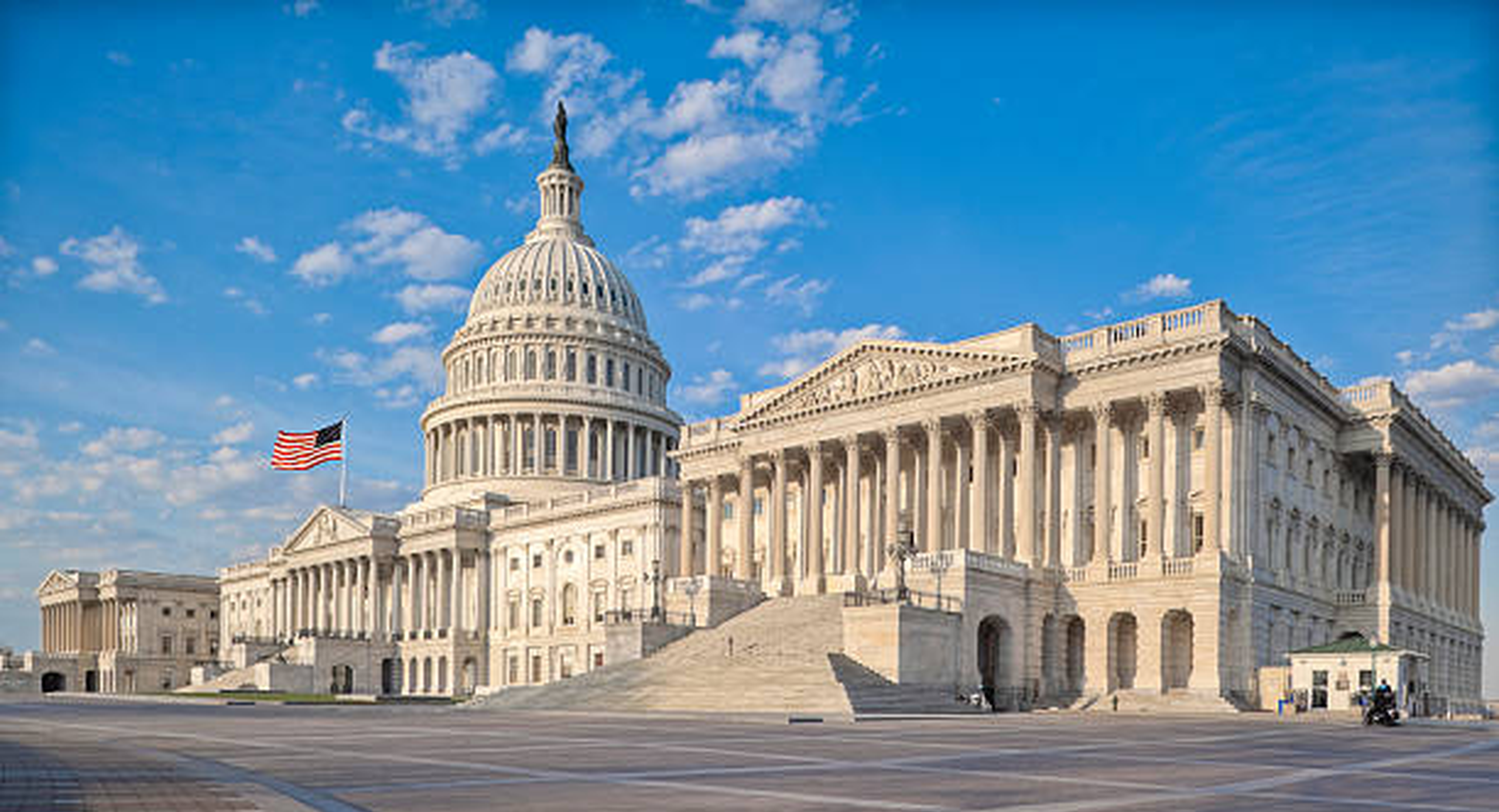
Democrats won control of both chambers of Congress in Tuesday’s midterm elections, defeating Republican candidates across battleground states and longtime Republican territory to end the party’s unified control of Washington.
The November 3 results will place the House and Senate under Democratic leadership when the next Congress convenes in January, while President Donald Trump remains in office for the final two years of his term. Republicans’ losses reached beyond the closely divided districts that usually determine congressional control, including Senate defeats in Texas, Kansas and Iowa.
By Wednesday morning, Democrats had crossed the 218-seat threshold required for a House majority and were positioned to hold at least 54 Senate seats. Several congressional contests remained unresolved, with outstanding ballots still being counted. Those races will determine the size of the new majorities rather than which party controls Congress.
The outcome reversed the governing arrangement Republicans established after the 2024 election. Trump entered his second term with his party controlling both legislative chambers. Beginning in January, advancing his legislative priorities will require support from a Congress led by the opposition.
Democrats gained Republican-held Senate seats in Texas, Kansas, Iowa, Ohio, Maine, North Carolina and South Carolina. They also defended seats Republicans had sought to capture in Georgia and Michigan, preventing Republican gains from offsetting their losses elsewhere.
Texas produced a major break with its recent political history. Democrat James Talarico defeated Republican Ken Paxton, becoming the first Democrat elected to the Senate from Texas since 1988. His victory moved a Senate seat into Democratic hands in a state that has anchored Republican presidential and statewide campaigns for decades.
Kansas delivered another departure from its established voting pattern. Democrat Adam Hamilton defeated Republican Sen. Roger Marshall, becoming the first Democrat elected to represent the state in the Senate since 1932.
In Iowa, Democrat Josh Turek defeated Republican Ashley Hinson for the seat held by retiring Republican Sen. Joni Ernst. The result added to Democratic gains in a state Trump carried by a substantial margin two years earlier.
Ohio voters returned former Democratic Sen. Sherrod Brown to Washington. Brown defeated Republican Sen. Jon Husted in the special election to complete the term originally won by JD Vance before he became vice president. Brown’s victory followed his own Senate defeat in 2024.
In Maine, Troy Jackson defeated Republican Sen. Susan Collins, ending her pursuit of a sixth term. Former North Carolina Gov. Roy Cooper also won a Republican-held Senate seat, while South Carolina elected Democrat Annie Andrews.
Democratic victories in Georgia and Michigan helped secure the new majority. Georgia Sen. Jon Ossoff defeated Republican Mike Collins. In Michigan, Abdul El-Sayed defeated Republican Mike Rogers for the seat of retiring Democratic Sen. Gary Peters. El-Sayed will become the first Muslim elected to the United States Senate.
Republicans retained seats elsewhere, including Nebraska, where Sen. Pete Ricketts defeated independent Dan Osborn, and Florida, where Sen. Ashley Moody won her special election. Those victories preserved Republican representation without preventing the chamber from changing hands.
House contests broadened the Republican losses. Democrats captured districts in multiple regions, including seats Republicans had defended as part of their narrow majority.
In Indiana’s 5th Congressional District, Democrat J.D. Ford defeated Republican Rep. Victoria Spartz. Trump had carried the district by nearly 17 percentage points in 2024. Democratic pickups also included Pennsylvania’s 7th District, where Bob Brooks defeated Rep. Ryan Mackenzie, and New Jersey’s 7th District, where Rebecca Bennett defeated Rep. Tom Kean Jr.
The House result places Democratic leader Hakeem Jeffries in position to seek the speakership. Members of the incoming chamber will elect their speaker in January. If chosen, Jeffries would become the first Black American to hold the office.
Governors’ races extended the changes beyond Congress. Democrats captured Republican-held offices in Georgia, Ohio, Iowa, Texas and Nevada, affecting state leadership as well as the relationship between those governments and Washington.
Keisha Lance Bottoms won Georgia’s governorship, Amy Acton won in Ohio, Rob Sand won in Iowa and Gina Hinojosa won in Texas. Nevada Attorney General Aaron Ford defeated Republican Gov. Joe Lombardo. Republicans won governors’ races in Florida and Alabama, electing Byron Donalds and Tommy Tuberville.
Economic concerns accompanied the Republican losses. National voter polling identified dissatisfaction with living costs and the administration’s economic performance, alongside concerns about government accountability. The results also included victories by Democratic candidates with different ideological positions, from Brown and Cooper to El-Sayed.
The transfer of congressional power will change who writes legislation, leads committees and directs investigations. Democratic House leaders will control the chamber’s agenda, while the Senate majority will oversee consideration of presidential nominations, including federal judges and senior administration officials.
Trump will retain the presidency’s executive powers and the authority to veto bills. Democrats’ congressional majorities will not, by themselves, supply the two-thirds votes in each chamber necessary to override a veto. Federal spending legislation and other measures requiring approval from Congress and the president will face negotiations across party lines.
The outgoing Congress remains in office through the transition. Election officials will continue counting ballots, completing required reviews and certifying results under individual state deadlines. The new Congress is scheduled to convene January 3, with Democrats taking responsibility for both chambers and Republicans preparing to govern from the White House without a congressional majority.