


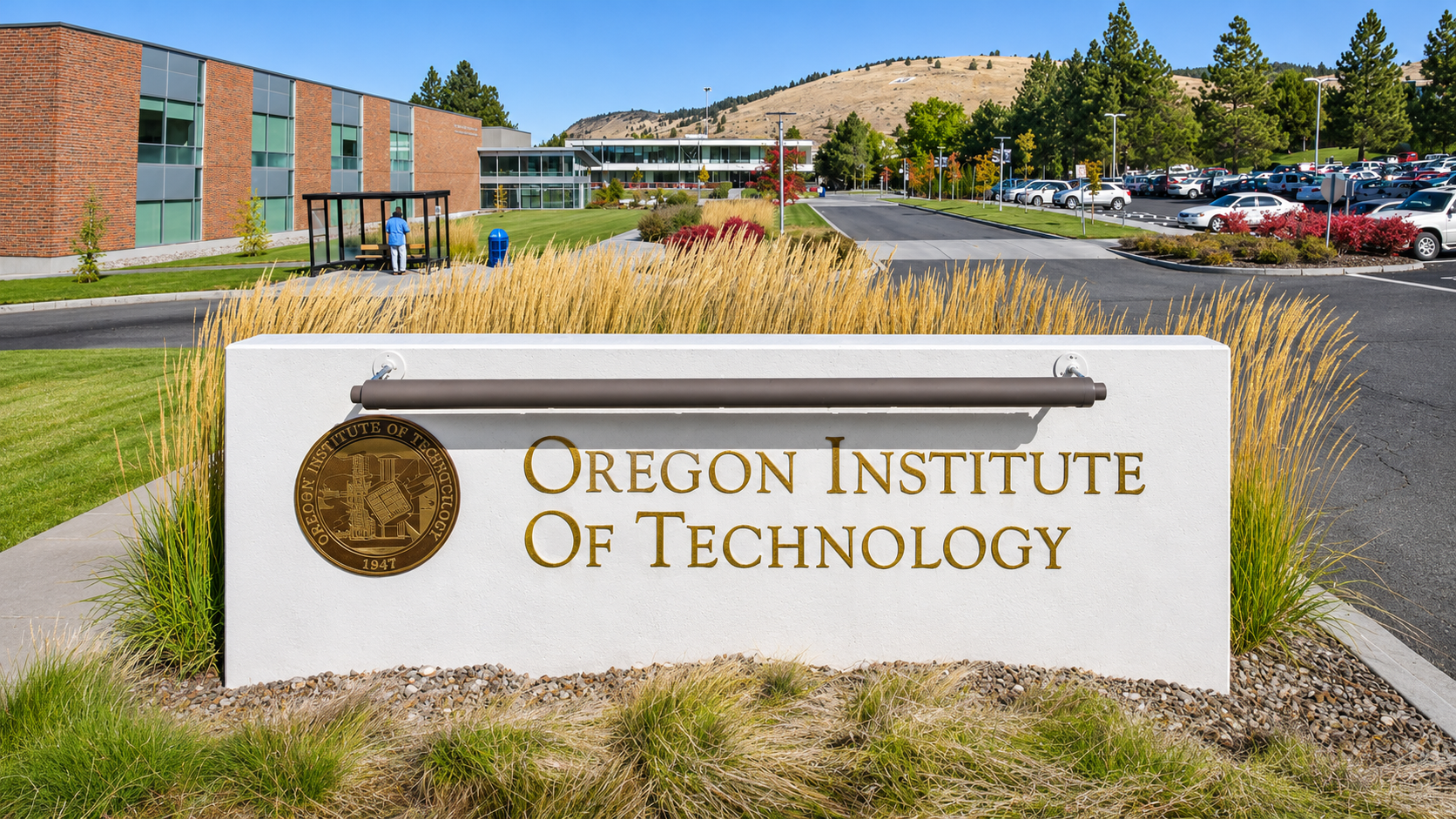
Oregon Tech welcomed 579 freshmen this fall, its largest entering class in more than four decades. The November 19 announcement marks a third straight year of freshman growth at the university, where students from Josephine, Jackson and Klamath counties accounted for nearly 15 percent of enrollment a year ago.
The incoming class grew by 28 students, or 5.1 percent, from last fall. Enrollment across the entire university rose at a slower pace, climbing by 44 students to 5,488, an increase of 0.8 percent. The four-decade milestone belongs to the freshmen. Oregon Tech’s overall enrollment was slightly higher in 2017, when the university counted 5,490 students, two more than it serves today.
In the Rogue Valley alone, 273 residents attended Oregon Tech last fall, including 99 from Josephine County and 174 from Jackson County. Another 533 students came from Klamath County. Those figures count students from the three counties wherever they studied, whether they took classes in Klamath Falls, attended another Oregon Tech location or studied online.
Oregon residents accounted for much of the university’s growth in the years leading up to this fall. Between 2023 and 2025, enrollment among Oregon residents rose from 4,260 to 4,607, while the number of students from outside the state declined from 851 to 837. In last year’s freshman class, 434 of the 551 students were Oregon residents. More than nine in ten members of that class attended full time.
In Klamath Falls, the first indication that more new students were looking for a place to live came months before classes opened. By May 20, Oregon Tech had received housing applications from 483 new students, compared with 443 on the same date the previous spring. Applications from returning students also rose, from 450 to 460. New students accounted for 40 of the 50 additional housing applications the university had received by that point in the year.
The rise in freshman enrollment dates back several entering classes. In fall 2024, Oregon Tech welcomed 530 freshmen. That class grew to 551 the following year, then to 579 this fall. Over the same two years, the university also saw enrollment change well beyond its residence halls. Between fall 2024 and fall 2025, the number of students who studied primarily online rose from 494 to 588, while enrollment at the Portland metropolitan campus fell from 588 to 570.
High school classrooms account for a substantial part of Oregon Tech’s enrollment. Across the state, 82 high schools partner with the university to offer courses that carry both high school and college credit. In fall 2025, those classrooms accounted for 2,116 of the university’s 5,444 students. High school students took 9,013 college credit hours through Oregon Tech that term, up from 8,306 the previous fall.
This year’s freshmen also entered during a broader discussion about the future of Oregon’s public universities. Phil and Penny Knight’s $1 billion gift to the University of Oregon brought fresh attention to the roles of the state’s institutions. Oregon Tech President Nagi Naganathan welcomed the investment in Eugene and used the November enrollment announcement to address the place of a polytechnic university in a state that also supports research universities and regional campuses.
Naganathan singled out the preparation of health professionals and engineers, two fields with longstanding ties to Southern Oregon. In the Rogue Valley, Oregon Tech and Rogue Community College announced an agreement in September to bring upper-division manufacturing engineering technology courses to RCC facilities. In Klamath Falls, the university’s health programs train students in fields ranging from dental hygiene to medical imaging. Both specialties figured in the president’s assessment of what Oregon Tech contributes as its entering classes grow.
“The strength of Oregon’s system will come not from every institution doing everything, but from each doing very well what it was built to do,” Naganathan said.