


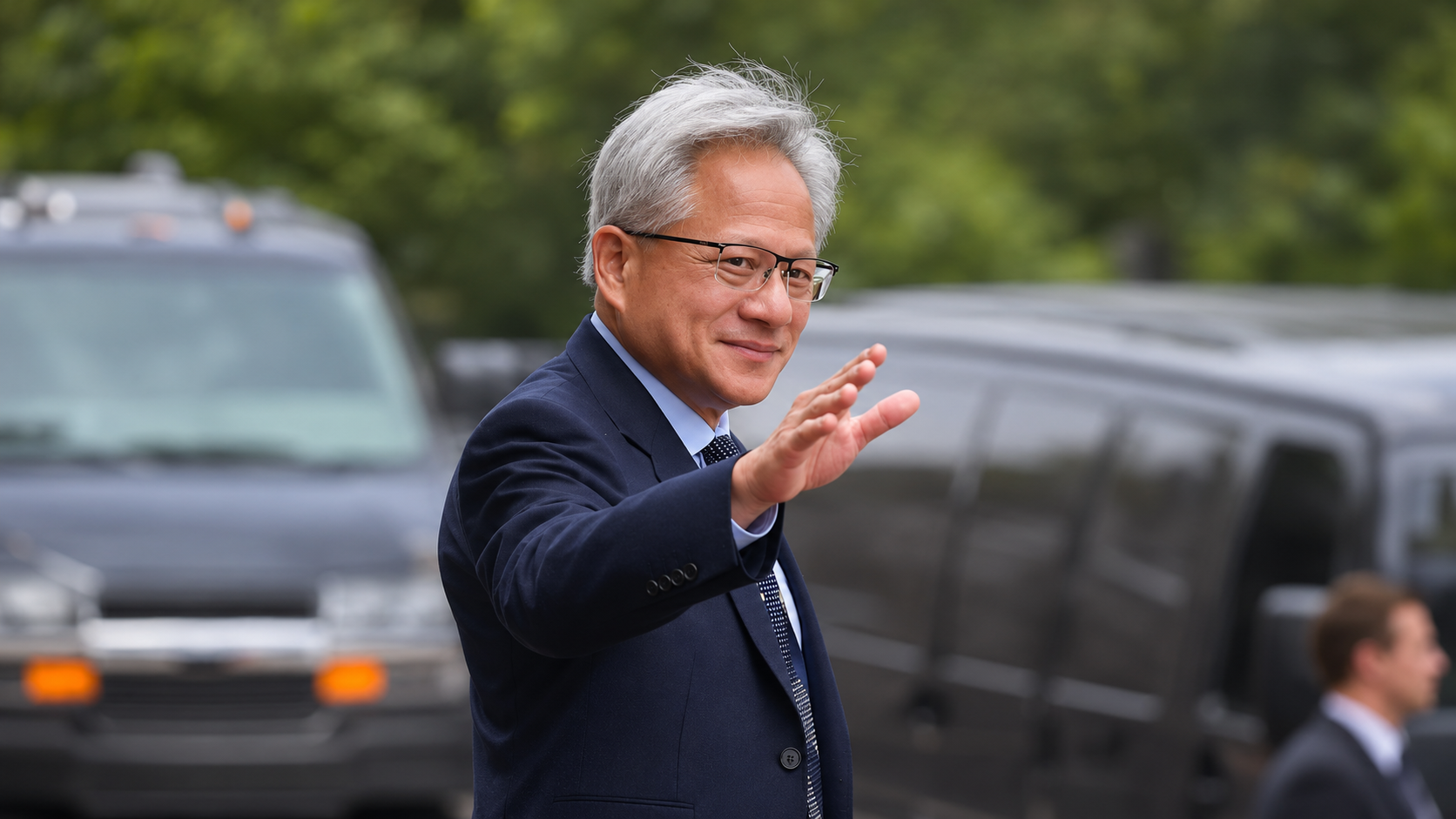
President Donald Trump’s involvement in restoring Jensen Huang to the helm of Nvidia has widened a congressional investigation into the administration’s handling of advanced semiconductor exports to China, drawing bipartisan demands for government records, intelligence assessments and testimony from senior corporate executives. Oregon Senator Ron Wyden is among those pursuing answers as congressional investigators turn their attention toward the White House and its influence over one of America’s most valuable technology companies.
Nvidia’s board of directors voted unanimously Monday to reinstate Huang as president, chief executive officer and board member, reversing his November 12 departure following direct intervention from Trump and Vice President JD Vance. The announcement came before the completion of an independent corporate investigation into potential foreign intelligence activity involving a business associate of Huang.
Trump defended his intervention Tuesday, citing Huang’s technological expertise, American competitiveness in artificial intelligence and the economic consequences of his departure. The president maintained that federal authorities had uncovered no evidence of unlawful conduct by Huang and argued that retaining his leadership served American national security interests.
Members of Congress are demanding access to the intelligence findings behind those assurances.
Wyden and Massachusetts Representative Richard Neal formally opened an investigation November 12 into the administration’s authorization and taxation of advanced Nvidia semiconductor exports to Chinese companies with suspected connections to military operations, government institutions and sanctioned entities.
In correspondence addressed to Commerce Secretary Howard Lutnick, the two Democrats demanded the preservation of federal records concerning semiconductor export licenses, tariff decisions and communications between the Commerce Department, Nvidia and its representatives. Their investigation preceded Monday’s leadership reversal and is expected to continue when Democrats assume congressional control in January.
Congressional investigators are also examining commercial activity involving Megaspeed, a Singapore-based artificial intelligence infrastructure company suspected of facilitating the transfer of advanced American semiconductor technology to China in potential violation of federal export restrictions.
Huang previously acknowledged a personal relationship with an executive associated with Megaspeed who has been the subject of allegations concerning possible connections to Chinese intelligence. Federal authorities have not established that the individual engaged in espionage or that Huang knowingly participated in unlawful technology transfers.
Nvidia’s directors attributed their decision to reinstate Huang partly to information received from senior federal officials, maintaining that his return presented no national security risk. The company’s independent investigation remains underway.
Republican Senators John Cornyn of Texas and John Curtis of Utah have challenged the government’s assurances, seeking identification of the officials who advised Nvidia’s directors and the intelligence assessments supporting their conclusions. Nebraska Republican Representative Don Bacon has called for an examination of federal authorizations permitting the sale of advanced American computer chips to China.
Massachusetts Democratic Senator Elizabeth Warren, expected to assume leadership of the Senate Banking Committee in January, is pursuing additional information concerning the administration’s communications with Nvidia. California Representative Robert Garcia, the anticipated incoming chairman of the House Oversight Committee, has called for an investigation into presidential involvement and potential conflicts of interest.
The confrontation has extended to the administration’s broader semiconductor export policies. Lutnick’s department oversees the federal licensing process governing international sales of sensitive American technology, including advanced computing equipment used in artificial intelligence development. Treasury Secretary Scott Bessent previously expressed frustration over delays in restricting semiconductor exports involving Megaspeed.
On Wall Street, Nvidia’s reinstatement announcement triggered a 31.5 percent surge in its share price Monday, restoring approximately $952 billion in market capitalization. Shares retreated more than 7 percent during Tuesday’s trading as investors reassessed the company’s exposure to congressional investigations, federal inquiries and corporate governance concerns.
Senate Banking Committee Chairman Tim Scott, a South Carolina Republican, has scheduled Huang to testify publicly on December 3. Three House committees are also preparing to interview the Nvidia executive behind closed doors on December 1, with the company’s general counsel expected to appear the following day.
Congressional investigators enter the December proceedings with two unresolved questions dominating the inquiries: whether advanced American semiconductor technology reached restricted Chinese entities and whether the Trump administration possessed sufficient intelligence to support its intervention in Nvidia’s leadership.
Wyden’s investigation into federal export authorizations will continue alongside those proceedings, with the administration’s licensing decisions, corporate communications and national security assessments positioned to become central subjects of congressional oversight when the new Congress convenes in January.