


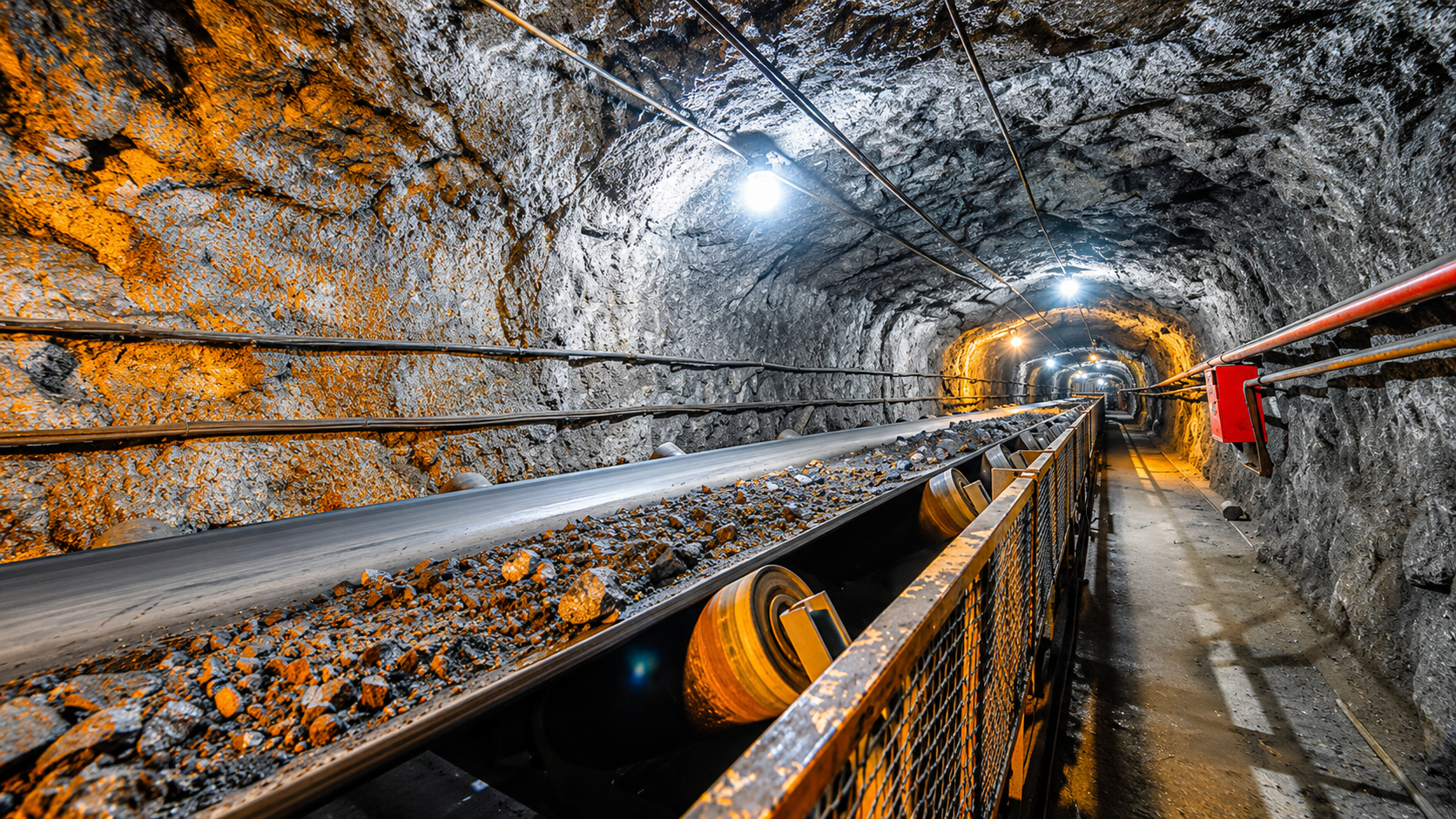
“Josephine County is the brokest, richest, county in the United States,” said the original founder of the local company American Mineral Research at the beginning of a 2021 mini-documentary which can be found on YouTube HERE.
Another local proponent of responsible natural resource production in Josephine County and SW Oregon had a saying which others have repeated many times over the years. “We have a refrigerator full of food and we’re starving.”
The next few months and the next two years, local community members and leaders at all levels of government that represent Josephine County will have several genuine opportunities to start ridding ourselves of the “broke” and “starving” part of those bold, opposing phrases. And I have absolutely no doubt that we can develop our local mineral resources in a way that retains the beautiful natural and scenic environment that we call home.
In recent weeks, I’ve spent a fair amount of time reflecting on the misinformation and the arguments from those that opposed the recent jail/juvenile justice levy renewal ballot measure as a few opponents wanted to see a slightly lower tax rate rather than a renewal at the same rate. I’ve also been reflecting on how so many times over the years our county commissioners and commissioner candidates want to pursue economic development and responsible harvesting of our natural resources, and how all too often this is much talk and little action. And I’ve been reflecting on the dramatic AI industry boom, and how all of a sudden many people are against or skeptical of data centers in Oregon, despite Oregon having a larger amount of data centers than most states without many reported problems or complaints.
What do all these things have in common? We have vast critical mineral and precious metal resources in Josephine County that in time could provide an economic development (job creation) environment unlike anything we’ve seen in Josephine County for several decades. Our vast mineral resources could help lead to lower County tax rates if we’re responsible in public/private partnership agreements with those that propose to develop our vast mineral resources on both public and private lands in Josephine County. And the robust green energy technology and compute technology industries need the vast mineral resources that we have in Josephine County for both energy and hardware purposes.
The question is, will our State and County leaders allow us to start eating, or will they continue to force us to starve? It really is just that simple, at its core.
Tens of billions in mineral resources in Josephine County alone are at stake just from what we know about today. The real number could be in the trillions in the four counties of SW Oregon, because so much of Josephine County and mineral-rich SW Oregon has not been explored in modern times. With a few small exceptions, mineral development in Josephine County and SW Oregon hasn’t been done much on a commercial scale since before WWII.
I’m not overstating the potential when I say that the mineral development industry can lead to as much or more economic development and tax resources to Josephine County than the peaks of the timber industry decades ago. If we do this right over the next 10-15 years, Josephine County voters won’t even need to vote on a jail and juvenile justice levy renewal down the road if mineral project revenues can replace property tax revenues.
So much for arguing for a 14-cent rate decrease on the levy renewal like recalled county commissioner John West did in recent months (without backing up how he would actually balance the sheriff’s jail budget with this decrease). I’d much rather prefer a 100% decrease to that levy tax rate, wouldn’t you? I can’t go into the weeds in this editorial on exactly how we can do this because it would be too long to read, but I promise you this is possible in the long-term and then some if we allow responsible mining projects to proceed.
In Alaska, eligible residents do not pay income tax or sales tax and on top of that they get paid an annual Permanent Fund Dividend (PFD) of $1200 per person in 2026 from oil and mineral revenue just for being a permanent resident of the state. And in the long-term, our mineral resources and other natural resources in the vast United States is a key part of how we can help control or at least backstop ballooning debts and deficits at the federal government level.
But here in Josephine County, back in 2023 and 2024, County Commissioners John West and Herman Baertschiger illegally blocked a small proposed mining lease application on a 76-acre County-owned timber property that could have led to well over $100 million of gross mineral revenues from the project and likely over $10 million of royalty revenues to Josephine County during the life of the project to help support law enforcement. The applicant, American Mineral Research, has had to sue Josephine County twice since 2024 just to make the County Commissioners follow the County code (the local law) in regard to their mining lease application. And American Mineral Research won the first of the two lawsuits, proving that John West lied about the status of this application during his 2024 campaign against his recall petition. This first lawsuit also proved in a court of law that former commissioners John West and Herman Baertschiger acted illegally in regard to this mining lease application.
The second lawsuit against the County from American Mineral Research is expected to be decided in coming months and relates to the illegal decision that the 2025 Commissioners made in regard to the mining lease application. In a nutshell, from 2023 to 2025, County Commissioners have chosen huge legal costs rather than huge revenues that could have helped support County law enforcement programs…all because the applicants were not political buddies of the former commissioners. Other county officials, including legal counsel Wally Hicks and Forestry Director Dave Streeter also illegally treated American Mineral Research in various ways from the year 2020 to 2025, including during the time the company held the first mineral exploration permit in county history (for a County-owned property) from 2020 to 2023. And right from the first application to Josephine County for this project in late 2019, the company stated its intent was to show the County how it could generate more revenues for law enforcement from mineral resources on publicly owned lands in Josephine County. That is still the hope today, despite the self-imposed roadblocks from County officials.
Why not embrace a proposal that could lead to significant non-tax revenue generation for Josephine County law enforcement and multiply the net revenues the County generates from timber harvesting on County-owned lands? It’s all because of corruption (abuse of power) and a selfish attitude from certain former commissioners.
John West, while battling his voter recall in 2024, even paid for full page ads in the Sneak Preview stating that my American Mineral Research colleagues and I were trying to take over all the County timber lands (to try and discredit me as one of the recall campaign leaders). Meanwhile, we only applied to do a relatively simple mineral development project on a small 76-acre County timber property which makes up about 0.25% of the acreage in the County timber portfolio. And around the same time John West attempted to lead an effort to sell as many County timber properties as possible, intentionally without studying the mineral resource potential on those lands. West was successful in spearheading the sale of many of the County-owned timber properties in the Williams area before being soundly recalled from office by close to 62% of County voters that placed a vote in the special recall election of December 2024.
But that $10+ million in potential County law enforcement revenues from mineral royalties on that single 76-acre County timber property is literally pocket change compared to the public and private revenue potential from a series of nickel laterite deposit developments that are being proposed in relatively remote areas of the Illinois Valley in Josephine County and eastern Curry County. The leaders of Homeland Nickel and Patriot Nickel who are in process of proposing the projects have talked in public appearances that they believe Josephine County and SW Oregon have the most significant untapped nickel laterite deposits of any other place in the United States.
Nickel is a critical mineral that is primarily used in making stainless steel and batteries. And the way these nickel projects have been publicly proposed, we might be sitting on nickel deposits worth more than $10 billion. That’s just the estimated nickel deposit values, one of many mineral resources we have in abundance in Josephine County. As a key component of manufacturing processes and batteries, Tesla has secured several different multi-billion nickel supply agreements with nickel mining companies. Like many critical minerals, China controls the vast majority of the world’s nickel processing facilities, and the US has to import all the nickel it uses in domestic manufacturing processes. What we have here in Josephine County could change that.
Josephine County also plays host to a wide variety of other critical minerals and precious metals. American Mineral Research (the company trying to help the County produce more law enforcement revenues) is developing several small projects on public and private lands in Josephine County that have high-grade gold deposits and notable levels of the rare critical mineral Tellurium (among other critical minerals) which is used in making high-efficiency solar panels. A former geologist of the state geology department, DOGAMI, credits the original founder of American Mineral Research for the discovery of high levels of native tellurium in Josephine County.
You can see an old pamphlet in the Josephine County Historical Society from the early 1900’s that says Josephine County was once the largest producer of platinum in the US. Platinum group metals are also on the critical minerals list. And Josephine County has hosted mines that historically produced several other critical minerals like copper and chrome.
Now let’s go back to the nickel project proposals. As word got out over the last two years of the nickel development projects that were in the early stages of being proposed, the companies proposing the projects have already faced stiff pushback from regional environmental groups and what seems to be an all-out attack from certain state agencies such as the Oregon Department of Environmental Quality (DEQ).
The state DEQ has proposed designating the Illinois River and Rough and Ready Creek as Outstanding Resource Waters (ORW designation). The designation would prohibit new or expanded permitted discharges into those waters. Because a mine needs those permits to operate, despite not utilizing water for extraction, the designation would block development of some of the proposed nickel project sites. In fact, one Josephine County Commissioner recently stated in a public meeting that this proposed designation could lock up nearly one-third of the acres in Josephine County from mineral development and certain other commercial developments.
There are only three ORW designations in Oregon today, one being Crater Lake (an obvious choice for protection). However, this ORW proposal in the Illinois Valley (IV) of Josephine County is rumored to be the first time an ORW designation has been proposed for an area that has significant commercial development potential and extremely viable mineral resource development potential. This could set a very dangerous precedent across Oregon, if approved.
Public comment is being accepted on this ORW proposal in coming months, so stay tuned. Billions of mineral resources are literally at stake, as is our county’s economic future and hundreds of new high-paying jobs. Based on some advisory votes on the ballot in Josephine County in the last decade, close to two-thirds of voters don’t want our public and private lands locked up in Josephine County and don’t want prohibitions on development. I sure hope the majority makes their voice heard in coming months and coming years.
And for those that consider themselves environmentalists and those that live out in the Illinois Valley, I know my words won’t change many of your minds but for what it’s worth you have no scientific cause for concern. These nickel laterite projects will not cause harm to any waterways or cause harm to the environment in any other way. And some of them will take place in remote areas that you can’t even get to by vehicle today.
Typically, the main reason projects like this need water discharge permits are because of rainwater that runs from the project area and naturally drains into the creeks or rivers. This natural drainage is already happening when it rains today, and the nickel projects don’t change that. To state it another way, the nickel companies won’t be impacting the waterways at all, but they do have to get a permit to allow rainwater drainage in project areas.
And thousands of lab samples of the rock and soil are processed before a project like this moves forward. This is to ensure there are no “nasties” in the rock or soil that would be harmful to the waterways when rain drains off the project site. There is also a wide area on each side of creeks and rivers where no development at all is ever allowed to happen.
All the proper environmental laws and protections are in place to ensure these projects won’t be harmful. Almost nothing in life is guaranteed, but for those of you sitting on the fence and not sure what to think about these projects, what would you think about these projects if it was guaranteed that the projects would not harm the waterways or the environment in any way?
Environmentalist groups have been trying to lock up the public lands in the IV for decades now, fearing the worst and promoting false narratives about the harm these types of modern mining projects would cause. In an especially funny moment, a few years ago in a congressional hearing on a bill that would have locked up a large chunk of federally-managed lands in the Illinois Valley, Senator Ron Wyden said something to the effect of “we have to protect the rafters in Rough and Ready creek.” Most of the year vast stretches of this creek don’t have enough water to raft. These nickel projects won’t impact the waterways, nor will they impact tourist activities in the area.
Environmentalists also point towards a mine up in Douglas County that turned into a superfund decades ago to promote the false narrative about nickel projects affecting waterways. Except that mine was worked at a very different time with very different regulations, and that mine was not even a nickel mine with completely different type of geology. The rock from that old mine did have some “nasties” in it, and it’s not at all comparable to the proposed nickel projects in Josephine County.
These projects have already been studied and sampled in depth, and there are no “nasties” in the rock or soil that would cause harm. If there were, the projects would not move forward. Thousands of lab samples typically prove this without any doubt before a project of this nature and size is launched.
So, fellow Josephine County neighbors, are you ready to finally start eating and put this “broke” mentality behind us for good?
Today, I’m giving thanks for my upcoming Thanksgiving meals and also giving thanks for the bountiful mineral resources in Josephine County. Because I have no doubt we can develop these mineral resources while at the same time kicking off a local economic boom and protecting the beautiful places we call home.
And how about we eventually lower our county property tax rates while we’re at it? We own these vast resources, so let’s manage them in a way that benefits our public services and the public infrastructure that we rely on every day in Josephine County.
Disclosure – This week’s article is an editorial of an opinion. The author Jay Meredith is a long-term advocate of law enforcement and public safety programs in Grants Pass and Josephine County. The author is also the CFO of American Mineral Research and one of the shareholders of American Mineral Research. American Mineral Research does not have any current mineral development projects that would be directly affected by the State DEQ proposed ORW designation in Josephine County.