


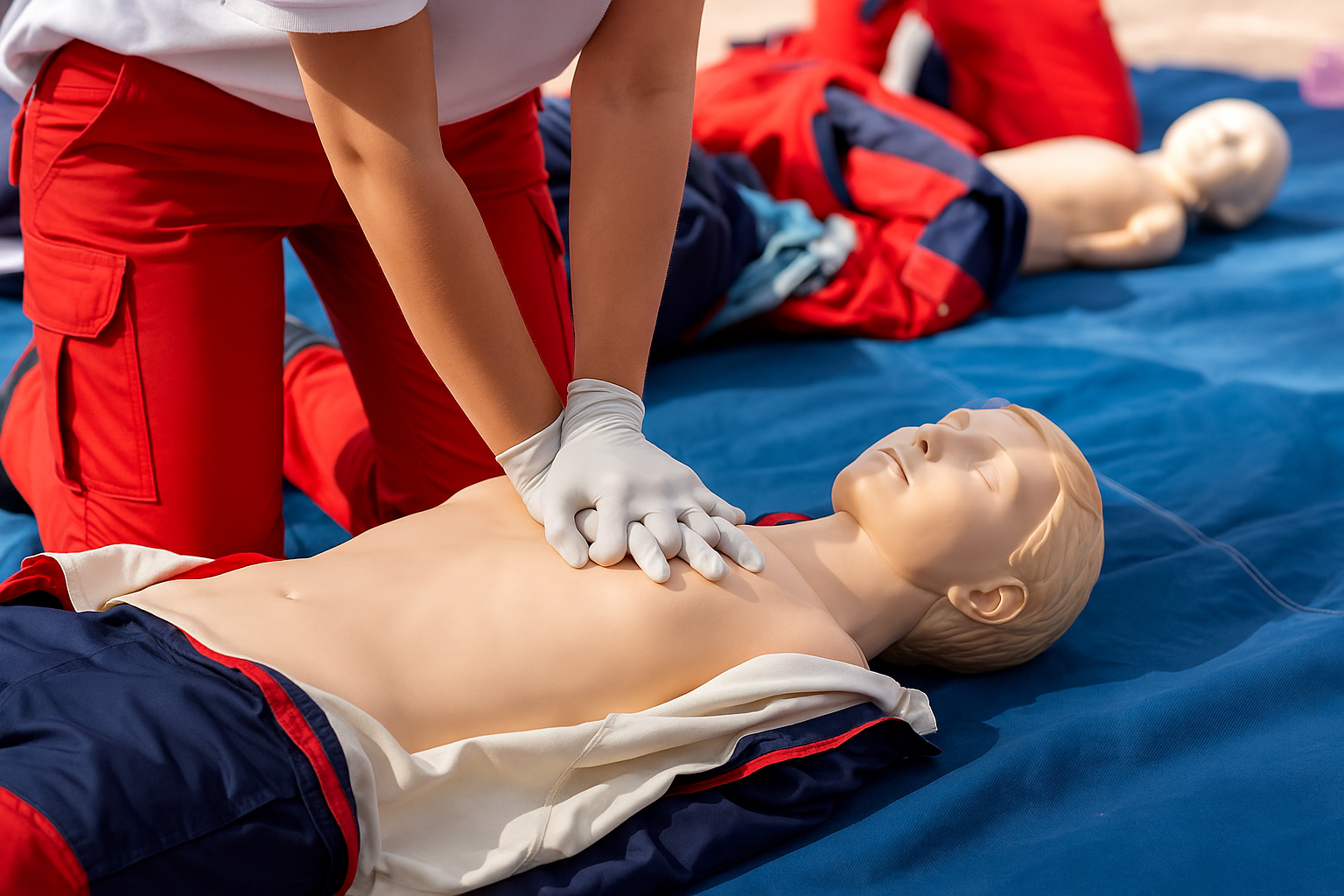
A growing effort to improve emergency preparedness throughout Josephine County is bringing new lifesaving equipment and training opportunities to several local organizations during CPR and AED Awareness Week, observed annually from June 1 through June 7.
American Medical Response (AMR) is expanding access to Automated External Defibrillators, commonly known as AEDs, while also providing hands-on training designed to help community members respond effectively during medical emergencies. The initiative focuses on increasing the availability of critical equipment in locations where rapid intervention can make the difference between life and death.
Six organizations throughout Josephine County have been selected to receive AED devices along with training in CPR and emergency response procedures. The participating organizations include Galice Resort, Thunder Ridge Ranch, River Valley Church, U-Turn for Christ, Vineyard Christian School, and the Three Rivers School District.
The program is aimed at strengthening the chain of survival during cases of sudden cardiac arrest, a medical emergency that can occur without warning and requires immediate action. Health experts consistently emphasize that the chances of survival increase significantly when bystanders begin CPR and use an AED before emergency medical personnel arrive on scene.
For rural communities in particular, access to lifesaving equipment can be especially important. While emergency responders work to reach patients as quickly as possible, longer travel distances and challenging terrain can sometimes increase response times. Having trained individuals and AED devices readily available in community gathering places can help bridge those critical minutes.
The initiative reflects a broader emphasis on community-based health and wellness efforts that empower residents to take an active role in emergency preparedness. Rather than relying solely on professional responders, programs such as this encourage schools, churches, businesses, and community organizations to become part of a coordinated network of lifesaving support.
AEDs are designed to be used by ordinary citizens with minimal training. The devices provide voice-guided instructions and can analyze a person’s heart rhythm to determine whether an electrical shock is needed to restore normal cardiac function. Combined with CPR, AED use has become one of the most effective tools available for improving survival rates following sudden cardiac arrest.
Training associated with the program gives participants practical experience in recognizing cardiac emergencies, performing chest compressions, and safely operating an AED. These skills can prove invaluable in public settings, workplaces, schools, recreational facilities, and community events where medical emergencies may occur unexpectedly.
The equipment rollout and training activities scheduled this week highlight the importance of preparation and awareness throughout Southern Oregon. As outdoor recreation, tourism, community events, and summer activities increase across the region, public health officials and emergency responders continue encouraging residents to learn CPR and become familiar with AED locations in their communities.
The organizations receiving the new devices serve a wide range of local residents, from students and educators to faith-based groups, recovery programs, visitors, and outdoor enthusiasts. By placing AEDs in these locations, the program expands emergency readiness across multiple sectors of the community.
Health professionals note that sudden cardiac arrest can affect individuals of any age and often occurs without prior warning signs. Immediate intervention remains one of the most important factors influencing outcomes, making widespread education and access to emergency equipment a key component of community health initiatives.
As CPR and AED Awareness Week continues, the effort underway in Josephine County serves as a reminder that lifesaving care often begins long before an ambulance arrives. Through expanded training opportunities and greater access to emergency equipment, local organizations are helping create a stronger, more prepared community capable of responding when every second counts.