


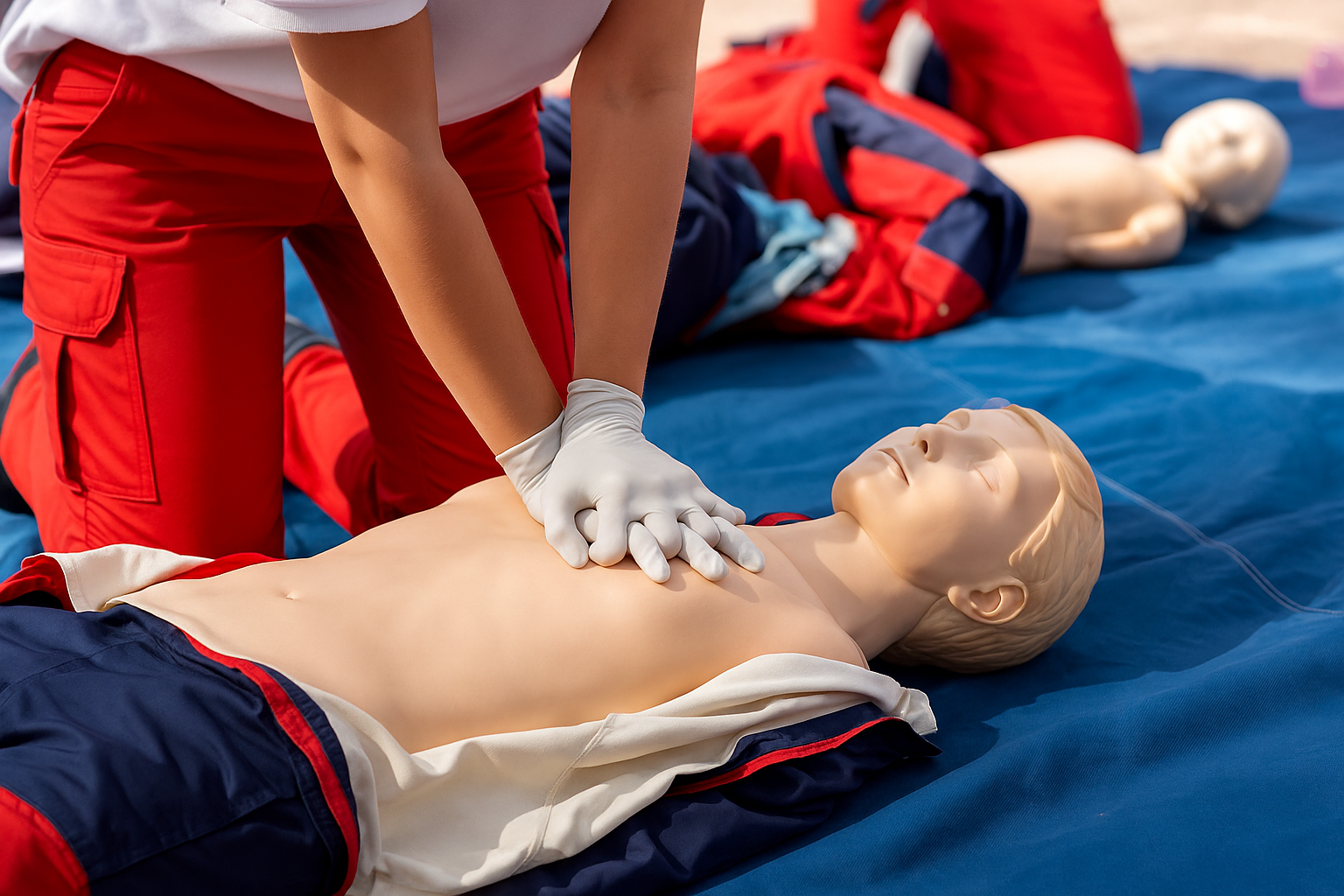
Cardiac emergencies rarely happen on schedule. They strike at home, in parks, at grocery stores, and during ordinary moments when no one expects them. The difference between panic and action often comes down to preparation. In Southern Oregon, residents have more resources at their fingertips than many realize, but far too few take advantage of them before an emergency happens.
If someone were to collapse in front of you, would you know what to do? For many, the answer is no. Yet, local organizations across the region quietly offer classes every month, teaching everyday citizens how to step in during those critical first minutes. Hospitals, fire districts, community colleges, and national health organizations all play a role in bringing CPR training into neighborhoods. By taking one of these classes, residents can become the link that keeps someone alive until paramedics arrive.
In Josephine and Jackson counties, the American Red Cross and the American Heart Association partner with fire departments and schools to hold regular certification sessions. These are not just for medical professionals; they’re open to parents, teachers, teenagers, business owners, and anyone who wants to be ready when seconds matter. Local fire stations frequently list upcoming courses on their websites, and community colleges often offer CPR as part of their continuing education programs. Signing up is typically as easy as visiting a website, calling a training coordinator, or walking into a station to ask for the schedule.
For those who can’t attend a full in-person class, blended courses offer flexibility. Participants complete the academic portion online at their own pace, then attend a short, practical session to learn and demonstrate the physical skills. This hybrid model has become especially popular for busy families and professionals who still want hands-on training without committing to a full day.
Community preparedness also includes knowing where automated external defibrillators, or AEDs, are located. These life-saving devices are increasingly found in schools, gyms, libraries, and government buildings throughout Southern Oregon. Anyone can use them—they provide clear, step-by-step voice instructions—and they can dramatically improve survival rates. Taking the time to look around your workplace, school, or favorite community spaces to locate the nearest AED is a small but powerful step toward readiness.
Another key part of staying prepared is keeping training up to date. CPR techniques and guidelines are periodically revised, and skills fade without practice. Local organizations regularly offer refresher courses that take just a couple of hours. A single evening can restore confidence and ensure your knowledge aligns with the latest recommendations.
Emergencies are unpredictable, but the community’s response doesn’t have to be. Southern Oregon has the infrastructure to create a network of prepared citizens; it only requires individuals to take the initiative. By enrolling in a class, familiarizing yourself with AED locations, and staying current with your skills, you’re not just learning a procedure—you’re giving someone a fighting chance to survive. In a moment when every heartbeat counts, being ready isn’t optional; it’s essential.