


A night built on tradition, proximity to power, and press access unraveled in seconds Saturday when gunfire erupted outside the ballroom hosting the annual White House Correspondents’ Dinner in Washington, D.C., sending shockwaves through one of the nation’s most closely watched political gatherings.
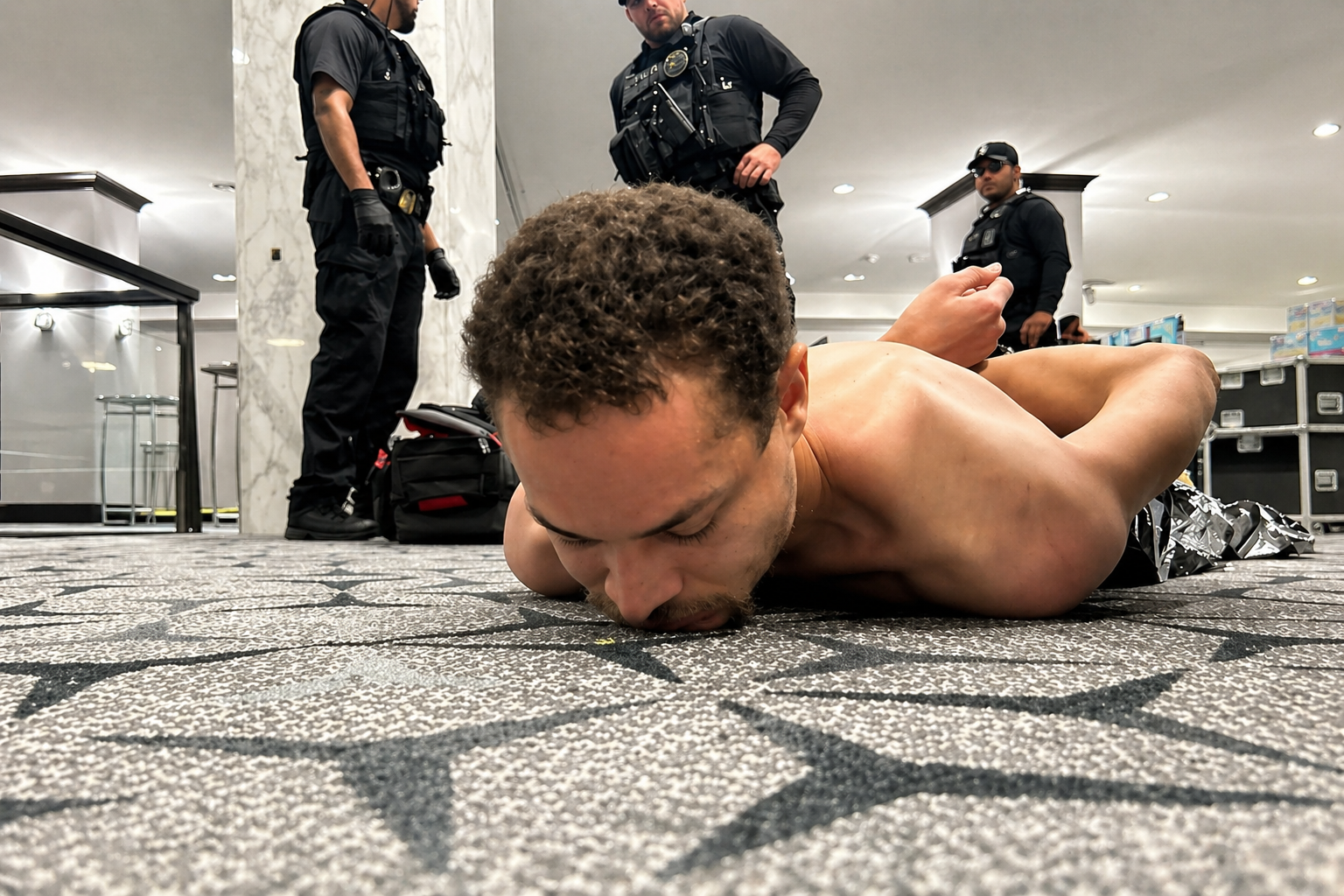
Federal authorities have identified the suspect as Cole Tomas Allen, a 31-year-old man from Torrance, California, who is now in custody as investigators work to determine motive and intent. According to multiple national outlets and statements delivered through the White House press briefing, the incident unfolded at the Washington Hilton, where thousands of attendees, including Donald Trump and the First Lady, were gathered for the high-profile event.
Law enforcement officials say the suspect opened fire near a secured area outside the main ballroom, triggering an immediate response from the U.S. Secret Service and other federal agents assigned to protect senior government officials. Within moments, agents moved to secure the perimeter and evacuate protected individuals. The president and other top officials were safely escorted from the venue without injury, underscoring the speed and coordination of the response.
Early details indicate that the suspect had been staying at the same hotel where the event was being held, raising immediate questions about access, screening procedures, and whether the attacker had prior knowledge of security layouts. Authorities have confirmed that the individual was armed at the time of the incident and was subdued before gaining access to the main event space.
At least one federal agent sustained injuries during the confrontation, though officials report that protective gear prevented more serious harm. No fatalities have been reported, a fact that officials attribute to both the rapid intervention of security personnel and the location of the gunfire outside the primary gathering area.
From the White House press room, officials moved quickly to reassure the public that the situation had been contained. The president later confirmed that the suspect had been apprehended and credited law enforcement for preventing what could have escalated into a far more dangerous scenario. Federal agencies, including the FBI and Secret Service, have launched a full investigation that now centers on the suspect’s background, communications, and any potential affiliations.
Despite the swift containment, the incident has already prompted renewed scrutiny of security protocols surrounding major political and media events. The White House Correspondents’ Dinner, long regarded as a symbol of the relationship between the press and the presidency, places journalists, policymakers, and public figures in close proximity, creating a uniquely visible and potentially vulnerable setting.
Investigators are now examining how the suspect was able to position himself near a secured checkpoint and whether existing screening measures were bypassed or insufficient. The question of intent remains central, with officials declining to speculate publicly while evidence is still being gathered. No formal motive has been released, and authorities have not indicated any broader threat tied to the incident.
The disruption of the event marks a rare breach in what is typically one of Washington’s most tightly managed evenings. Beyond the immediate security concerns, the shooting has reignited discussion about the balance between accessibility and protection in an era where political gatherings increasingly carry elevated risk.
As federal investigators continue to piece together the circumstances leading up to the shooting, the focus remains on understanding whether this was an isolated act or part of a larger concern. For now, the outcome stands as a narrowly avoided tragedy, halted by seconds and the presence of a security apparatus designed for precisely this kind of moment.