


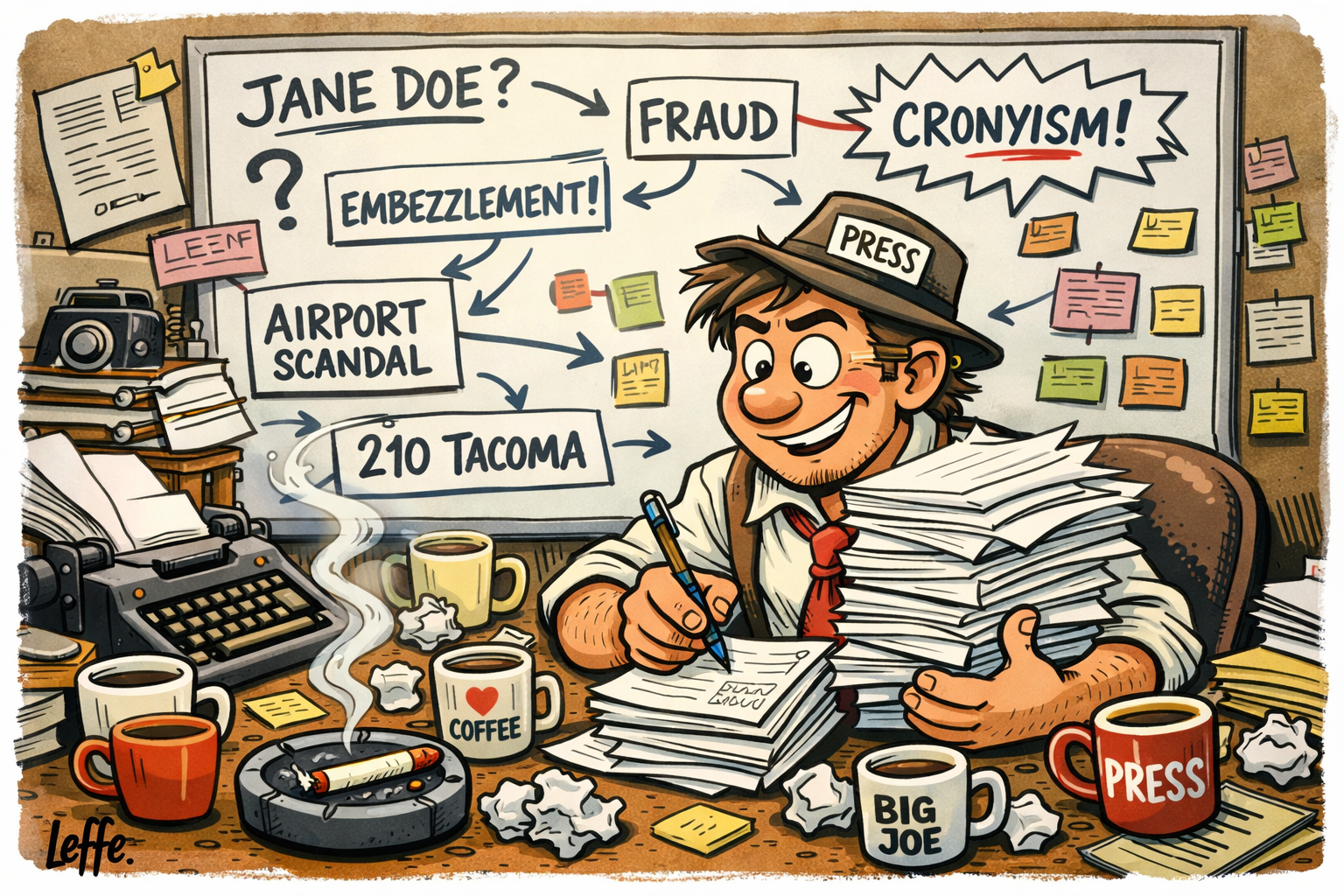
There is a part of journalism that never shows up in the finished article, never makes it into the headline, and never finds its way into the comments section, the quiet but constant decision-making that happens long before a word is published. Every day brings choices that are not always obvious and rarely easy. What deserves attention, what does not, what is noise dressed up as news, and what is a legitimate concern hiding in plain sight. For a newspaper journalist, especially one working at the local level, these decisions can shape not just a story, but an entire week, sometimes an entire season.
There are rabbit holes everywhere. Some are worth exploring, even when they are uncomfortable or time-consuming. Others look promising at first and then reveal themselves to be dead ends, distractions, or worse, traps that consume energy without serving readers in any meaningful way. Learning the difference is not something taught in textbooks. It comes from experience, from mistakes, and from the occasional moment of clarity when you realize that walking away is not failure, it is judgment.
Not everything we look into gets reported, and that can surprise people. There is an assumption that journalists chase every rumor, every tip, every whisper, but the truth is far more restrained. Many leads are examined quietly and set aside because they lack substance, verification, or relevance. Some stories are real but not ripe, others are personal matters better left alone, and some are simply not worth amplifying. Choosing not to publish is just as much a responsibility as choosing to publish, even if it is far less visible.
Then there is the human side of the work. Journalism can be intense, emotionally draining, and mentally exhausting, especially in a time when outrage is profitable and attention is currency. There are days when the healthiest decision is to throw your hands up, step back, and walk away from something you cannot control or something that does not truly concern the public interest. That choice is not about avoiding hard truths, it is about protecting perspective, mental health, and the trust of readers who rely on us to filter, not flood.
As we move into this week, with Hanukkah, and Christmas just ahead, it feels like a good moment to acknowledge that balance. The goal is not to overwhelm, but to inform, not to chase every spark, but to focus on what genuinely matters to this community. News should add clarity, not chaos, especially during the holidays when people are already carrying enough.
We hope Monday finds you well, that your weekend treated you kindly, and that the week ahead brings a little calm alongside the inevitable busyness of the season. Our aim is to bring you enough news to keep you informed, engaged, and grounded, without stealing the joy from this time of year. Sometimes the most responsible thing a journalist can do is tell the story, and sometimes it is knowing when not to, and either way, that decision is made with you in mind.