


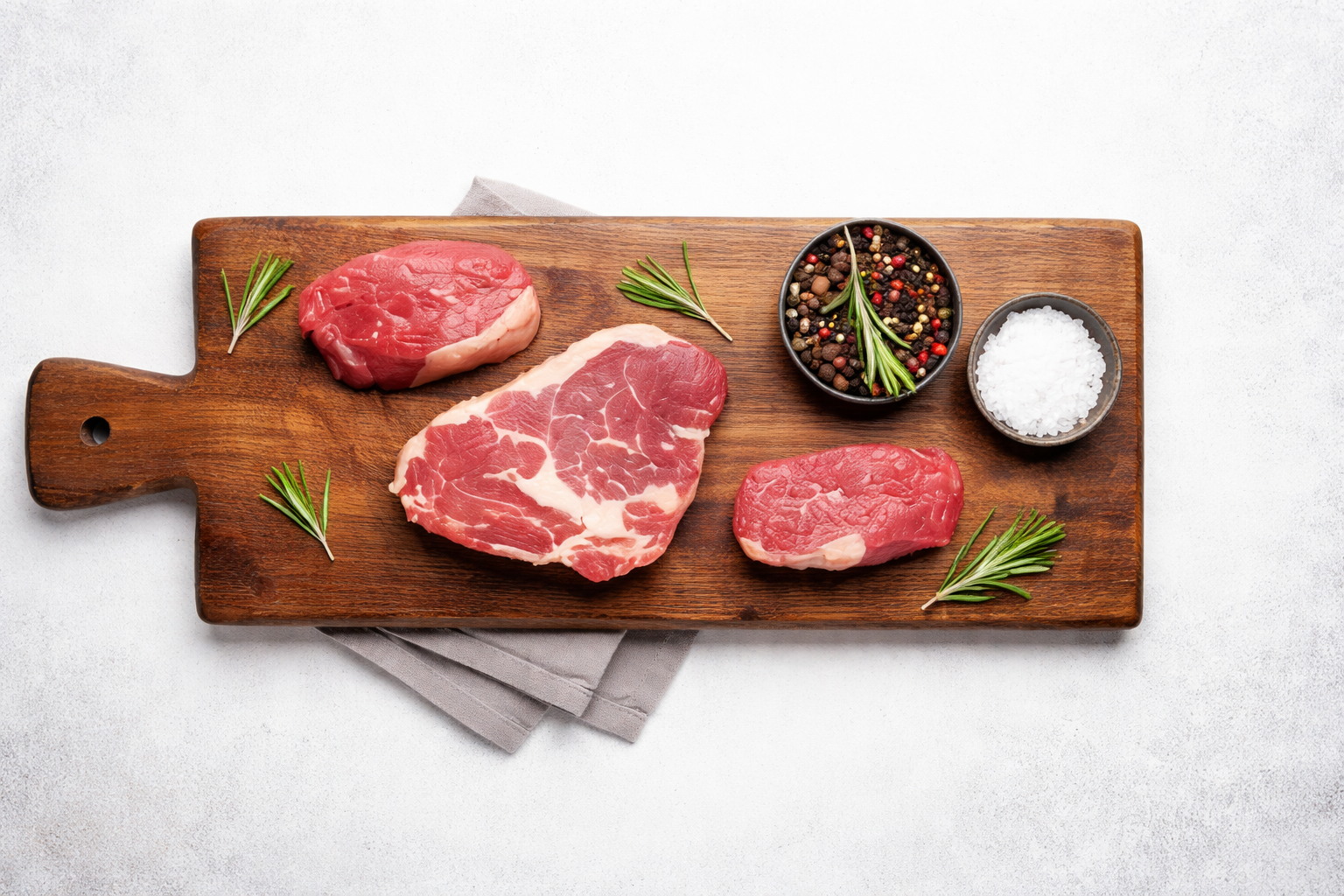
If you are a committed vegetarian, this might be your cue to smile, shake your head, and move along. For everyone else in Southern Oregon, the conversation around red meat is not about elimination, it is about balance.
For years, red meat has been caught in a nutritional tug of war. On one side, it is criticized for its links to heart disease and certain cancers when consumed in excess. On the other, it remains one of the most nutrient-dense foods available, providing high-quality protein, iron, and vitamin B12, all essential for energy, muscle function, and overall health. The reality sits squarely in the middle.
Health organizations such as the American Heart Association and the World Health Organization consistently recommend moderation rather than avoidance. For the average adult, that translates into roughly two to three servings per week, with each serving about the size of the palm of your hand. This approach allows individuals to benefit from the nutritional value of red meat without taking on the risks associated with overconsumption.
The concerns tied to red meat are largely connected to quantity and processing. Diets high in saturated fats have been associated with Heart Disease, while frequent consumption of processed meats has been linked to an increased risk of Colorectal Cancer. These findings do not suggest that a steak on your plate is inherently harmful, but rather that a steady, daily intake without balance can lead to long-term health issues.
Here in Southern Oregon, the conversation takes on a slightly different tone. This is a region where locally sourced beef is not just available, it is part of the agricultural backbone of the community. Ranches throughout areas like Josephine County and Jackson County provide access to fresh, responsibly raised beef that often contains fewer additives and a different nutritional profile than heavily processed alternatives. Supporting local producers while maintaining a moderate intake creates a balance that benefits both personal health and the regional economy.
A clean and sustainable approach to eating red meat focuses on quality and preparation. Leaner cuts such as sirloin or tenderloin can reduce excess saturated fat, while cooking methods like grilling, baking, or pan-searing without heavy oils help preserve nutritional value. Pairing red meat with vegetables, whole grains, and other nutrient-rich foods ensures that it complements a balanced diet rather than dominating it.
It is also worth noting that red meat can play a useful role in maintaining strength and stamina, particularly for individuals who lead active lifestyles. Iron supports oxygen transport in the blood, while protein aids in muscle repair and recovery. When consumed responsibly, these benefits can contribute to overall wellness rather than detract from it.
The idea of a clean lifestyle does not require strict elimination of foods that have been part of human diets for generations. Instead, it calls for thoughtful choices and awareness. Red meat, when eaten in moderation and sourced responsibly, can fit comfortably within that framework.
For Southern Oregon residents, the takeaway is simple. Enjoy what your region produces, support local agriculture, and keep portions in check. A steak once or twice a week is not a problem. In fact, when approached with balance, it can be part of a healthy, grounded way of living that reflects both the values and the resources of the community.